


Home Care Nurses, We Need Your Input!

Your feedback can help guide future improvements to the Home Care Program
Attention in-home nurses who care for children and adults in the Home Care Program!
We have a short survey asking about the challenges and successes of providing Home Care services.
This survey is part of an evaluation of the Home Care Program required by Illinois law, Public Act 104-0009. The law requires the Illinois Department of Healthcare and Family Services (HFS) to evaluate how the Home Care Program operates, how it provides services and how it determines rates and payments for services.
Your experience as a nurse providing care is an important part of this evaluation.
Please note that only one survey response is allowed per nurse.
The survey for nurses is available starting Oct. 1. It will remain open for 60 days.
Your feedback will help HFS and the Division of Specialized Care for Children (DSCC) better understand what is working and what challenges exist in the Home Care Program. Your feedback can also help identify future improvements.
We would truly appreciate your participation!
Meet Our Medical Advisory Board Member: Dr. Matthew Mischler
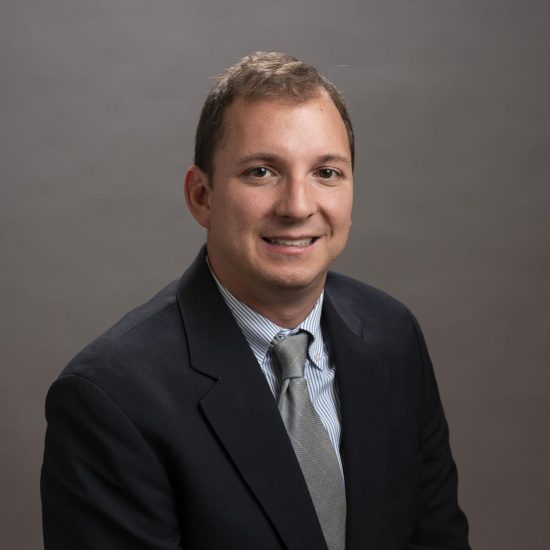
Helping youth with special healthcare needs find a safe landing spot in adult care
As a physician and clinical professor of internal medicine-pediatrics, Dr. Matthew Mischler is passionate about providing high-quality care across the lifespan.
This continuity of care is especially important for youth with special healthcare needs as they transition to adulthood.
“How do we build safe landing spots on the other side for kids and families as they’re aging out of pediatric care?” Mischler said. “It’s such a needed space to be in. It’s so scary for families and caregivers. There’s so much fear and trepidation and absolutely, understandably so.”
As a member of the Division of Specialized Care for Children’s (DSCC) Medical Advisory Board (MAB), Mischler enjoys collaborating with DSCC and healthcare professionals across Illinois to improve transition support for families and providers.
“One of the things that’s so huge that DSCC does is help families navigate in that space,” he said. “They meet patients and families where they are to try to help them through that time.”
A calling to medicine
Mischler grew up in Peoria and always enjoyed science, especially biology and chemistry. With no doctors in the family, he didn’t consider medicine as a career until he broke his leg as a teenager.
Being around the orthopedic surgeons and anesthesiologists sparked his interest. A talk with his pediatrician later helped Mischler see medicine as a blend of science and helping others.
“I felt that vocational aspect. That calling became a part of it,” Mischler said. “I can’t imagine doing anything else.”
Mischler graduated from Bradley University in Peoria and then attended medical school at the University of Illinois Urbana-Champaign. He enjoyed all his medical rotations and couldn’t choose between caring for children or adults. Therefore, he pursued a combined specialty in internal medicine and pediatrics, known as “Med-Peds.”
Med-Peds physicians receive dual training in both pediatrics and adult medicine, making them uniquely qualified to provide seamless care from childhood through adulthood.
Mischler currently practices at OSF St. Francis Medical Center and is a Clinical Professor of Internal Medicine and Pediatrics and Program Director of the Med-Peds Residency Program at the University of Illinois College of Medicine at Peoria.
Mischler hopes his background and experience can help support DSCC’s ongoing efforts to strengthen providers’ knowledge, resources and skills to better support transition-age youth.
Building safe landing spots
Transitioning to adult care is often challenging for young adults with special healthcare needs, their families and their providers.
Families often face both emotional and logistical challenges as they move from pediatric to adult healthcare systems, Mischler explained.
He also notes how adult and pediatric specialists are often trained differently. These differences can lead to gaps in knowledge and comfort for adult providers when they care for patients with complex childhood-onset conditions.
Mischler praises DSCC for guiding families during this crucial time and working to build safe landing spots for patients aging out of pediatric care.
“Having an organization that stretches across the state like DSCC is such a huge resource in Illinois,” he said.
Mischler first started working with DSCC about six years ago when he helped start a pediatric-to-adult care transition team in Peoria. He referred families to DSCC and became involved with the annual Illinois Statewide Transition Conference.
DSCC later invited Mischler to join the MAB, where he recently completed his third year.
“The resources the organization provides to patients and families, the support that’s there as well for physicians and other providers — I think that’s an understated part of what DSCC does,” he continued.
“The (Medical Advisory) Board has given me an opportunity to better understand and appreciate just how much goes into this work, and how fortunate we are in Illinois to have an organization like DSCC that does the kind of work they do.”
“A beacon” for families and providers
As an MAB member, Mischler is focused on increasing awareness of DSCC and its wealth of transition resources across the state’s healthcare community.
“When there’s an organization that its mission and its goal is to support the most vulnerable and the most medically complex patients and families, that’s a really special thing to be a part of and that’s a huge thing for practicing physicians, nurse practitioners and PAs (physician assistants) to know is there for their patients,” he continued.
He thinks of providers in smaller or rural communities who may suddenly care for a child with complex needs. These physicians may feel unsure where to turn.
“How do we reach them and make sure they are aware of all the things that DSCC has to offer… They aren’t trying to navigate it alone. There is somebody out there whose mission is to help, and I think that’s a huge beacon,” Mischler said.
“The more people who can be aware of what DSCC is and how many people they support and how much advocacy goes on behind the scenes for the most vulnerable patients, that’s really important.”
Share Your Feedback on a New MFTD Waiver Service
The proposed change would allow legally responsible adults to provide certified nursing assistance services to participants under age 21
Families have an opportunity to share feedback on a proposed new service available through the Medicaid Home and Community-Based Services Waiver for Those Who Are Medically Fragile and Technology Dependent (MFTD waiver).
The public comment period is open until Oct. 11.
The Illinois Department of Healthcare and Family Services (HFS) operates the MFTD waiver. Many families in the Home Care Program have children who receive services through the MFTD waiver.
HFS has announced a proposed new waiver service called “Legally Responsible Adult as a Certified Nursing Assistant.” This service will allow legally responsible adults to provide certified nursing assistant services to MFTD waiver participants under age 21.
It will take effect Jan. 1, 2027, or upon approval from the federal Centers for Medicare and Medicaid Services (CMS).
review the full waiver amendment
To review the full waiver amendment, you can:
- Read the public comment notice on HFS’ website.
- You can call (217) 524-4148 to request a copy.
- Copies are also available at the following locations:
- Healthcare and Family Services
201 South Grand Avenue East
Springfield, IL 62763 - Healthcare and Family Services
401 S. Clinton
Chicago, IL 60607
- Healthcare and Family Services
How to submit public comments
HFS now invites families and the public to comment on these proposed amendments through Oct. 11.
You can submit feedback in two ways:
- Email HFS.HCBSWaiver@illinois.gov
- Mail written input to the Illinois Department of Healthcare and Family Services, Attention: Waiver Operations Management, 201 South Grand Avenue East, 2FL, Springfield, IL 62763
HFS and the Division of Specialized Care for Children will review the comments and respond to them.
We will then submit comments to CMS as part of the amendment approval process.
Sensory-Friendly Fun and Support at the 2026 Illinois State Fair in Springfield

Come visit DSCC at the fair’s Sensory Station on Aug. 13-17 and enjoy special sensory-friendly Sunflower Hours on Aug. 15
We are excited to once again partner with the Illinois State Fair to provide inclusive, accessible fun for families!
The 2026 Illinois State Fair is happening from Aug. 13-23 at the fairgrounds, 801 E. Sangamon Ave., in Springfield.
Our Division of Specialized Care for Children (DSCC) team will be there to welcome you to the fair’s Sensory Station from Aug. 13-17. The fair is also offering sensory-friendly Sunflower Hours and other programming to make the event a more comfortable and enjoyable experience for all.
DSCC at the Sensory Station
- Thursday, Aug. 13, to Monday, Aug. 17
- 10 a.m. to 7 p.m. daily
Our DSCC team will be at the fair’s Sensory Station from Thursday, Aug. 13, through Monday, Aug. 17.
The Sensory Station is inside the Emmerson Building, just off Main Street and Brian Raney Avenue in the center of the fairgrounds. It will be open from 10 a.m. to 7 p.m. daily. It is an air-conditioned, dedicated quiet zone with activities and resources to help visitors regroup and refocus.
The Sensory Station’s features and activities include:
- Calming pods
- A foam block pit
- A stuffed animal “petting zoo”
- A twinkle tunnel, coloring station and other sensory-processing activities
Families can also check out sensory bags to use while exploring the fairgrounds. The bags include noise-canceling headphones, fidgets and sunglasses. There is also stroller parking, a diaper changing station and a nursing area at the Sensory Station’s entrance.
Check out our “DSCC Outreach at the 2026 Illinois State Fair” video to learn more about the Sensory Station and its impact on families.
Nearby, the fair has a First Aid Station with rooms families can use for adult changing stations, tube feedings and other needs. This station is in the Emmerson Building Annex, across from the Dairy Building on Central Avenue. It is open from 11 a.m. to 6 p.m. daily.
Our DSCC team will also host a tent outside the Sensory Station from Aug. 13 to 17. During these five days, we will have rock-painting and coloring activities, along with information about our programs and services for families statewide.
Sunflower Hours on Aug. 15
- Saturday, Aug. 15, from 9 a.m. to 12 p.m.
- Carnival hours from 10 a.m. to 12 p.m.
Enjoy a quieter fair experience during Sunflower Hours on Aug. 15 from 9 a.m. to 12 p.m. During this time, the fair will adjust certain programs and activities to create a more calming environment for individuals with sensory processing sensitivities.
The fair has Sunflower Hours stickers available for families to use during this timeframe. This sticker allows fair visitors with sensory sensitivities to enjoy select amusement rides for free from 10 a.m. to 12 p.m. Youth must have an adult and/or caregiver accompany them on rides. All riders must have the Sunflower Hours sticker to ride for free.
DSCC has a limited number of stickers available for our program participants. To request a Sunflower Hours sticker, please email dscc@uic.edu with your name and your participant’s name by Aug. 6.
We will send stickers on a first-come, first-served basis.
All families may visit the Sensory Station during the Sunflower Hours event to get more stickers. The stickers will be available while supplies last.
Conservation World, located at the fair’s Eighth Street entrance, will also host Sunflower Hours on Saturday, Aug. 15, and Tuesday, Aug. 18, from 8:30 to 10 a.m. Fairgoers can explore the great outdoors in a more peaceful and sensory-friendly setting during these times.
Social Story and other resources to Plan Your Visit
The Illinois State Fair has a social story to help you plan your visit to this year’s event. It is a step-by-step guide to help parents and caregivers explain what to expect during a visit to the Illinois State Fair.
You can find the social story and more details about the Sensory Station, Sunflower Hours, the entertainment schedule and more in the Sensory-Friendly Fair section of the Illinois State Fair website.
To find more sensory-friendly activities and events for children and families throughout Illinois, visit our Events page and follow our Facebook page and Instagram page.
Share Your Input at Our May 7 Family Advisory Council Open Forum
We invite all Illinois families of children with special healthcare needs to share their feedback and experiences at this virtual forum.
Join us for an opportunity to connect with other families and share your feedback on topics that matter to you.
Our next Family Advisory Council (FAC) open forum is on May 7 from 9 to 11 a.m.
Members will discuss how they can partner with the Division of Specialized Care for Children (DSCC) to share their families’ stories, successes and helpful tips and resources they’ve learned along the way.
The FAC will also open the floor to hear your ideas as they discuss DSCC’s messaging to families, digital communication channels and more.
This free virtual meeting is for all Illinois families of children with special healthcare needs. You do not have to be a Division of Specialized Care for Children (DSCC) participant to attend.
You can sign up on Zoom to join the meeting. Please note that live Spanish translation will be available.
The FAC guides our efforts to strengthen teamwork, improve communication and empower families to have a voice in their children’s care. The council also connects families to resources and other families who are on a similar journey.
You can find the minutes from past meetings and more details on our website’s Family Advisory Council page. You can also learn more about some of our FAC members on our Meet Our Family Advisory Council Members page.
If you have questions or would like more details on how to participate in the FAC, please email dsccfac@uic.edu.
We hope to see you on May 7!
DSCC Helps Give One Family a Safer Night’s Sleep
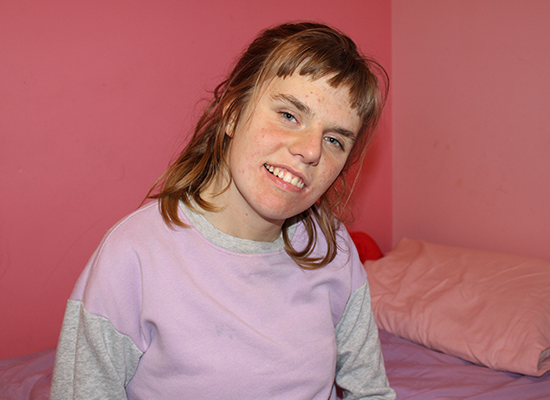
A DSCC Care Coordinator partnered with community organizations to create a custom SeizureSense alert system for a teen with complex needs and her deaf parents.
Getting the right amount of sleep each night can be difficult for anyone.
For Melissa and Tim Kearney, it can be especially hard. Keeping their daughter, Makaelyn, safe is an around-the-clock job that doesn’t stop when they go to bed.
Makaelyn is a happy, curious teenager with autism who is non-verbal. Her diagnoses also include cerebral palsy, muscle and bone deformities and a history of seizures. Monitoring her seizures and catching them early is essential.
This monitoring proved challenging for Melissa and Tim, both of whom are deaf and hard of hearing. Melissa also has cerebral palsy, which makes getting out of bed quickly more challenging.
The University of Illinois Chicago’s Division of Specialized Care for Children (DSCC) is an important partner in helping the Kearney family navigate Makaelyn’s challenges. DSCC Care Coordinator Court Prather worked alongside Tim and Melissa for months to help them find an alert system that would meet their needs.
The hard work paid off, and Court connected the family with two organizations that could brainstorm a solution and provide funds for a custom alert system.
Thanks to Medlaunch UIUC and the Danny Did Foundation, Tim and Melissa can now rest easier knowing they have a safe and effective “SeizureSense” alert system.
“I can’t stop thinking about Makaelyn getting up and wandering or having a seizure. I’m up and down all night, checking to be sure she’s okay.” Tim explained. “Having an alarm that lets me know she’s up or having a seizure is a life-changer. Who knows? I might end up with a whole new personality thanks to getting a peaceful night’s sleep.”
Over a year in the making
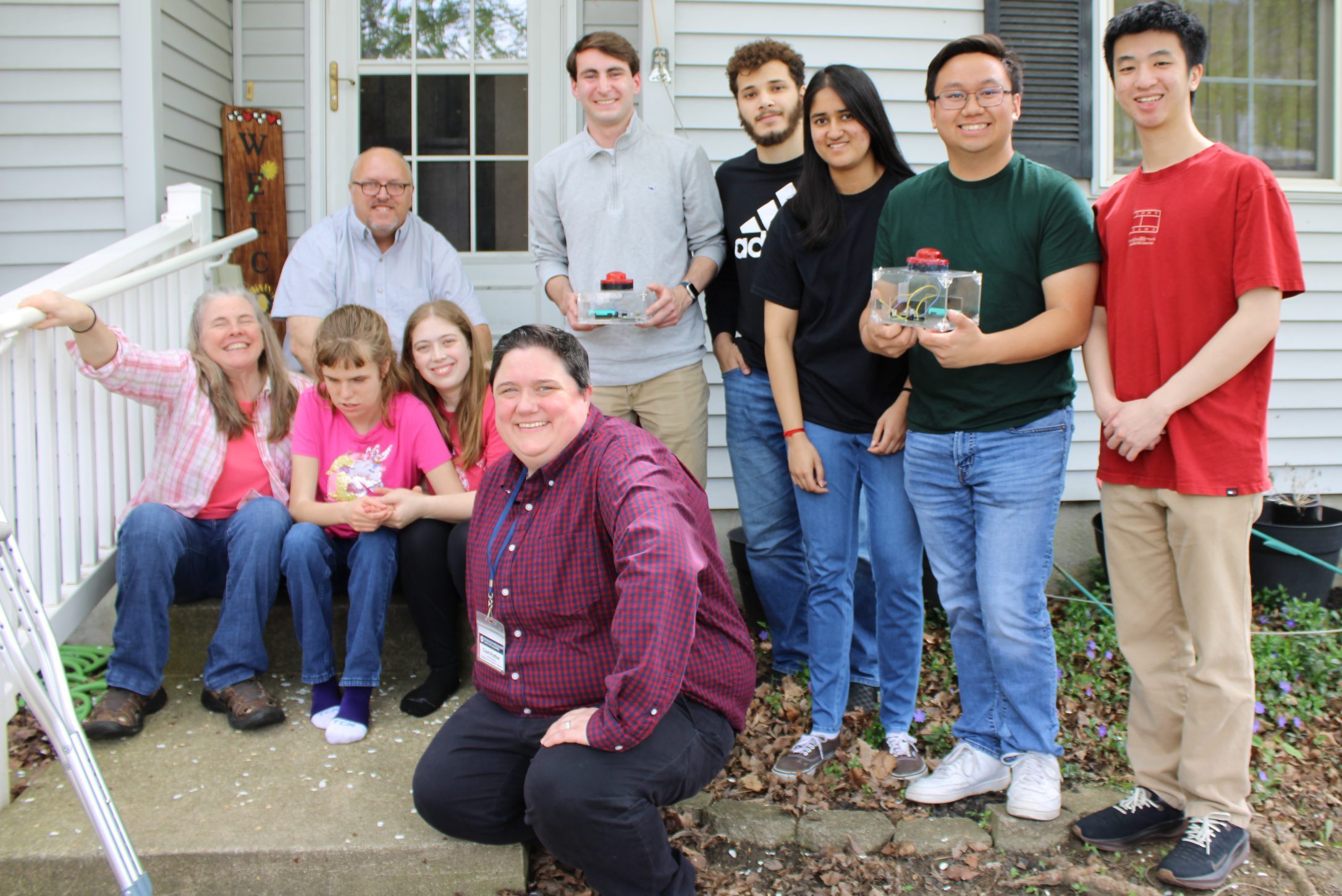
The journey to develop the “SeizureSense” alert system for the Kearneys was long and filled with roadblocks.
“This alert system project has been over a year in the making,” Court explained. “We looked everywhere for an existing monitor system to catch Makaelyn’s seizures at night. We found an app that could be installed on a phone and would vibrate, but the vibration level was just not enough. The other systems we found in the U.S. all had an audible alert.”
Court wasn’t giving up.
“There was no straight path or easy answer for this challenge,” Court explained. “I spent a lot of time doing research, making calls and trying to get all the pieces and people to connect throughout the process.”
Everything changed when Court discovered the Danny Did Foundation and sent a project application to MedLaunch UIUC.
The Danny Did Foundation focuses on raising awareness about epilepsy, preventing Sudden Unexpected Death in Epilepsy (SUDEP), and helping families with seizure detection and prediction devices that may help to prevent seizure-related deaths.
MedLaunch UIUC is a student-led organization at the University of Illinois Urbana-Champaign. Students from a variety of majors and perspectives work with individuals with disabilities to design, build, and deliver devices that improve their independence and quality of life. MedLaunch accepts project applications each fall. Five or six teams review submissions. Each team chooses a project to tackle during the school year.
“The Danny Did Foundation was incredibly helpful,” Court said, noting the foundation awarded the family a grant and paid for the alert monitor.
“It was exciting to have MedLaunch take on our project and get to work tailoring the device to the Kearney family’s needs,” Court added.
The pieces started coming together to make an alert system for the family possible. “At each step, Court helped coordinate interpreters, project meetings, approvals and other details to keep the process moving forward.”
A passion for accessibility and creating person-centered solutions
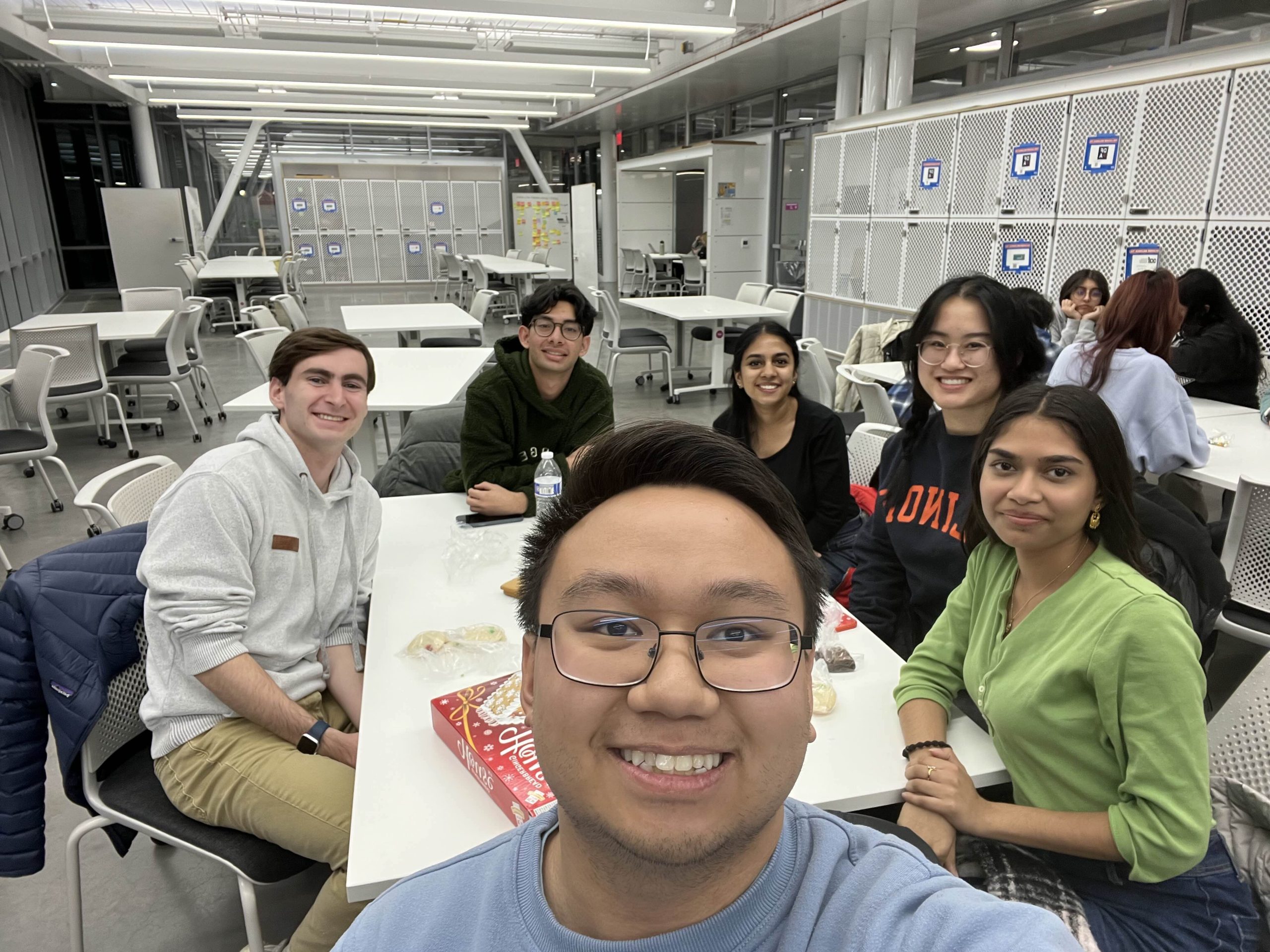
MedLaunch Team members come from diverse backgrounds, including computer science, engineering, communications and more. Their love for tackling tough challenges and unique situations unites them.
“I’m studying engineering but hope to go to medical school,” said team lead Ryan Sullivan. “Our design process focuses on developing a product to fit a person’s specific needs. We get to brainstorm together, create products, and be very hands-on in helping people and making an impact. It’s very fulfilling.”
Tackling specific issues and unique situations inspires members to return to the club year after year. SeizureSense team members each had two or more years of experience with the club.
Court, Melissa and Tim, and their American Sign Language (ASL) interpreter, Teresa Fulling, were impressed with the Medlaunch team’s attention to detail and passion for accessibility.
“Everyone asked a lot of good questions that helped us narrow down and focus on what we needed,” Melissa explained. “We travel sometimes, but I didn’t think about making the alert system portable. Our (MedLaunch) team did! Keeping that in mind made a big difference in helping us figure out the best way to move forward.”
Throughout the process, the SeizureSense Team provided updates, asked questions and navigated various challenges.
installation day
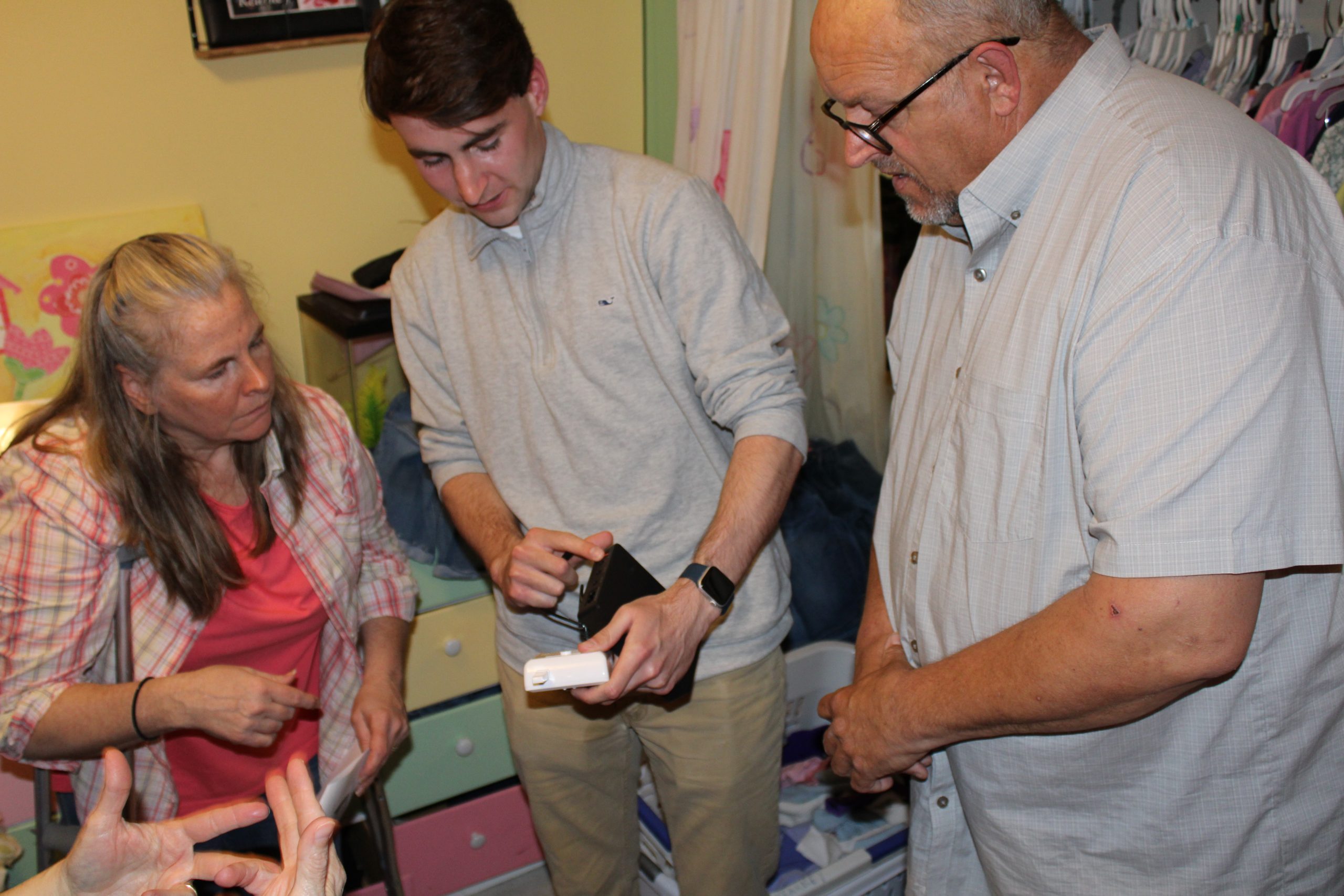
The family and team felt a strong sense of anticipation and excitement as the SeizureSense installation crew arrived.
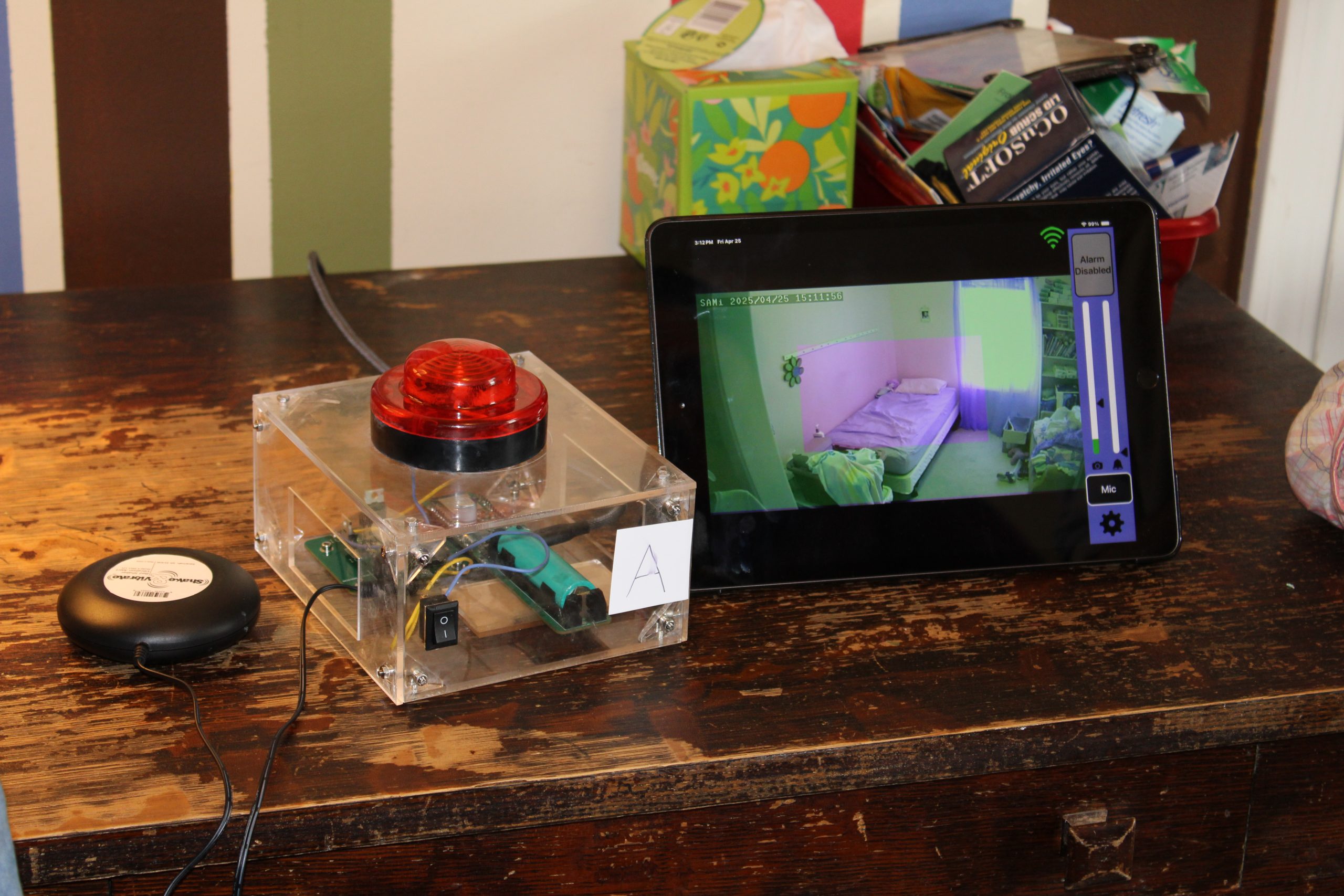
After a warm welcome, Ryan Sullivan, Matthew Tan, Hussein Thahab, Kriti Mathur, and Eric Vo unveiled the specialized SeizureSense system to the Kearney family. The system includes:
- An alert light and vibration component
- A monitor in Makaelyn’s room that communicates with alert devices in both parents’ bedrooms (they sleep in different rooms due to their medical conditions)
- A backup battery in case of a power outage
The first stop was Makaelyn’s room, where team members set up the camera and adjusted the system settings.
Next, the team set up alert system components in Melissa’s and Tim’s bedrooms. Each small, clear acrylic box contains a light and a vibration mechanism to wake the parents if the system detects motion in Makaelyn’s room. Melissa’s device also connects to her computer so that she can see the camera video anytime.
Tim and Melissa eagerly watched every step. Throughout the setup process, ASL interpreter Teresa interpreted the Kearney’s questions so that team members could provide answers about how each part works and connects to other parts of the system. Court took many photos to document each step for the Kearneys.
Once SeizureSense was in place, the team carefully tested the system. It worked perfectly.
The last test required Tim and Melissa to demonstrate that they could take the system apart, put it back together and adjust the settings as needed.
A huge burden lifted
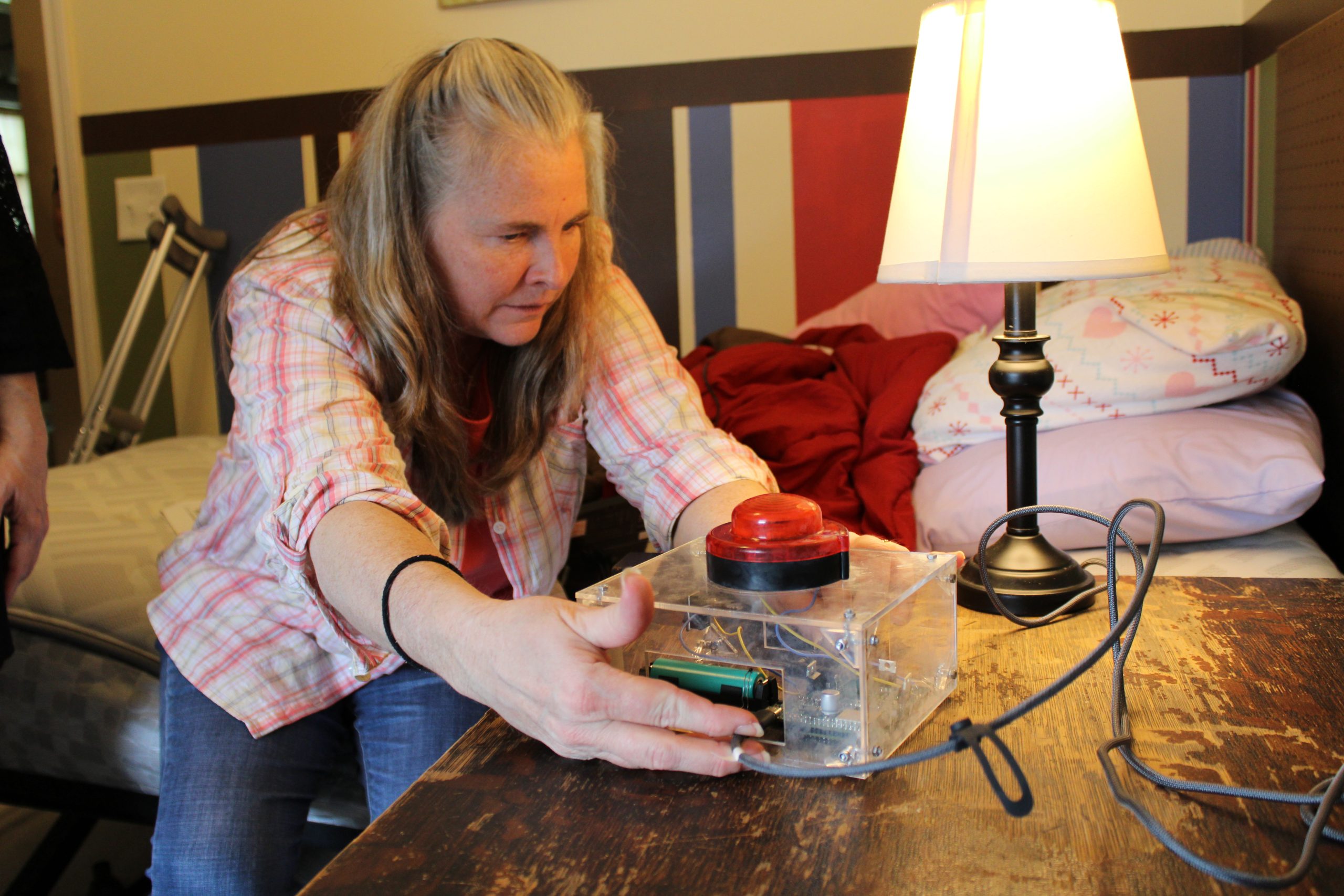
Melissa says the SeizureSense system is “a huge burden off my shoulders, and I can now sleep more peacefully knowing that we have a ‘night watch’ for our daughter.”
Over the last few months, Court and the MedLaunch team have provided invaluable support to make sure the SeizureSense system continues to work well for the Kearneys.
“The U of I team was truly passionate about solutions and what works best for us parents and what works out for (Makaelyn’s) care needs. They were willing to come back and continue problem-solving so that all different areas were thoroughly taken care of for long-term use at home,” Melissa said.
“I’m impressed with their time, willingness and thorough thinking in many different areas… They don’t give up until the project is totally accomplished!”
The Kearneys also praised Court’s dedication to finding a solution and showing a true understanding of their family’s needs.
“I want to give Court a huge thank you… for Court to connect a variety of different organizations or companies to collaborate or make this work is remarkable,” Melissa said
“Court really helps us to tackle so many barriers, such as making sure K (Makaelyn) has the seizure med support she needs, seizure alert devices, trying helping us with K’s dental barriers and helping (me) with phone calls for services and much more,” Melissa added. “It’s nice having a ‘village’ to support K’s needs in various areas.”
Thank you, Court, for never giving up on the Kearney family’s needs and developing strong partnerships to achieve their goals!
Share Your Feedback on Proposed MFTD Waiver Improvements
The public comment period is open until April 22
Families have an opportunity to share feedback on proposed improvements to the Medicaid Home and Community-Based Services Waiver for Those Who Are Medically Fragile and Technology Dependent (MFTD waiver). The public comment period is open until April 22.
The Illinois Department of Healthcare and Family Services (HFS) operates the MFTD waiver. Many families in the Home Care Program have children who receive services through the MFTD waiver.
HFS has announced several amendments to improve how the state delivers, explains and organizes services for individuals receiving MFTD waiver support. The proposed changes aim to make MFTD waiver services clearer, more efficient and easier to access.
The proposed changes include:
NEw Service Added
- Allows occupational or physical therapists to assess a person’s home. This change helps HFS determine what equipment or home changes an individual needs for safety and independence.
Equipment and Technology Updates
- Separates evaluations from equipment services (so HFS bills and and handles them separately)
- Expands the list of covered items, including:
- Mobility aids (such as lifts and standers)
- Adaptive items (such as utensils, bikes and seating)
- Sensory and safety items (such as mats and trampolines)
Home and Environment Changes
- Confirms that Environmental Accessibility Adaptations is no longer a single service
- Breaks it into separate services:
- Pest control
- Home modifications
- Vehicle modifications
- Clarifies that home modifications can apply to more than one home (such as shared custody situations)
Service Improvements and Clarifications
- Adds more detail and clearer rules for:
- Home modifications (such as lifts, ramps and generators)
- Pest control (including traps)
- Allows the state to recover certain costs if a person passes away or cannot move home after services are planned
RemoveD Services
- Removes services that the waiver already covers elsewhere to prevent duplication:
- Placement maintenance counseling
- Specialized medical equipment
Provider and Service Rules
- Requires providers to be in good standing
- Clarifies when family members can be paid for respite care (only if they don’t live with the individual)
Quality and Oversight Updates
- Improves how HFS monitors and reviews the program
- Updates performance measures and tracking methods
- Clarifies who collects and reviews data
- Adds grievance procedures for participants
Rates and Administrative Updates
- Sets a standard rate for the new therapist assessment service
- Updates cost estimates and system changes to support the amendment
review the full waiver amendments
To review the full waiver amendments, you can:
- Read the public comment notice on HFS’ website
- Review hard copies of the notice at the Department of Human Services (DHS) local offices (except in Cook County).
- In Cook County, you may review the notice at the Office of the Director, Illinois Department of Healthcare and Family Services, 401 S. Clinton St., First Floor, in Chicago.
How to Get a Copy of the Proposed Waiver AMENDMENTs
- You can download and print a hard copy of the proposed waiver amendments from the HFS website at https://hfs.illinois.gov/medicalclients/hcbs.html.
- You can call (217) 524-4148 to request a copy.
- Copies are also available at the following locations:
- Healthcare and Family Services
201 South Grand Avenue East
Springfield, IL 62763 - Healthcare and Family Services
401 South Clinton
Chicago, IL 60607
- Healthcare and Family Services
How to submit public comments
HFS now invites families and the public to comment on these proposed amendments through April 22.
You can submit feedback in two ways:
- Email HFS.HCBSWaiver@illinois.gov
- Mail written input to the Illinois Department of Healthcare and Family Services, Attention: Waiver Operations Management, 201 South Grand Avenue E., 2FL, Springfield, IL 62763
HFS and the Division of Specialized Care for Children will review the comments and respond to them.
We will then submit comments to the federal Centers for Medicare and Medicaid Services as part of the amendment approval process.
Planned Maintenance for NurseNet and Provider Portal
Our NurseNet and Provider Portal sites will be briefly unavailable starting at 8 p.m. on March 14
The Division of Specialized Care for Children (DSCC) will perform scheduled maintenance on our claims processing system and applications from 8 to 9 p.m. this Saturday, March 14.
During this time, our Provider Portal and NurseNet site will be temporarily unavailable.
If you have any questions or concerns about the downtime, please email dsccexternalhelp@uic.edu.
We appreciate your understanding and continued partnership!
Explore Camp Opportunities for All Abilities With Our Summer Camp List

Inclusive camps for all ages offer fun, friendships and new adventures!
Are you looking for the perfect camp opportunity for your child or young adult?
Check out our 2026 summer camp list. You’ll find accessible day, overnight and family camps across Illinois and beyond.
These programs welcome campers with a wide range of needs and abilities, including many of our Core Program’s eligible medical conditions. The camps also cater to many different interests, such as:
- Building independence and self-advocacy skills
- Participating in adaptive sports
- Exploring the great outdoors
- Taking a deeper dive into science, technology, engineering and math (STEM)
- Cooking, art, drama and more
There are several ways to search for camps on our website:
- View our 2026 summer camp list
- Use the search box and filter option on our Events page to search for camps and other related keywords and locations
- Use our Events Calendar view
Our list continues to grow, so check back often!
Be sure to check with your local Special Recreation Association and/or park district programs for day camps near you. Some camp lotteries and programs are now open for registration. Spots will fill up fast.
Please note that DSCC shares these camp opportunities on behalf of other organizations. If you have questions about a specific camp, please contact the camp sponsor or organizer using the listed phone number or website.
If you know about a good summer camp opportunity to add to our list, please send us the details at dscc@uic.edu.
Here’s to a fantastic summer filled with smiles, new skills and fun new experiences!
Hop Over to Inclusive Egg Hunts and Sensory-Friendly Bunny Visits Across Illinois

Hunt for eggs, see the Easter Bunny and enjoy plenty of family fun at sensory-friendly events in March and April
Wondering where the Easter Bunny will hop next?
The Division of Specialized Care for Children’s (DSCC) Special Events page can help you find sensory-friendly bunny visits and egg hunt options for individuals with disabilities of all ages.
The Bunny Cares program offers Easter Bunny visits in a calmer, quieter environment that supports visitors’ sensory, physical and developmental needs. Autism Speaks and Cherry Hill Programs have partnered to provide these special Bunny Cares photo opportunities.
Bunny Cares events will take place at several malls in Illinois on Sunday, March 22.
You can click on the locations below to learn more and book your free sensory bunny visit (be sure to view “Bunny Hours” and “Event Schedule,” or search the event schedule for “Bunny Cares,” “Caring Bunny” or “Sensory Bunny” for each location):
The Bunny Cares experiences are free. Photos will be available to buy at each event. Space is limited. Visit the Bunny Cares website for a complete list of sites and more details.
There are more “eggs-cellent” opportunities to meet the Easter Bunny and hunt for eggs throughout Illinois.
If you’re located in the west and northwest suburbs, check out Kidlist for Easter egg hunts and more.
We’ve also highlighted a variety of egg hunts and bunny visits happening in communities across the state. These events include:
- Sensory-Friendly Easter Event in Springfield on March 21 from 10 a.m. to 12 p.m.
- LLDSS Annual Easter Egg Hunt in Chatham on March 28 from 10 a.m. to 11 p.m.
- Sensory Egg Hunt at Mount Greenwood Park in Chicago on March 26 from 6 to 7 p.m.
- Hippity Hop Breakfast Party in Schaumburg on March 28 from 9 a.m. to 11 p.m.
- Edwardsville Children’s Museum EGGstravaganza in Edwardsville on March 28 from 9 a.m. to 12 p.m.
- Williamson County Fair Easter Egg Hunt and Car Show in Marion on April 4 from 10 a.m. to 1 p.m.
Our Special Events page has more opportunities to find colorful eggs, have fun and celebrate spring.
Many of the events are free.
Please note that DSCC shares many of these community events on behalf of other organizations. If you have questions about a specific event, please contact the event sponsor or organizer using the contact number or website listed for each program.
Happy hopping and hunting!