


Family Input Guides State Plan for Children With Medical Complexity
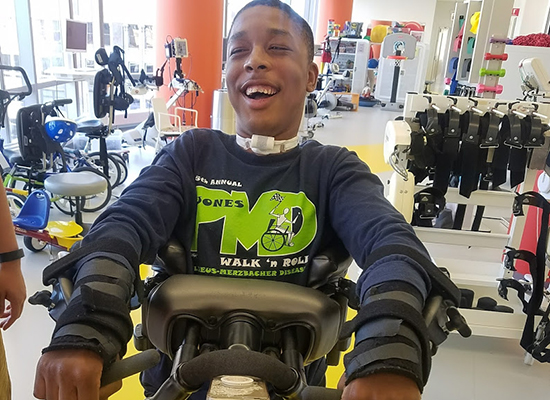
Illinois awaits approval to use FMAP funds for improving care for our Home Care Program participants
Illinois has developed a plan to use increased federal funding to improve support and services for children and youth with complex medical needs.
This plan incorporates valuable feedback from our participants, stakeholders and staff members at the University of Illinois Chicago’s Division of Specialized Care for Children (DSCC).
The extra funds are part of the American Rescue Plan Act of 2021. The act gives Illinois a temporary 10 percent increase in federal funding for home and community-based services (HCBS). This 10 percent increase is called the Federal Medical Assistance Percentage or FMAP.
Illinois must use the FMAP funds to enhance, expand or strengthen HCBS.
HCBS includes the waiver for children who are medically fragile and technology-dependent (MFTD). Therefore, the FMAP can provide extra funds to help support children and youth in the Home Care Program and their caregivers. FMAP improvements will also affect individuals who receive in-home, shift-based nursing as a non-waiver benefit.
In late May, DSCC asked our participant families, staff and community partners for input on how to use the FMAP funds. We also sought feedback on DSCC’s ideas for improving HCBS for Home Care participants.
We shared the input we received with the Illinois Department of Healthcare and Family Services (HFS). We then worked with HFS to develop Illinois’ proposal for using the FMAP funds.
Ideas included in the proposal are:
- Expand consumer direction (the ability for consumers to make choices about the services they receive) to allow unlicensed family caregivers to be paid caregivers. DSCC would then work to develop health and safety monitoring, assist with training and more. This change could provide caregiver relief to a large number of Home Care families.
- Develop a nursing portal where open shifts could be posted by nursing agencies and families. This portal would be visible to home nurses and families. The intent is to try to improve nursing coverage for open shifts across the state.
- Improve training and access to training to help improve the quality of nursing care in the home. This initiative would include developing training that builds on and complements existing training for caregivers in the home.
- Increase the in-home respite nursing rates to match the rates from the 2019 nursing rate increase.
- Increase the child-specific training rates to match the rates from the 2019 nursing rate increase.
HFS submitted Illinois’ proposal to the federal Centers for Medicare and Medicaid Services in July. We are now awaiting its approval and planning for the necessary next steps.
It is important to note that though the FMAP funding increase is temporary, we hope to make many of these changes permanent. We are discussing how to handle any relevant long-term costs with HFS.
We are excited about this opportunity to improve care for our Home Care Program participants.
Thank you to everyone who took the time to share their ideas and feedback with us.
We will continue to share updates on the status of Illinois’ proposal as they become available.
DSCC Participant Creates Hospital Library for Teen Patients
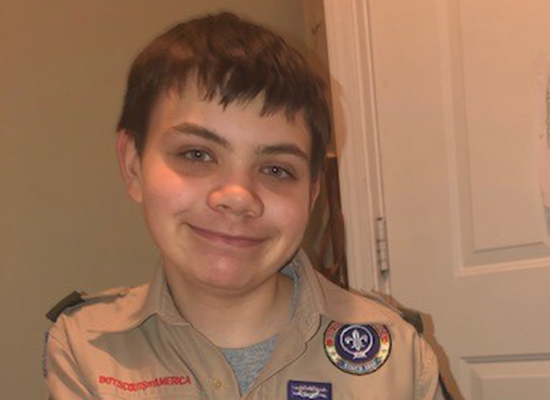
Nathan Lichucki is collecting donations for a teen library at Edward Hospital in Naperville for his Eagle Scout Service Project
Nathan Lichucki has spent a lot of time at Edward Hospital in Naperville.
The 14-year-old receives regular infusions there to treat his rare disease.
“Every 21 days, I go for infusions, and I know the hospital very well. The child life specialists there are really good. They give us things when we have hard days, but they don’t usually have stuff for older kids,” Nathan said. “I really like to read, and it is an easy thing to do while you are there. They said they were running out of things for older kids because nothing was being donated during COVID.”
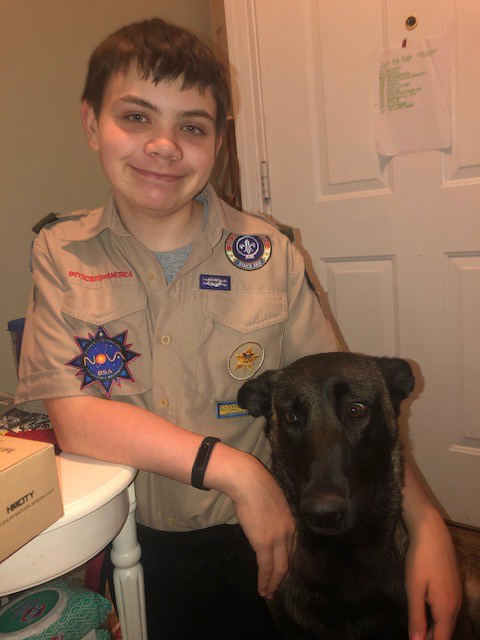
Nathan is also a longtime Scout who is working to achieve the highest rank of Eagle Scout. To earn it, Nathan must complete a service project to show his leadership skills.
Nathan saw a need at Edward Hospital firsthand and decided to create a library for teen patients. The library will include a cart, various books and activities aimed at young adults.
“Many times, kids are in the hospital for several days at a time. There is not good cell service on the PICU (pediatric intensive care unit) side and if you have certain monitors on, a tablet has to be away from your body,” Nathan explained.
“I thought that if kids could have something to occupy them at least for a while, that would be very beneficial. I have been in the hospital lots of times, more than I can count, and you get super bored, especially when you start feeling better but cannot go home yet.”
Nathan worked with Edward’s Child Life Team to come up with a list of items to collect for the teen library. Nathan is collecting the following:
- Books for ages 12-17
- Blank journals
- Colored pencils/markers/adult coloring books
- Puzzle books (crossword, sudoku, etc.)
All items must be new due to the hospital’s infection control policies.
“The kids get to take the books and games home, so they are useful not just at the hospital but also at home,” Nathan said of the library.
He has sent letters to friends, families and businesses to request donations for the library. He has also set up an Amazon wish list that anyone can access and purchase items to ship to his home.
Local donors can also drop off items at Illinois State Rep. Terra Costa Howard’s Office at 913 S. Main St. in Lombard.
“Everyone thought that my project is a super idea for a project and one that has not been done. The child life specialists were super excited for me to build the library for the patients and they have been very helpful in making sure that I have the right items on the wish list to make sure that they would be used,” Nathan said. “I want to make sure that there are lots of choices for the kids.”
Nina Sittler, a certified Child Life Specialist at Edward Hospital, said she loves that Nathan’s project focuses on an age group that is often overlooked for donations.
“A unique element that Nathan is incorporating is he is asking for book series. We would often get individual books from a series but rarely the entire series. It will be nice to offer the entire series to one patient,” she said.
The deadline to complete Nathan’s Eagle Project is Aug. 2. However, Nathan and his family expect to continue collecting donations on an ongoing basis to help keep the teen library stocked.
Nathan said he’s been happy with the number of donations coming in so far. His health conditions make him highly susceptible to infections, so his troop members have helped pick up items directly from donors when it isn’t safe for Nathan to do so.
Nathan has a primary immune deficiency and a rare disease called Stiff Person Syndrome (SPS) along with other complicating diagnoses. He is enrolled with the Division of Specialized Care for Children (DSCC) in the Home Care Program.
“SPS is very hard. It makes my muscles very stiff. I cannot hold parts of my body without them shaking a lot. It makes it hard to write, speak and walk. I cannot move my hands a lot and they get locked into place sometimes,” Nathan explained. “ It sometimes pops my joints out of place. I cannot walk very far. I use braces and my wheelchair so that I can get farther. My face and chest get a lot of muscle spasms, and it makes me forgetful when it attacks my brain.”
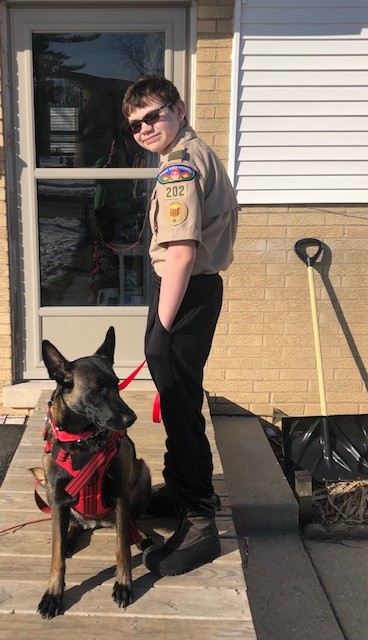
Nathan has a beloved service dog named Dakota. Dakota, a 4-year-old Belgian Malinois, monitors his blood sugar and helps him with his balance when he is moving outside of his wheelchair.
As a DSCC participant, Nathan and his family work with their DSCC Care Coordinator to identify goals for the transition to adulthood and self-management. One of Nathan’s goals in this area was to participate in Scouts with minimal medical interruption.
Nathan loves scouting and was inspired by his four uncles, who all earned the rank of Eagle Scout. Nathan’s grandfather was also a scoutmaster for 20 years.
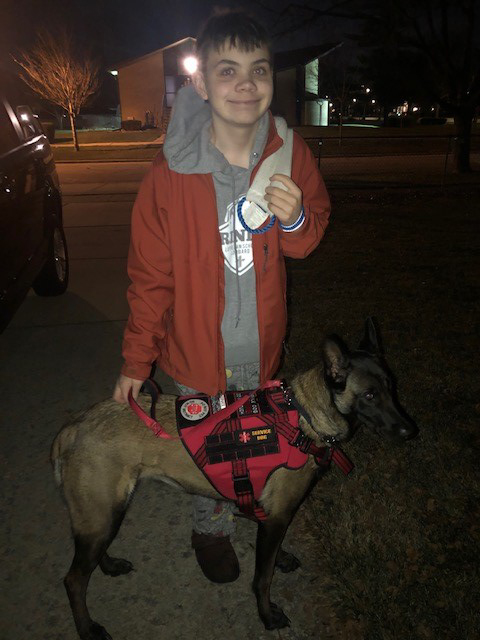
Nathan is currently the librarian for Troop 202.
“My troop does a great job of including me by giving me jobs that don’t have a lot of dexterity and don’t require a ton of small movements. My friends are in my troop and we liked to hang out before the pandemic, now we just text each other,” Nathan said.
He enjoys all scouting activities, including camping, hiking and looking at wildlife. He has earned 63 merit badges to date — only 21 are required for the rank of Eagle.
“Nathan is a very dedicated scout who holds true to the 12 points of the scout law. Despite all he has to endure health-wise, he always keeps a positive attitude and does what he can to help others in his troop and community,” Troop 202 Assistant Scoutmaster Dave Andrusyk said. “This past summer, he took advantage of many of the virtual offerings for merit badges and he stayed active in scouting. The many badges and awards he earned show how dedicated and resourceful he is.”
Nathan appreciates the friendships he’s made through Scouts and encourages other young people to give it a try.
“Helping other people is a huge part of scouting and there are many ways to do scouting. You can ask people what they need and then provide that as a service,” he said. “You don’t have to stop scouting when you are sick, you can find your own path and do things at your own pace and do a lot of stuff from home and if you pick a good supportive troop, that is very important.”
Important Clarification on In-Home Supervisory Visits for Home Care Families
UPDATED: In-home nurse agency supervisory visits are still optional for most Home Care Program families
We have an important clarification to share about the status of home nursing agency supervisory visits.
A previous version of this post stated that home nurse agency supervisory visits must now resume in-person without exceptions for all Home Care Program participants. That information is no longer accurate.
We have received clarification from the Illinois Department of Public Health (IDPH). The department’s June 24 notice about required in-person supervisory visits only applies to home health aides (CNAs) providing care in the home. It does not apply to all nurses working in the home.
At this time, in-person supervisory visits are only required when:
- A CNA is providing care in the home.
- The parent/guardian is a licensed nurse and providing care as a paid caregiver in the home.
If your home nursing care does not fall in these categories, in-person supervisory visits are not required and remain optional. (Please note that DSCC still encourages nursing agencies to perform in-home supervisory visits when possible to ensure the health and safety of our participants.)
We apologize for the confusion!
The emergency amendments that suspended in-person supervisory visits during the pandemic are still in place.
If you have questions or additional concerns about the status of in-home supervisory visits, please contact your DSCC Care Coordinator.
Our DSCC Team will continue to prioritize the health of your child and family and work with our state partners to provide guidance and support.
Once again, we regret any confusion and are happy to help answer any questions and address your concerns.
Thank you for your understanding.
Resources for LGBTQ+ Youth With Disabilities and Their Families

DSCC aims to help families strengthen their support to promote young people’s health, safety and wellbeing.
The University of Illinois Chicago’s Division of Specialized Care for Children (DSCC) wants to help Illinois families strengthen their support for LGBTQ+ youth with special healthcare needs and disabilities.
June is Lesbian, Gay, Bisexual, Transgender and Queer (LGBTQ+) Pride Month. There are approximately 5 million LGBTQ+ individuals with disabilities in the United States, according to the nonprofit RespectAbility.
Our DSCC team can provide resources to help our participant families, healthcare providers and community partners understand and support LGBTQ+ youth and their needs.
Research shows that family involvement in an LGBTQ+ youth’s life, particularly in the first two years of coming out, improves their overall safety, health and long-term well-being.
Teaching children about self-awareness and self-care at a young age can lead to better health and safety as a teenager. Helping a child establish boundaries is also linked to better teen health and safety.
Former DSCC Quality Specialist Diane Becker has studied research in these areas. Diane is a nationally certified juvenile treatment specialist and a licensed clinical social worker. She has worked with families and professionals in the social work and counseling fields for 30-plus years.
Diane appeared on the “Just Breathe: Parenting Your LGBTQ Teen” podcast last year to talk about mental health, boundaries and self-care for both LGBTQ+ young adults and parents.
She shared the latest research and discussed the importance of connectedness, family and health and safety.
You can listen to Diane’s two-part interview at the links below –
- What Are These Boundaries You Speak Of? An Interview with Diane Becker Part One
- What Are These Boundaries You Speak Of? An Interview with Diane Becker Part Two
We also encourage Illinois families of LGBTQ+ youth with special healthcare needs to contact us with their questions and concerns. You can call us at (800) 322-3722 or email us at dscc@uic.edu to learn more about available resources and support.
You can also visit our online Resource Directory.
Featured resources that can help support LGBTQ+ youth and their family/caregivers include:
National and Statewide Crisis Hotlines
- Find a Helpline
- National Suicide Prevention Lifeline
- National Domestic Violence Hotline
- The Substance Abuse and Mental Health Services Administration’s (SAMHSA) National Helpline
- Illinois Crisis and Referral Entry Services (CARES) Line
- Illinois Warm Line
- National Runaway Safeline
Connections
- The Trevor Project
- Central Illinois LGBTQ+ Organizations
- Chicago and Illinois Mental Health Agencies and Organizations
- Strong Family Alliance
- PFLAG Parent Support and Resources
- “Expressing, Coping, Reframing: Addressing the Mental Health of ‘Quaranteens’ in the Time of COVID-19”
- It Gets Better Project
Find a Healthcare Provider
- University of Illinois Hospital & Clinics’ Inclusive Healthcare and Policies
- Gender Development Program at Ann & Robert H. Lurie Children’s Hospital of Chicago
- GLMA
- OutCare Provider Directory
Education
- Illinois State Board of Education LGBTQ Student and Family Resources
- Advocating for LGBTQ Students With Disabilities
- Know Your Rights: Students and LGBTQ Rights at School
Information
Scholarships for Illinois Adults With Spina Bifida
Three scholarship opportunities available
Are you an Illinois adult living with spina bifida and continuing your education?
The Illinois Spina Bifida Association (ISBA) is now accepting scholarship applications for the 2021-22 school year.
Several scholarships are available and may be used for a range of post-high school adult education, including:
- Two- and four-year college programs
- Graduate school
- Online courses
- Technical or trade schools
- Other continuing education opportunities
The ISBA scholarship application is available at https://i-sba.org/programs#scholar.
The ISBA’s three scholarship opportunities are:
- The Patrick Juris Scholarship is awarded to a student with spina bifida preparing for a field of service that helps others.
- The Valiant Scholarship is awarded to a student who displays outstanding leadership, goodwill toward those less fortunate and dedication to making a difference.
- The Mary Mayer Scholarship is in memory of a fiercely independent individual with spina bifida.
For more details about these memorial scholarships, see the ISBA scholarship application.
The deadline to submit scholarship applications is July 17.
For more information, contact (773) 444-0305 or info@i-sba.org.
Podcast Highlights DSCC “Resource Hunter”

Mom’s new podcast features Care Coordinator Amanda Kaufman and how she helps children with medical complexity through DSCC
As a Care Coordinator in the Home Care Program, Amanda Kaufman guides parents and caregivers as they learn to care for their medically complex children at home.
One of those parents formerly on her caseload is Erica Stearns. Erica is the mother of two Home Care participants, 5-year-old Margot and 3-year-old Caratacus.
Earlier this year, Erica started a podcast called, “Atypical Truth.” The podcast focuses on issues affecting caregivers, individuals with disabilities and individuals with complex medical conditions.
Erica recently invited Amanda on the podcast to talk about her role at the Division of Specialized Care for Children (DSCC), where she works in our St. Clair Regional Office.
During the conversation, Erica spoke about how Amanda and DSCC have provided invaluable support to her family:
“DSCC was one of the first organizations to step into our lives. They were some of the first social workers who came into our home and really began helping us to navigate our new lives with a medically complex child.
The beginning of this experience was actually very difficult. It occurred during a time when I was still learning how to cope with the acceptance of the unexpected that came with this unknown diagnosis.
DSCC has played a tremendous role in helping our family to thrive, really. Not only have they helped to provide the means for us to care for our children at home rather than in a hospital or an institution, they’ve also supported us emotionally throughout every step of this journey.
They are the people who we can guarantee to check in on us regularly, to tell us about a resource or a charity that might benefit our children, and they even go so far as to send birthday cards to each of the kids, which I just can’t express it enough how touching and heartwarming that singular gesture is.”
Amanda talked about her background as a social worker and her passion for connecting families to the right resources.
“I love finding resources, and I love being successful at finding something that a family needs,” Amanda told Erica.
Amanda also shared how caring for her late mother now helps her relate to her participant families’ challenges and emotions.
You can access the entire podcast episode, titled “Resource Hunter,” on the Atypical Truth website. It is available for listening on all popular podcast streaming services.
A big thank you to Erica for featuring DSCC and highlighting Amanda’s compassion and commitment to our participant families!
Tell Us How Illinois Can Better Support Children With Medical Complexity
Federal funds are available to help enhance, expand and strengthen home and community-based supports for children with complex medical needs
We’re excited to announce a unique opportunity for you to share feedback to help Illinois improve its support and services for children and youth with complex medical needs.
In March, President Joe Biden signed the American Rescue Plan Act of 2021 in response to the COVID-19 pandemic. Under this act, Illinois can qualify for a temporary 10 percent increase in federal funding for home and community-based services (HCBS). This 10 percent increase is called the Federal Medical Assistance Percentage or FMAP.
Illinois must use the FMAP funds to enhance, expand or strengthen HCBS beyond what is available under the Medicaid program as of April 1, 2021.
HCBS includes the waiver for children who are medically fragile and technology-dependent (MFTD). Therefore, the FMAP can provide additional funds to help support children and youth in the Home Care Program and their caregivers.
Illinois must submit its ideas for how to use FMAP funds to the federal government by June 12.
We’ve put together a brief overview of the FMAP requirements. The video features Molly Hofmann, our Director of Care Coordination, Systems Development and Education, and Stephanie Leach, our Assistant Director of Operations for Home Care for our southern offices and our Illinois Department of Healthcare and Family Services (HFS) Liaison.
Please watch their short presentation below –
We’d like to know what you think about the Division of Specialized Care for Children’s (DSCC) suggestions. What concerns do you have about them? What additional ideas do you have?
Please send your thoughts to dscc@uic.edu with the subject of “FMAP Feedback” by June 6, 2021.
For more information about the available FMAP funds, you can review the public notice on the HFS website. The notice includes HFS’s suggested recommendations for improving HCBS services.
HFS also has a form to collect feedback from families, caregivers and other stakeholders. You can download the HFS feedback form and email it to HFS.HCBSWaiver@illinois.gov no later than June 4, 2021.
A note that DSCC’s and HFS’s ideas for improvement are simply suggestions at this time.
Summer Camp and Enrichment Opportunities for All Abilities

In-person and virtual activities to help youth with and without disabilities stay engaged and learning this summer
Summer is quickly approaching. And though the COVID-19 pandemic is not yet over, the ease in safety restrictions means more in-person activities will be available for this year’s break from the school year.
If you’re looking for a way to help your child stay engaged and learning, we’ve compiled a list of both in-person and virtual summer camp activities and enrichment programs for youth of all ages and abilities.
Our list of inclusive activities includes daily adventures, arts and crafts, sports camps, college preparation opportunities and condition-specific programs.
Our events calendar shows the activities listed by date. You can also search for programs in your area by clicking on a regional office near you.
For more virtual learning and educational resources for youth, visit the Childcare, Learning and Education Tools section of our COVID-19 Resource Directory.
Know of an in-person or virtual summer camp opportunity to add to our list?
Send us the details at dscc@uic.edu. We’ll continue to update our list of camps and activities, so please check back often.
Free Course On How to Care for Children With a Trach
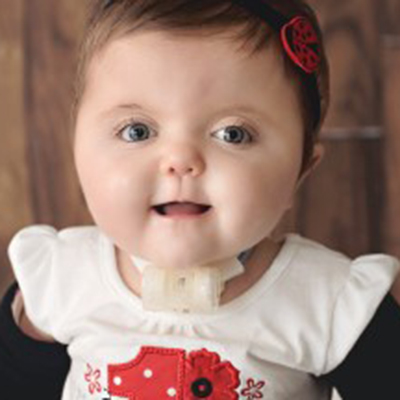
NOTE: Please see our updated post “Free Virtual Training Program on Caring for Children With Complex Medical Needs at Home” for the latest information.
A free course is available for how to care for children with a tracheostomy (trach) with/without a ventilator.
The course is available online until Dec. 31, 2021.
eHomeCare is an online training program designed to provide comprehensive information for those caring for children with a trach with/without a ventilator.
This training is for:
- Nurses working in home-based environments
- Physicians
- Respiratory therapists
- Family members and caregivers of children with trachs with/without ventilators
- Anyone interested in learning more about caring for this population
The eHomeCare course includes five modules:
- Pediatric Airway and Tracheostomy
- Oxygenation and Ventilation
- Suctioning and Bronchial Hygiene
- Tracheostomy Care and Tube Changes
- Emergency Preparedness
It will take about four to five hours to complete the course.
Free continuing education credits are available.
Learners can use this course for their initial training, an annual review and/or as an ongoing resource.
Participants must create an account and enroll on the eHomeCare webpage.
If you have questions, please contact whitmore.research@son.wisc.edu.
Former DSCC Employee Wins Lifetime Achievement Award
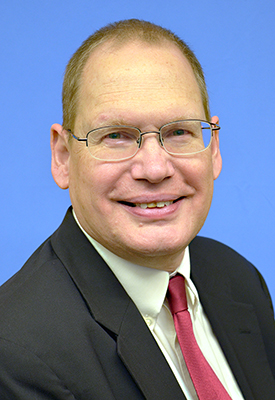
Ralph Schubert honored for 40 years helping Illinois children and families
Ralph Schubert has received the Title V Lifetime Achievement Award from the federal Maternal and Child Health Bureau.
Ralph is the former Associate Director for Title V Programs at the University of Illinois Chicago’s Division of Specialized Care for Children (DSCC). He retired in August 2020.
The award recognizes outstanding contributions to the field of maternal and child health over time.
“He’s been a tireless and lifelong advocate for children,” said Dr. Michael Warren, the Associate Administrator of the Maternal and Child Health Bureau.
Ralph has 40 years of public health experience in various local, state and federal positions in Illinois.
“I never expected to be considered for this award let alone selected to receive it,” Ralph said. “I am deeply honored.”
Before joining DSCC, Ralph spent a combined 30 years at the Illinois Department of Public Health and Illinois Department of Human Services.
His leadership positions at these agencies included Manager of Maternal and Child Health Grants and Program Development Unit. Ralph also served as the acting Associate Director for Family Health and the Associate Director for Program Planning and Development, where he was responsible for developing and implementing a new community health and prevention program.
He later became the Director of Public Policy for the Illinois Public Health Association before joining DSCC in August 2016.
Ralph said a major highlight of his career was helping lead the Healthy Families Illinois initiative.
Healthy Families Illinois is a home visitation program to support new and expectant parents and improve children’s safety. He collaborated with a group of 75 advocates, service provides and others to design, implement and expand this program.
Ralph’s work with Healthy Families Illinois earned him the Friend of Children Award from Prevent Child Abuse Illinois and a Leadership Award from Voices for Illinois Children.
Ralph said he is grateful for the people he has worked with for supporting him and challenging him to be better throughout his career.
Now that he is retired, Ralph is pursuing his third master’s degree and plans to do mission work in Africa.
Congratulations, Ralph, and thank you for your service!