


Participant Families: Share Your Preference for In-Person Visits
Complete a short survey to share your input and comfort level
As we move out of the pandemic phase of COVID-19, we’re planning for how to best support our participant families. These plans include how our Division of Specialized Care for Children (DSCC) team meets with families.
We want to know how you and your family feel about returning to in-person meetings and home visits.
You can click on this survey link to share your input. The survey is only six questions and shouldn’t take long to complete.
The survey is available in English and Spanish. It will be open through March 25.
Our goal is to serve you and your family in the safest and most comfortable way possible. Your survey responses will help us understand your comfort level and plan accordingly.
We appreciate your time and feedback!
We also encourage you to check our COVID-19 Resource Directory often for the latest information on testing options, assistance programs, health guidance and more.
Our next “Resource Roundup” newsletter will go out later this month. It highlights recent additions and updates to our Resource Directory as well as news and upcoming events. Fill out this brief subscription form to join our newsletter mailing list.
If you need help with specific needs or have questions about available resources, please contact your DSCC Care Coordinator.
Free At-Home COVID-19 Test Options for Families

* Please see our updated news post, “New Round of Free At-Home COVID Tests Now Available,” for the most up-to-date information about free COVID-19 test availability. *
If you need a COVID-19 test, there are many ways you can test at home for free.
COVID-19 home test kits are available at no cost by mail or pick-up at specified locations.
You may also be eligible for insurance reimbursement or Medicaid coverage at participating pharmacies. Here is a summary of the current options:
- Every home in the United States is eligible to order another round of free at-home tests through the U.S. Postal Service (USPS) at https://special.usps.com/testkits. Please note:
- Limit of one order per residential address.
- Your order will include four individual rapid antigen COVID-19 tests.
- Orders will ship free.
- For those who cannot access the internet or need help placing an order:
- Call (800) 232-0233 or the TTY line at (888) 720-7489 to get help in English, Spanish and more than 150 other languages.
- USPS is also distributing more accessible tests for individuals who are blind or have low vision. The tests work with a compatible Bluetooth-enabled smartphone and a free app to provide users with audible instructions and audible test results. You can order these accessible tests at https://special.usps.com/testkits/accessible or by calling (800) 232-0233. Please note:
- There is a limit of one order per residential address.
- Each order includes 12 accessible rapid-antigen tests.
- Supplies are limited. Please do not order the more accessible tests if you have options for using the standard tests.
- Orders ship free while supplies last.
- Free COVID-19 rapid tests are available for vulnerable Illinoisans. The Illinois Department of Public Health (IDPH) is distributing at-home, over-the-counter COVID-19 rapid antigen tests to economically disadvantaged Illinois families in zip codes outside the city of Chicago. Tests are available on a first-come, first-served basis and will be delivered to your home address. To learn if your household is eligible for one package of five tests visit the Project Act website.
- Note you can find free COVID-19 testing locations on IDPH’s testing locator page.
- If you have health insurance through an employer or Marketplace, your insurance will pay you back for eight at-home tests each month for each person on your plan.
- The Illinois Department of Healthcare and Family Services (HFS) will allow Medicaid-participating pharmacies to prescribe and bill for COVID-19 home test kits.
- This coverage went into effect on Jan. 1, 2022, and applies to Medicaid fee-for-service and HealthChoice Illinois managed care plans.
- Individuals with disabilities can also contact the Disability Information and Access Line (DIAL) for help with available testing options, including ordering free at-home test kits.
- Contact DIAL Monday through Friday from 8 a.m. to 7 p.m. at (888) 677-1199 or email DIAL@usaginganddisability.org.
- Individuals who are deaf and hard of hearing can reach DIAL using the 711/Video Relay Service (VRS).
If you have questions about testing your child, this article from HealthyChildren.org gives a helpful overview of the different types of COVID-19 tests available and what parents need to know.
Your child’s pediatrician can help you determine when testing is a good idea and which type of test would be best. Please contact their office with any questions.
For more information on testing options, assistance programs and caregiver support, visit the Division of Specialized Care for Children’s COVID-19 Resource Directory.
New Law Empowers Adults With Disabilities to Make Their Own Choices

The Supported Decision-Making Act takes effect Feb. 27 and allows individuals with disabilities to make decisions with help from trusted supporters
When making decisions, we all rely on help and advice to choose what’s right for us.
A new Illinois law ensures people with disabilities can get the help they need to make decisions for their own lives.
The Supported Decision-Making Act empowers individuals with disabilities to make their own choices with the right support. It takes effect on Feb. 27.
Research shows that when persons with disabilities have more control over their lives, they experience better health and wellbeing. However, many persons with disabilities have faced unnecessary and restrictive guardianships once they turn 18 simply because of their disability.
Supported decision-making is an alternative to guardianship. It allows individuals with disabilities to identify a supporter. This supporter can help interpret information, weigh options and help communicate the person’s decisions in certain areas as needed.
These areas can include:
- Where to live
- Medical care or counseling
- Money
- Work
- School
- Public benefits and more
An identified supporter is someone the person with disabilities knows and trusts. It can be:
- A friend
- A family member
- A co-worker or colleague
- A person with professional skills
Under the act, the person with disabilities fills out a Supported Decision-Making Agreement. The agreement identifies the supporter and what areas the person with disabilities needs support with.
This agreement ensures that the person with disabilities makes decisions and not the identified supporter.
This process promotes self-sufficiency and control for individuals with disabilities.
Illinois is among several states that have supported decision-making laws in place.
The Illinois Guardianship and Advocacy Commission has many resources to explain the new Supported Decision-Making Act. These include:
- Supported Decision-Making Fact Sheet
- Supported Decision-Making Frequently Asked Questions
- Supported Decision-Making Training for Persons With Disabilities
Family Matters Parent Training & Information Center is also hosting an upcoming webinar on the Supported Decision-Making Act.
The presentation will provide an overview of the law. It will also review the contents of a Supported Decision-Making Agreement and share examples of how supported decision-making works.
The “Supported Decision-Making in Illinois: What Is It and How Does It Work?” webinar will take place at 11 a.m. Feb. 22.
Additional resources on supported-decision making are available in the Guardianship and Alternatives section of our Transition Tools.
Parent Education Workshop Series Open to All DSCC Families

DSCC partners with IL LEND to offer an online space for parents to learn about important topics, gain resources and discuss strategies
A new webinar series provides an online space for parents and caregivers to access educational workshops, learn about resources and discuss strategies and support needs.
The series is open to all parents and caregivers of children enrolled with the University of Illinois Chicago’s Division of Specialized Care for Children (DSCC).
It’s the result of a partnership between DSCC and UIC’s Leadership and Education in Neurodevelopmental and related Disabilities Program (IL LEND).
There is no cost for families to participate.
Please note this workshop series now has a parent education focus rather than a traditional support group.
The virtual workshops will take place via Zoom on the third Wednesday of the month through April.
Workshops topics may include:
- Respite care
- Feeding
- Ventilator maintenance/cleaning
- Transportation
- Navigating relationships with staff
The workshop schedule is for the following dates from 7 to 8 p.m.:
- Feb. 16
- March 16
- April 20
The topic for the Feb.16 session is Early Intervention. The guest speaker is Maria Kastanis, assistant director of the Early Intervention Training Program (EITP) at the University of Illinois at Urbana-Champaign.
The details and registration information for the next meeting are below:
- WHAT: Educational workshop series for parents/caregivers of children and youth enrolled in DSCC’s programs
- WHEN: Feb. 16, 7 to 8 p.m.
- TOPIC: Early Intervention (Note: the discussion part of the workshop will include a facilitator for Spanish-speaking families.)
- WHERE: Virtual via Zoom
- Registration link
Visit the workshop series website for more details about the series and individual meetings.
We’ll also post details about upcoming meetings in the Events section of our website.
If you have questions about the series or an individual meeting, please fill out the Contact Us section of the workshop series website.
Transition Conference Prepares Youth With Disabilities for Adulthood
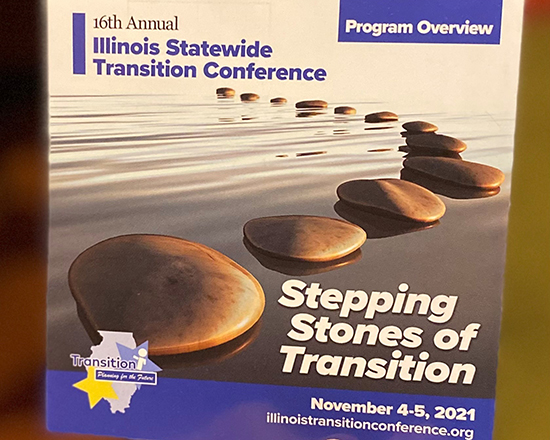
Families and professionals came together in person and virtually at the annual Stepping Stones of Transition Conference in East Peoria to improve outcomes for transition-age youth with special needs
As a single parent raising a child with complex medical needs, Kristen Fisher says it’s easy to feel isolated.
The feeling subsided as she walked through the East Peoria Riverfront Conference Center and saw dozens of other parents and youth with similar needs.
“Seeing everyone at the conference and meeting other parents, it helps confirm that I’m not alone,” Kristen said.
The Illinois Statewide Transition Conference, titled “Stepping Stones of Transition,” returned for its 16th year on Nov. 4-5 in East Peoria after a one-year absence due to the COVID-19 pandemic.
More than 660 families and professionals gathered in-person and virtually to gain skills, resources and information to help youth with disabilities prepare for adulthood.
The University of Illinois Chicago’s Division of Specialized Care for Children (DSCC) is a conference sponsor and served on its steering committee.
DSCC covered the conference-related expenses for 33 of our participant family members across the state.
A “Phenomenal” Experience
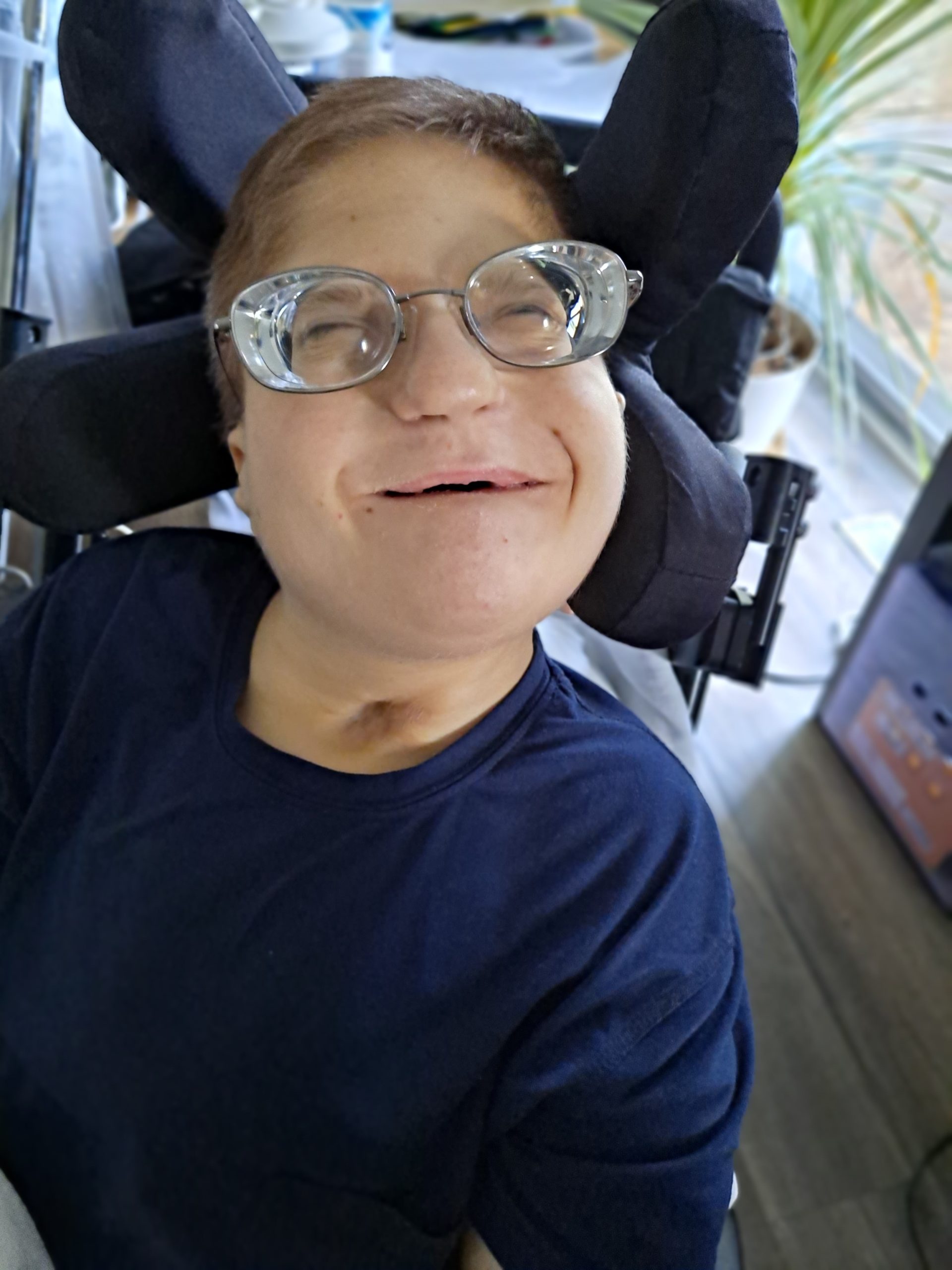
Kristen is the mother of DSCC participant Connor Fisher, who will soon turn 15 years old. He was born prematurely with profound delays and a “smile that will melt your heart,” she said.
This year’s conference was Kristen’s first and she called the experience “phenomenal.”
“It’s hard to grasp that my baby is not a baby. He’s growing up. It’s a scary transition,” she said.
Kristen particularly enjoyed the breakout session “SSI, SSDI, HFS: Understanding the Alphabet Soup of Government Benefits.” She gained a better understanding of available government benefits and how they change over the lifetime.
DSCC mom Amy also learned helpful information during the breakout session on government benefits. She said financial planning is an important part of preparing for her daughter Jaida’s future. Jaida, 17, has been a DSCC participant since just after birth.
Eighteen-year-old DSCC participant RJ Smith attended the conference with his mom, Karla. It was the first time attending for both.

RJ is a senior in high school who plays the baritone in his high school band. He wants to go to culinary school after graduation to become a baker.
He picked all the conference breakout sessions that he and Karla attended.
One of their favorites was about the Fast Track Transition Program through the Illinois Department of Human Services’ Division of Rehabilitation Services. The program provides pre-employment transition services to students with disabilities.
RJ said he is ready for more independence, and Karla said the session helped open her eyes to more options to help achieve that.
“I want to help him become more independent and push him toward that but not just leave him sitting the middle of the road, stranded,” Karla said. “(The conference) overall has been helpful.”
Preparing for Life After Graduation

The conference consisted of informative breakout sessions in the areas of:
- Employment
- Education
- Community
- Health Care
DSCC participant Michael Rounds, 15, said he enjoyed the breakout session on the Culture of Coordinated Support Model. This model is where people with disabilities, families, supporters, agencies and service providers work together to develop and implement consistent support plans with unified goals and services provided by the provider best suited to do so.
Michael said the session made him think about getting more involved with his Individualized Education Program (IEP) at school. He also liked learning more about what choices are available to him as he plans for his future.
His mother, Lori, said the conference helped her know where to start in preparing Michael for life after high school graduation.

Rosa Menard, mom to 17-year-old DSCC participant Jacob, said the amount of information to soak up over the two-day conference was almost overwhelming. She took many notes about potential resources and programs to discuss during Jacob’s next IEP meeting.
Jacob is non-verbal and she wants to set him up for success after high school.
Rosa encouraged other families to start the transition planning process as soon as possible.
“Start asking those questions now,” she said.
Improving Outcomes
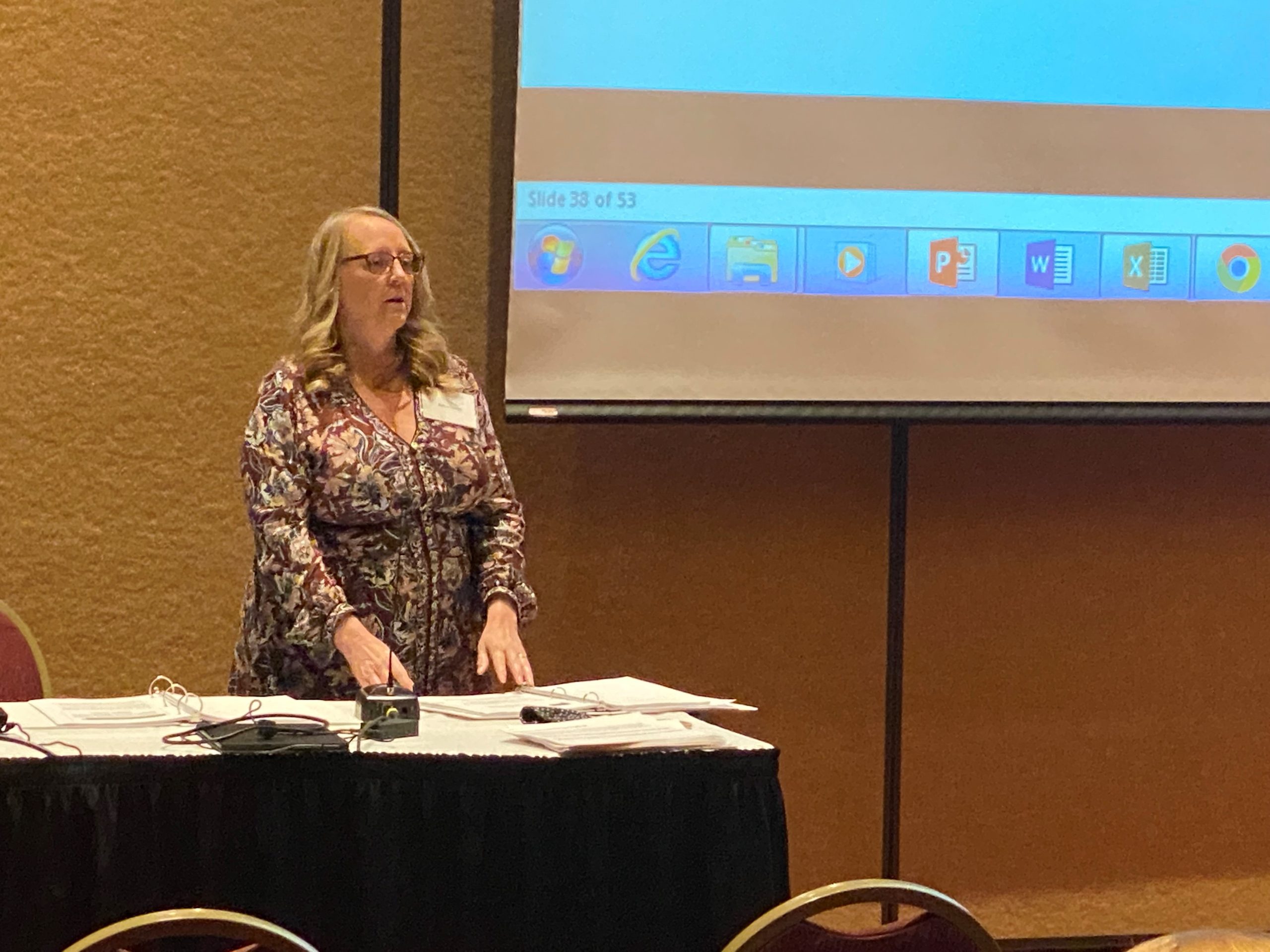
Nearly 40 DSCC staff members attended the conference in-person or virtually to network, learn from others and strengthen their skillsets and tools to serve our families.
DSCC also sponsored the conference’s health care track for providers who play a role in the transition from the pediatric to adult healthcare system and those who build youth’s capacity and healthcare skills to prepare for adulthood.
DSCC Transition Specialist Darcy Contri said attending providers found helpful tips and information they will apply in their own practices and interactions with youth and families. These changes include:
- Starting the transition planning process sooner with patients and families
- Making sure the youth and their family are included in all decision-making and planning
- Keeping a holistic view of the patient and noting environmental barriers for their family
- Emphasizing self-determination when working with youth and families on transition goals
- Discussion of self-management strategies with youth and families
Darcy has been involved with planning the conference for the last 16 years.
“Every year it has been exciting to see the positive impact the transition conference has on improving outcomes for Illinois transition-age youth and their families,” she said.
Visit our Facebook page to see more photos from this year’s conference.
New Support Group and Workshop Series for Home Care Families
UPDATE: Please note this support group is now open to all families of children enrolled with the Division of Specialized Care for Children. See the latest support group news for more details.
The University of Illinois Chicago’s Division of Specialized Care for Children (DSCC) is partnering with UIC’s Leadership and Education in Neurodevelopmental and related Disabilities Program (IL LEND) to offer a support group for families enrolled in the Home Care Program.
The Home Care Program helps children and adults who require in-home nursing care. DSCC operates the Home Care Program on behalf of the Illinois Department of Healthcare and Family Services.
This support group will provide an online space for parents to access educational workshops and swap concerns, resources and strategies.
There is no cost for families to participate.
The group will meet on the third Wednesday of the month from November through April.
Workshops topics may include:
- Respite care
- Feeding
- Ventilator maintenance/cleaning
- Transportation
- Navigating relationships with Home Care staff
IL LEND would also like to hear families’ ideas for future support groups and workshop topics. You can share your feedback on this brief online form.
The support group schedule is for the following dates from 5:30 to 6:30 p.m.:
- Nov. 17
- Jan. 19
- Feb. 16
- March 16
- April 20
Here are details for the first session:
- WHAT: Virtual support group/workshop series for parents/caregivers of children and adults enrolled in the Home Care Program.
- WHEN: Nov. 17 from 5:30 to 6:30 p.m.
- TOPIC: Navigating the COVID-19 Pandemic (Note, the discussion portion of the support group will include a facilitator for Spanish-speaking families.)
- WHERE: Virtual via Zoom
- REGISTER: Please sign up online in advance. After registering, you will receive a confirmation email containing information about joining the workshop discussion via Zoom.
New Law Extends Illinois Early Intervention Services

Starting in January 2022, children with summer birthdays may continue Early Intervention services until the beginning of the next school year.
A new Illinois law will stop a gap in services for children with summer birthdays who receive Early Intervention (EI) services.
Senate Bill 820 (Public Act 102-0209) allows children to continue EI services until the beginning of the next school year if their 3rd birthday is between May 1 and Aug. 31.
The law will take effect on Jan. 1, 2022.
The Illinois State Board of Education’s (ISBE) Early Childhood Department explained that this extension of Part C services to children over the age of 3 applies only if the child:
- Reached age 3 on or after May 1 of the current year through Aug. 31
- Enrolled in EI and received services before their 3rd birthday
- Is eligible for preschool serivces under Section 619 of the Individuals With Disabilities Education Act (IDEA) and
- Is found eligible for an Individualized Education Program (IEP) under IDEA and Section 14-8.02 of the School Code
If a child meets all the above criteria, their parents/guardians have the option to remain in EI until the beginning of the next school year or move to early childhood special education services (ECSE) through the school district.
ISBE notes that children enrolled in EI and turning 3 will still need an evaluation, if warranted, and an IEP developed, if qualified, before their 3rd birthday.
If families decide to begin ECSE services, they will not be able to return to EI services once they have ended.
Families can discuss potential eligibility for this extension with their Early Intervention Service Coordinator.
Tell Us About Your Home Nursing Experience
A brief survey for Home Care Program families will help us improve service and support
Attention all families in the Home Care Program! We want to know how well your family’s nursing agency is meeting your needs.
The University of Illinois Chicago’s Division of Specialized Care for Children (DSCC) team has put together a short, 10-question survey for families to complete.
We will not share your individual survey responses with anyone.
There is no requirement to share your name or your child’s/participant’s name. Entering this information is completely optional.
We will group your survey responses with those from other families to better understand how rate increases are affecting nurses working in the home.
Our ultimate goal is to improve the services and support available for DSCC participants with complex medical needs.
Please note this survey is only for families enrolled in the Home Care Program who receive in-home shift nursing services.
You can fill out the survey at https://uic.ca1.qualtrics.com/jfe/form/SV_85Pqs6nSdnHb7ds.
The survey is available in both English and Spanish.
The deadline to complete the survey is Oct. 19.
We appreciate your feedback and partnership!
DSCC Mom Helps Create Nonprofit for NICU Families
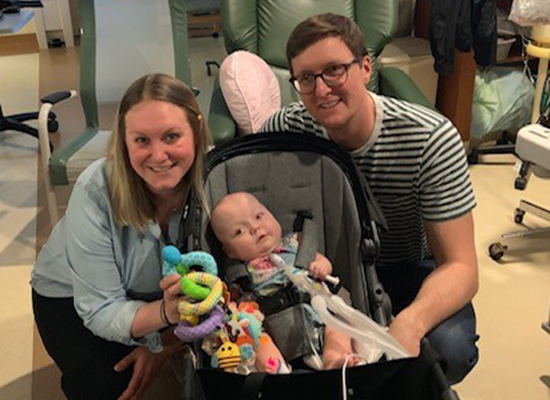
Jessica Wolff teamed up with her therapist friend to create The Nest Postpartum to provide resources for NICU families at Carle Hospital
As the mother of twin daughters born extremely premature, Jessica Wolff is intimately familiar with the stress and heartache of having a baby in the neonatal intensive care unit (NICU).
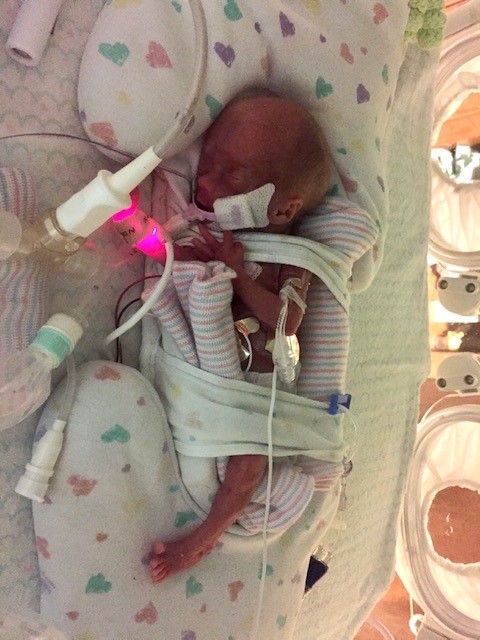
One of her twin daughters was stillborn. The other, Lily, was born with complex medical needs and spent eight months in the NICU at Carle Hospital in Champaign.
“Often, I was the only parent there (in the NICU) and there were 20 to 30 other babies there,” Jessica recalled. “There are so many barriers that families face while in the NICU, whether it’s transportation to be able to be there for their baby every day or access to meals for the rest of the family. (NICU parents) often have to leave the NICU early to go home for their other kids and make dinner and make sure everyone is fed.”
Jessica, who is a social worker, talked about these experiences with her good friend Paige Raab, who is a pediatric physical therapist. Paige works closely with many NICU families. She also had two traumatic births herself that resulted in NICU stays.
Both women talked about the disparities they saw in the NICU and decided to do something to help. Paige proposed starting a nonprofit foundation, and The Nest Postpartum was born.
“There is definitely a hole we noticed in community services (for NICU families). Paige came to me with the idea, and we built it from the ground-up,” Jessica said.
The Nest Postpartum aims to provide services such as transportation, lodging, prepared meals, care coordinator check-ins and links to other community support programs for families staying in Carle’s NICU.
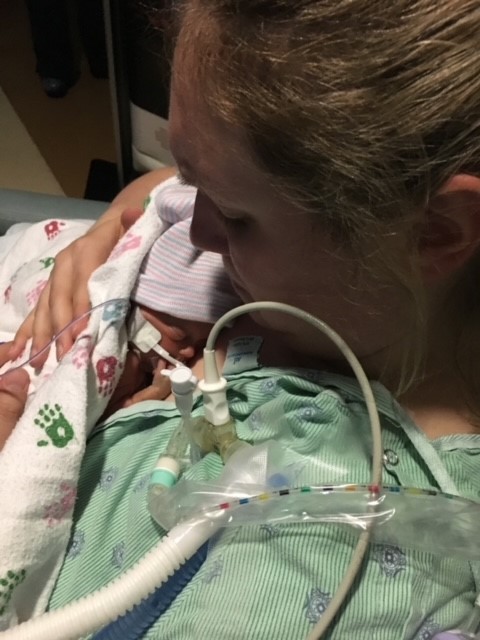
“We are hoping to provide transportation resources, whether public transportation, gas gift cards or access to rideshare programs and then we’re going to provide families with premade ready-to-cook or ready-to-eat meals. And if the (Carle Auxiliary) Guest House is unable to accommodate a family, we’ll provide hotel stays to bridge that gap,” Jessica said.
The Nest Postpartum also will provide care coordinators who are NICU moms themselves and/or have a healthcare background. These care coordinators will check in weekly with Carle NICU families to connect them with resources or provide emotional support.
Jessica and Paige started fundraising for The Nest Postpartum over the summer. The nonprofit will officially launch on Oct. 4.
“We’ve had amazing, overwhelming community support,” Jessica said. “The NICU staff themselves are super excited and the social workers we’re working with through the hospital are excited to have these resources available.”
The Nest Postpartum will initially only take referrals from Carle social workers. Jessica said interested families in need can reach out to their hospital social worker or tell their bedside nurse.
Jessica said she is thrilled to provide a valuable service to families experiencing similar struggles as her own.
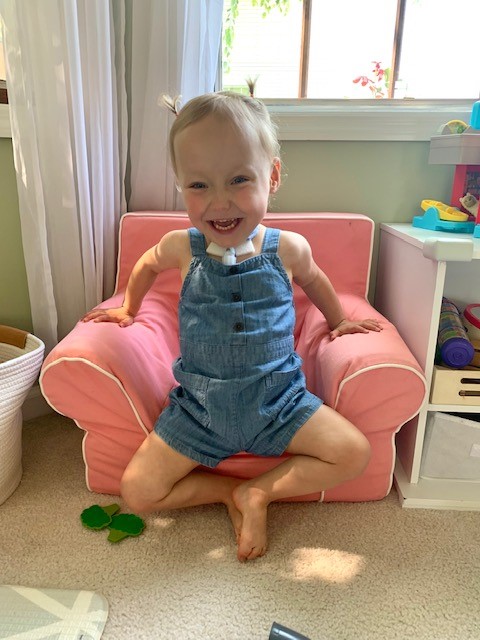
Her daughter, Lily, now 3, came home relying on a ventilator to breathe. She has been enrolled with the University of Illinois Chicago’s Division of Specialized Care for Children (DSCC) since she was an infant. She has received in-home nursing services through the Home Care Program. DSCC operates the Home Care Program on behalf of the Illinois Department of Healthcare and Family Services (HFS).
“We really enjoyed having the support of the Home Care Program. Coordinating the medical benefits and medical supplies and nursing was really a full-time job while keeping her alive was a full-time job for me,” Jessica said. “DSCC has been really important in making sure that Lily is home and successful.”
Jessica said she hopes The Nest Postpartum will provide other NICU parents the connection and camaraderie that’s been so beneficial for her.
“Having the support and the community of other parents who have lived this has been absolutely invaluable. I found myself for eight months only being able to focus on Lily and her survival. Coming home from the NICU was equally overwhelming because of her intense medical needs. We ran an ICU out of our house for over a year until she was able to come off the vent a bit,” Jessica said.
“To find these other mothers who walked the same path has really been life-saving for us.”
To learn more about The Nest Postpartum, visit https://www.thenestpostpartum.org/.
You can also watch local media coverage about the non-profit:
Public Comment for Proposed MFTD Waiver Amendments

Families have until Oct. 2 to provide feedback on several updates to the Home and Community-Based Services Waiver for children who are medically fragile and technology-dependent
The state invites families to provide feedback on several proposed amendments to the Home and Community-Based Services waiver for children who are medically fragile and technology-dependent (MFTD).
The Illinois Department of Healthcare and Family Services (HFS) operates the MFTD waiver. Many families in the Home Care Program have children who receive services through the MFTD waiver.
HFS has announced the following proposed amendments:
- Increase the Placement Maintenance Counseling rate from $50 to $86.28 to be more consistent with the Illinois Department of Human Services’ rates for counseling services.
- Update the cost projections for In-Home Shift Nursing and Certified Nursing Assistant for the waiver’s fifth year to account for recent rate increases and individuals over age 21 continuing to receive waiver services.
- Add Electrical Assessments to the current service definition under “Environmental Accessibility Adaptation” as an available option.
- Add Generators to the current service definition under “Environmental Accessibility Adaptation” as an available option.
- Lower the required number of bids for vehicle modifications from three to two.
HFS now invites the public to comment on these proposed amendments. (You can read the public comment notice on the HFS website.)
To review the full waiver amendments, you can:
- Download and read and/or print a hard copy of the amendments from the HFS website.
- Call (217) 524-4148 to receive a hard copy.
- Review copies at Healthcare and Family Services offices at :
- 201 South Grand Ave. E.,
Springfield, IL 62763
- 401 S. Clinton
Chicago, IL 60607
- 201 South Grand Ave. E.,
The deadline to provide feedback is Oct. 2.
You can submit feedback in two ways:
- Via email at HFS.HCBSWaiver@illinois.gov
- Via mail to the Illinois Department of Healthcare and Family Services, Attention: Waiver Operations Management, 201 South Grand Ave. E., 2FL, Springfield, IL 62763
HFS and the University of Illinois Chicago’s Division of Specialized Care for Children will review the comments and respond to them.
We will then submit comments to the federal Centers for Medicare and Medicaid Services as part of the amendment approval process.