


Meet Our Medical Advisory Board Member: Dr. Matthew Mischler
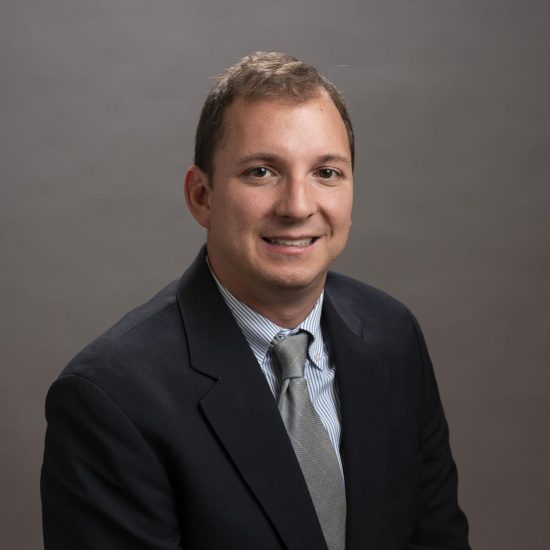
Helping youth with special healthcare needs find a safe landing spot in adult care
As a physician and clinical professor of internal medicine-pediatrics, Dr. Matthew Mischler is passionate about providing high-quality care across the lifespan.
This continuity of care is especially important for youth with special healthcare needs as they transition to adulthood.
“How do we build safe landing spots on the other side for kids and families as they’re aging out of pediatric care?” Mischler said. “It’s such a needed space to be in. It’s so scary for families and caregivers. There’s so much fear and trepidation and absolutely, understandably so.”
As a member of the Division of Specialized Care for Children’s (DSCC) Medical Advisory Board (MAB), Mischler enjoys collaborating with DSCC and healthcare professionals across Illinois to improve transition support for families and providers.
“One of the things that’s so huge that DSCC does is help families navigate in that space,” he said. “They meet patients and families where they are to try to help them through that time.”
A calling to medicine
Mischler grew up in Peoria and always enjoyed science, especially biology and chemistry. With no doctors in the family, he didn’t consider medicine as a career until he broke his leg as a teenager.
Being around the orthopedic surgeons and anesthesiologists sparked his interest. A talk with his pediatrician later helped Mischler see medicine as a blend of science and helping others.
“I felt that vocational aspect. That calling became a part of it,” Mischler said. “I can’t imagine doing anything else.”
Mischler graduated from Bradley University in Peoria and then attended medical school at the University of Illinois Urbana-Champaign. He enjoyed all his medical rotations and couldn’t choose between caring for children or adults. Therefore, he pursued a combined specialty in internal medicine and pediatrics, known as “Med-Peds.”
Med-Peds physicians receive dual training in both pediatrics and adult medicine, making them uniquely qualified to provide seamless care from childhood through adulthood.
Mischler currently practices at OSF St. Francis Medical Center and is a Clinical Professor of Internal Medicine and Pediatrics and Program Director of the Med-Peds Residency Program at the University of Illinois College of Medicine at Peoria.
Mischler hopes his background and experience can help support DSCC’s ongoing efforts to strengthen providers’ knowledge, resources and skills to better support transition-age youth.
Building safe landing spots
Transitioning to adult care is often challenging for young adults with special healthcare needs, their families and their providers.
Families often face both emotional and logistical challenges as they move from pediatric to adult healthcare systems, Mischler explained.
He also notes how adult and pediatric specialists are often trained differently. These differences can lead to gaps in knowledge and comfort for adult providers when they care for patients with complex childhood-onset conditions.
Mischler praises DSCC for guiding families during this crucial time and working to build safe landing spots for patients aging out of pediatric care.
“Having an organization that stretches across the state like DSCC is such a huge resource in Illinois,” he said.
Mischler first started working with DSCC about six years ago when he helped start a pediatric-to-adult care transition team in Peoria. He referred families to DSCC and became involved with the annual Illinois Statewide Transition Conference.
DSCC later invited Mischler to join the MAB, where he recently completed his third year.
“The resources the organization provides to patients and families, the support that’s there as well for physicians and other providers — I think that’s an understated part of what DSCC does,” he continued.
“The (Medical Advisory) Board has given me an opportunity to better understand and appreciate just how much goes into this work, and how fortunate we are in Illinois to have an organization like DSCC that does the kind of work they do.”
“A beacon” for families and providers
As an MAB member, Mischler is focused on increasing awareness of DSCC and its wealth of transition resources across the state’s healthcare community.
“When there’s an organization that its mission and its goal is to support the most vulnerable and the most medically complex patients and families, that’s a really special thing to be a part of and that’s a huge thing for practicing physicians, nurse practitioners and PAs (physician assistants) to know is there for their patients,” he continued.
He thinks of providers in smaller or rural communities who may suddenly care for a child with complex needs. These physicians may feel unsure where to turn.
“How do we reach them and make sure they are aware of all the things that DSCC has to offer… They aren’t trying to navigate it alone. There is somebody out there whose mission is to help, and I think that’s a huge beacon,” Mischler said.
“The more people who can be aware of what DSCC is and how many people they support and how much advocacy goes on behind the scenes for the most vulnerable patients, that’s really important.”
Meet Medical Advisory Board Member Dr. Shubhra (Sue) Mukherjee
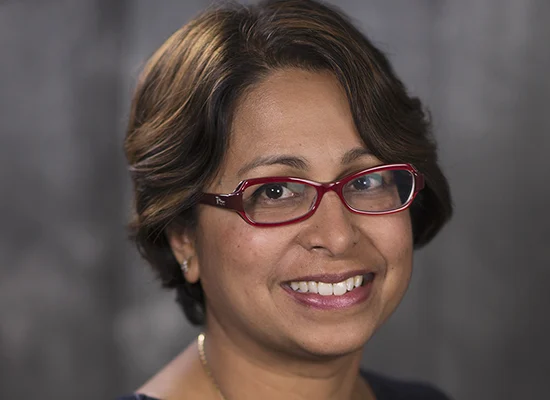
“DSCC understands the importance of supporting families and coordinating care.”
Dr. Shubhra Mukherjee, also known as Dr. Sue, is the medical director of pediatric and adolescent rehabilitation medicine at Shriners Children’s Chicago.
Mukherjee currently cares for patients up to age 22. Her background includes working with young adults with complex healthcare needs and collaborating across medical specialties to help these patients and their families connect with the care they need.
She has served on the Division of Specialized Care for Children’s (DSCC) Medical Advisory Board (MAB) for more than 16 years.
Mukherjee’s expertise in physical medicine and rehabilitation combined with a deep interest in the transition of care for children with complex healthcare needs has been a great fit.
“DSCC understands the importance of supporting families and coordinating care,” said Mukherjee. “I appreciate their statewide focus and how the MAB serves as an avenue for clinician input on what changes are needed, sharing feedback about the struggles we encounter helping patients get what they need, and working together to find solutions.”
Putting the Focus on Transition
When Mukherjee joined the board, schools were just beginning to explore the need to help students build the skills needed to transition to adulthood.
“They were looking at ways they could better prepare students to go on to jobs, college and life after high school,” Mukherjee explained. “In pediatric care, we realized that we needed to be doing the same thing for children with complex healthcare needs and their families.”
The DSCC team had the idea to increase the participation of medical professionals at the annual Illinois Statewide Transition Conference. We wanted to create a more proactive approach to helping children and their families make the transition from pediatric care to adulthood.
Mukherjee teamed up with DSCC’s former Title V Transition Specialist Darcy Contri to help put the idea into action.
“DSCC was already doing great work providing family support, tip sheets, and facilitating face-to-face conversations about transition. This was just one more piece of the puzzle,” said Mukherjee. “Darcy and I set up the first health care track for the Statewide Transition Conference with a goal of building more clinical engagement and increasing awareness and support for patients with complex health care needs and their families.”
The health care track has provided information and presentations with and for doctors and others providing complex care. According to Mukherjee, it continues to be a catalyst for building connections, sparking ideas, and inspiring healthcare professionals.
“I got to see that impact firsthand when one of our occupational therapists (OT) attended the conference with me,” Mukherjee said. “She was so moved that she became a big proponent of the OT’s role in developing and teaching adolescents skills related to health care.”
Opportunities to Collaborate
Mukherjee appreciates how the MAB fosters collaboration, networking and the development of partnerships. This work continues to create more options throughout Illinois for patients with complex care needs.
“It’s very rewarding to grow my knowledge and connect with like-minded professionals across so many different specialties,” Mukherjee said. “We’re able to share, provide feedback, and exchange ideas around removing barriers and supporting patients with complex healthcare needs at all stages.”
Mukherjee said DSCC also continues to be a major source of support for her own patients.
“Care coordination is so important for these families,” said Mukherjee. “DSCC helps them find the right care or specialist, get to appointments, and locate funding for the services they need to stay well and engage in their community. DSCC is there for the child and family.”
Mukherjee also leans on DSCC for updates and information.
“DSCC helps me keep track of program changes and learn about new services or programs that are available,” Mukherjee emphasized. “DSCC plays a vital role in sharing information and connecting the many different entities that individuals with complex needs depend on for their care.”
Awareness Brings Progress
Mukherjee said there is still a great need for education about the transition to adulthood and its importance.
“I’m glad to see the growing awareness and interest by professionals in helping youth develop the skills they need to be successful as adult users of the healthcare system,” said Mukherjee. “We are seeing more adult providers who understand the needs of young people with disabilities who are aging out of pediatric care.”
Awareness has brought progress, but challenges remain.
“Pediatric and adult care are not set up in the same way. For example, a spina bifida clinic and spinal care clinic are similar, but they are not the same. Adults with complex conditions going to a spinal care clinic may not be getting all of their needs met,” said Mukherjee. “The special pediatric clinic that addressed all their needs as a kid doesn’t exist in the adult care system.”
Mukherjee’s own focus on the transition to adulthood remains as strong as ever.
“I’ve been following some of the research initiatives at the University of Illinois Chicago. It’s exciting to see they are collecting data, exploring different aspects of complex care and its costs, and working towards building a framework that brings all the pieces together for adults with complex care needs,” she said.
“DSCC plays a vital role,” Mukherjee noted. “Sharing their information and ensuring it’s always there for the families we serve is important.”
Thank you, Dr. Sue, for your leadership to help families and professionals support the successful transition to adulthood!
Visit our Medical Advisory Board page to learn more about the MAB and its mission.