


Share Your Voice at Our Family Advisory Council Open Forum on Nov. 5
Connect with other families, share your ideas and help shape future resources for families at this virtual meeting.
Our Family Advisory Council (FAC) invites you to connect with other families and share your feedback on topics that matter most to you.
The FAC’s next open forum meeting is on Thursday, Nov. 5, from 9 to 11 a.m.
The FAC will share how its members have worked alongside the Division of Specialized Care for Children (DSCC) this past year to improve care coordination and elevate families’ voices.
The council will also open the floor to hear your ideas as we plan our Family Education Webinar Series for 2027. It’s a great opportunity to help shape the topics we focus on, because the best guidance comes from the lived experiences of families like yours!
You can sign up on Zoom to join the meeting.
The open forum is for all Illinois families of children with special healthcare needs. You do not have to be a DSCC participant to attend.
Live Spanish translation will be available.
The FAC guides our efforts to strengthen teamwork, improve communication and empower families to have a voice in their children’s care. The council also connects families to resources and other families who are on a similar journey.
You can find more details and minutes from past meetings on our Family Advisory Council page. You can also learn more about some of the FAC’s family leaders.
If you have questions about the open forum, please email dsccfac@uic.edu or call (800) 322-3722.
We hope to see you on Nov. 5!
Meet Our Medical Advisory Board Member: Dr. Matthew Mischler
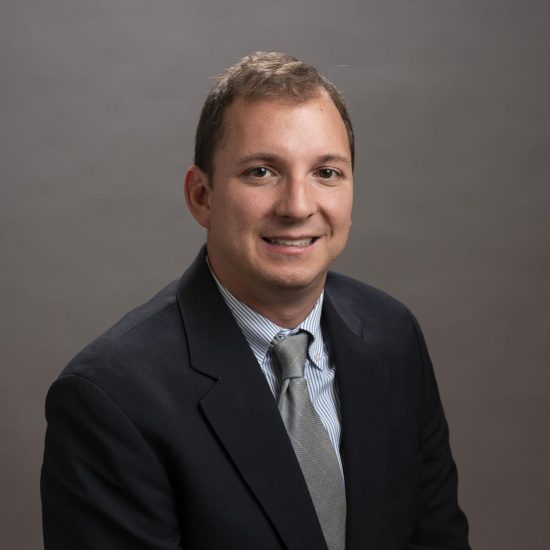
Helping youth with special healthcare needs find a safe landing spot in adult care
As a physician and clinical professor of internal medicine-pediatrics, Dr. Matthew Mischler is passionate about providing high-quality care across the lifespan.
This continuity of care is especially important for youth with special healthcare needs as they transition to adulthood.
“How do we build safe landing spots on the other side for kids and families as they’re aging out of pediatric care?” Mischler said. “It’s such a needed space to be in. It’s so scary for families and caregivers. There’s so much fear and trepidation and absolutely, understandably so.”
As a member of the Division of Specialized Care for Children’s (DSCC) Medical Advisory Board (MAB), Mischler enjoys collaborating with DSCC and healthcare professionals across Illinois to improve transition support for families and providers.
“One of the things that’s so huge that DSCC does is help families navigate in that space,” he said. “They meet patients and families where they are to try to help them through that time.”
A calling to medicine
Mischler grew up in Peoria and always enjoyed science, especially biology and chemistry. With no doctors in the family, he didn’t consider medicine as a career until he broke his leg as a teenager.
Being around the orthopedic surgeons and anesthesiologists sparked his interest. A talk with his pediatrician later helped Mischler see medicine as a blend of science and helping others.
“I felt that vocational aspect. That calling became a part of it,” Mischler said. “I can’t imagine doing anything else.”
Mischler graduated from Bradley University in Peoria and then attended medical school at the University of Illinois Urbana-Champaign. He enjoyed all his medical rotations and couldn’t choose between caring for children or adults. Therefore, he pursued a combined specialty in internal medicine and pediatrics, known as “Med-Peds.”
Med-Peds physicians receive dual training in both pediatrics and adult medicine, making them uniquely qualified to provide seamless care from childhood through adulthood.
Mischler currently practices at OSF St. Francis Medical Center and is a Clinical Professor of Internal Medicine and Pediatrics and Program Director of the Med-Peds Residency Program at the University of Illinois College of Medicine at Peoria.
Mischler hopes his background and experience can help support DSCC’s ongoing efforts to strengthen providers’ knowledge, resources and skills to better support transition-age youth.
Building safe landing spots
Transitioning to adult care is often challenging for young adults with special healthcare needs, their families and their providers.
Families often face both emotional and logistical challenges as they move from pediatric to adult healthcare systems, Mischler explained.
He also notes how adult and pediatric specialists are often trained differently. These differences can lead to gaps in knowledge and comfort for adult providers when they care for patients with complex childhood-onset conditions.
Mischler praises DSCC for guiding families during this crucial time and working to build safe landing spots for patients aging out of pediatric care.
“Having an organization that stretches across the state like DSCC is such a huge resource in Illinois,” he said.
Mischler first started working with DSCC about six years ago when he helped start a pediatric-to-adult care transition team in Peoria. He referred families to DSCC and became involved with the annual Illinois Statewide Transition Conference.
DSCC later invited Mischler to join the MAB, where he recently completed his third year.
“The resources the organization provides to patients and families, the support that’s there as well for physicians and other providers — I think that’s an understated part of what DSCC does,” he continued.
“The (Medical Advisory) Board has given me an opportunity to better understand and appreciate just how much goes into this work, and how fortunate we are in Illinois to have an organization like DSCC that does the kind of work they do.”
“A beacon” for families and providers
As an MAB member, Mischler is focused on increasing awareness of DSCC and its wealth of transition resources across the state’s healthcare community.
“When there’s an organization that its mission and its goal is to support the most vulnerable and the most medically complex patients and families, that’s a really special thing to be a part of and that’s a huge thing for practicing physicians, nurse practitioners and PAs (physician assistants) to know is there for their patients,” he continued.
He thinks of providers in smaller or rural communities who may suddenly care for a child with complex needs. These physicians may feel unsure where to turn.
“How do we reach them and make sure they are aware of all the things that DSCC has to offer… They aren’t trying to navigate it alone. There is somebody out there whose mission is to help, and I think that’s a huge beacon,” Mischler said.
“The more people who can be aware of what DSCC is and how many people they support and how much advocacy goes on behind the scenes for the most vulnerable patients, that’s really important.”
Sensory-Friendly Fun and Support at the 2026 Illinois State Fair in Springfield
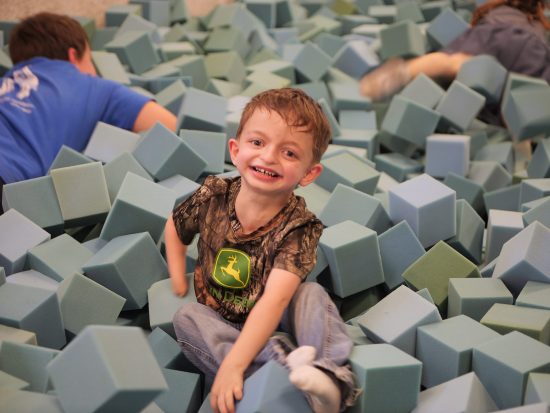
Come visit DSCC at the fair’s Sensory Station on Aug. 13-17 and enjoy special sensory-friendly Sunflower Hours on Aug. 15
We are excited to once again partner with the Illinois State Fair to provide inclusive, accessible fun for families!
The 2026 Illinois State Fair is happening from Aug. 13-23 at the fairgrounds, 801 E. Sangamon Ave., in Springfield.
Our Division of Specialized Care for Children (DSCC) team will be there to welcome you to the fair’s Sensory Station from Aug. 13-17. The fair is also offering sensory-friendly Sunflower Hours and other programming to make the event a more comfortable and enjoyable experience for all.
DSCC at the Sensory Station
- Thursday, Aug. 13, to Monday, Aug. 17
- 10 a.m. to 7 p.m. daily
Our DSCC team will be at the fair’s Sensory Station from Thursday, Aug. 13, through Monday, Aug. 17.
The Sensory Station is inside the Emmerson Building, just off Main Street and Brian Raney Avenue in the center of the fairgrounds. It will be open from 10 a.m. to 7 p.m. daily. It is an air-conditioned, dedicated quiet zone with activities and resources to help visitors regroup and refocus.
The Sensory Station’s features and activities include:
- Calming pods
- A foam block pit
- A stuffed animal “petting zoo”
- A twinkle tunnel, coloring station and other sensory-processing activities
Families can also check out sensory bags to use while exploring the fairgrounds. The bags include noise-canceling headphones, fidgets and sunglasses. There is also stroller parking, a diaper changing station and a nursing area at the Sensory Station’s entrance.
Check out our “DSCC Outreach at the 2026 Illinois State Fair” video to learn more about the Sensory Station and its impact on families.
Nearby, the fair has a First Aid Station with rooms families can use for adult changing stations, tube feedings and other needs. This station is in the Emmerson Building Annex, across from the Dairy Building on Central Avenue. It is open from 11 a.m. to 6 p.m. daily.
Our DSCC team will also host a tent outside the Sensory Station from Aug. 13 to 17. During these five days, we will have rock-painting and coloring activities, along with information about our programs and services for families statewide.
Sunflower Hours on Aug. 15
- Saturday, Aug. 15, from 9 a.m. to 12 p.m.
- Carnival hours from 10 a.m. to 12 p.m.
Enjoy a quieter fair experience during Sunflower Hours on Aug. 15 from 9 a.m. to 12 p.m. During this time, the fair will adjust certain programs and activities to create a more calming environment for individuals with sensory processing sensitivities.
The fair has Sunflower Hours stickers available for families to use during this timeframe. This sticker allows fair visitors with sensory sensitivities to enjoy select amusement rides for free from 10 a.m. to 12 p.m. Youth must have an adult and/or caregiver accompany them on rides. All riders must have the Sunflower Hours sticker to ride for free.
DSCC has a limited number of stickers available for our program participants. To request a Sunflower Hours sticker, please email dscc@uic.edu with your name and your participant’s name by Aug. 6.
We will send stickers on a first-come, first-served basis.
All families may visit the Sensory Station during the Sunflower Hours event to get more stickers. The stickers will be available while supplies last.
Conservation World, located at the fair’s Eighth Street entrance, will also host Sunflower Hours on Saturday, Aug. 15, and Tuesday, Aug. 18, from 8:30 to 10 a.m. Fairgoers can explore the great outdoors in a more peaceful and sensory-friendly setting during these times.
Social Story and other resources to Plan Your Visit
The Illinois State Fair has a social story to help you plan your visit to this year’s event. It is a step-by-step guide to help parents and caregivers explain what to expect during a visit to the Illinois State Fair.
You can find the social story and more details about the Sensory Station, Sunflower Hours, the entertainment schedule and more in the Sensory-Friendly Fair section of the Illinois State Fair website.
To find more sensory-friendly activities and events for children and families throughout Illinois, visit our Events page and follow our Facebook page and Instagram page.
Learn How Supported Decision-Making and Guardianship Can Help You Plan for the Future
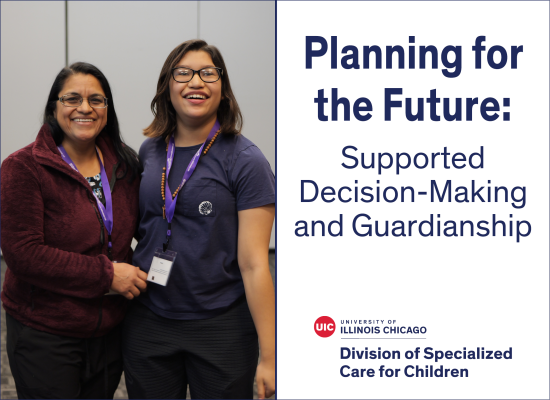
Join our free webinar on June 8 for families of youth with special healthcare needs transitioning to adulthood
When a young person with special healthcare needs turns 18, their family often faces important decisions about independence, legal rights and long-term support.
Join the Division of Specialized Care for Children (DSCC) for our free webinar, “Planning for the Future: Supported Decision-Making and Guardianship,” on June 8 from 6 to 7 p.m.
The presentation is for families of youth with special healthcare needs preparing for the transition to adulthood.
Bring your questions and learn from presenter Consuelo Puente, a retired attorney, dedicated advocate and mother of two adult sons with autism.
Consuelo will explain the differences between guardianship and supported decision-making, including:
- What each option means
- When they may be appropriate
- How they can affect a young person’s rights and autonomy
Participants will learn how supported decision-making can serve as an alternative to full guardianship, promoting self-determination while helping ensure safety and well-being.
The presentation will also cover the basic steps to establish guardianship in Illinois, helping families better understand the legal process and what to expect.
See the webinar flyer for more details:
- “Planning for the Future: Supported Decision-Making and Guardianship” flyer in English
- “Planning for the Future: Supported Decision-Making and Guardianship” flyer in Spanish
Live Spanish translation will be available.
Continuing education credits are available for social workers.
The recording and slides from the webinar will be available on our Family Education Webinars page.
For more details or other questions, please contact Claire Cook, DSCC Title V Transition Specialist, at clairer3@uic.edu or (800) 322-3722.
We hope you’ll join us!
Share Your Input at Our May 7 Family Advisory Council Open Forum
We invite all Illinois families of children with special healthcare needs to share their feedback and experiences at this virtual forum.
Join us for an opportunity to connect with other families and share your feedback on topics that matter to you.
Our next Family Advisory Council (FAC) open forum is on May 7 from 9 to 11 a.m.
Members will discuss how they can partner with the Division of Specialized Care for Children (DSCC) to share their families’ stories, successes and helpful tips and resources they’ve learned along the way.
The FAC will also open the floor to hear your ideas as they discuss DSCC’s messaging to families, digital communication channels and more.
This free virtual meeting is for all Illinois families of children with special healthcare needs. You do not have to be a Division of Specialized Care for Children (DSCC) participant to attend.
You can sign up on Zoom to join the meeting. Please note that live Spanish translation will be available.
The FAC guides our efforts to strengthen teamwork, improve communication and empower families to have a voice in their children’s care. The council also connects families to resources and other families who are on a similar journey.
You can find the minutes from past meetings and more details on our website’s Family Advisory Council page. You can also learn more about some of our FAC members on our Meet Our Family Advisory Council Members page.
If you have questions or would like more details on how to participate in the FAC, please email dsccfac@uic.edu.
We hope to see you on May 7!
Create Holiday Magic with Inclusive Fun for Everyone!
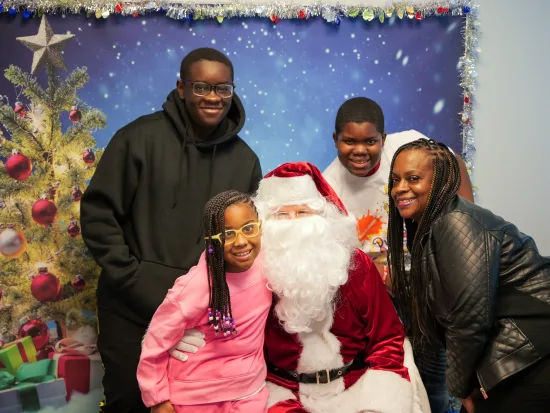
Celebrate the holidays with our list of inclusive, sensory-friendly events happening across Illinois.
The holiday season is a time for joy, connection and shared traditions. For individuals with sensory sensitivities, medical complexities and other disabilities, typical celebrations may not always feel comfortable or accessible.
Every family deserves the chance to enjoy the season in ways that support their children and loved ones’ needs and allow for meaningful moments together.
We’ve gathered a list of inclusive and sensory-friendly holiday events happening throughout Illinois. These activities can help you experience the magic of the season at a pace and environment that works best for your family.
There are sensitive Santa opportunities, Mr. and Mrs. Deaf Claus, light displays, low-sensory celebrations, accessible theater performances and other welcoming events for children and adults with special healthcare needs.
You can check out our Special Events page for the full roundup of activities. Just like Santa’s list, be sure to check it at least twice as we continue to add events!
Please note that the University of Illinois Chicago’s Division of Specialized Care for Children (DSCC) is not involved in the organization or scheduling of these holiday events. If you have questions about a specific event, please contact the event sponsor or organizer.
Featured Events
- The Secret Sleigh Project coordinates volunteers to provide in-home Santa visits to children who are medically fragile nationwide. See our Secret Sleigh event listing for more details on how to request a visit.
- Autism Speaks and Cherry Hill Programs will provide free sensory-friendly Santa experiences at multiple shopping centers in Illinois on Dec. 7. You must sign up to attend. Photo packages will be available to buy.
See our Santa Cares listing for more details. Be sure to select “Santa Cares”, “Caring Santa”, or “Sensitive Santa” when checking your location. Event dates and times may vary. Please check your mall location to confirm your date and time.
- Enjoy a movie on the big screen with the lights up, lower sound and the freedom to get up, dance, walk, shout or sing. Visit the following sites to find more details and a theater near you:
- Looking for holiday light displays to walk, wheel, or drive through? Maybe a parade, cookie walk or festival is more your style? Check out the websites and listings below to help plan your holiday adventures (note that some events may not be sensory-friendly):
Chicago and Northern Illinois
Check out WTTW’s list of holiday light displays and experiences. Kidlist also offers a huge list of Chicagoland drive-through and walk-through displays to help you get into the holiday spirit.
Other Chicagoland sensory-friendly activities include:
- Sensory-Friendly ZooLights at Lincoln Park Zoo and Sensory-Friendly Holiday Magic at Brookfield Zoo
- Special Kids Day Visit With Santa in Elmhurst
- Sensory-Friendly Holiday Express at Blackberry Farm in Aurora
- Breakfast with Mr. and Mrs. Deaf Santa Claus for Children With Hearing Loss in Chicago/ Desayuno con el Sr. y la Sra. Santa Claus Sordos
- “Abilities Team Winter Party” in Plainfield
- “Photos with Santa” for Children With Autism and Developmental Disabilities in Machesney Park
- Sensory-Friendly Winter Lights at Central Park in Oak Brook
- Winter Wonderland Celebration at the DSCC Mokena Regional Office
Central Illinois
Inclusive holiday parties are happening in central Illinois, such as:
- Cookies at the Clearinghouse/Evento Anual de Galletas en el Clearinghouse in Champaign
- Sensory Hour Sweets With Santa in Monticello
- “Special Time With Santa” in Taylorville
- Inclusive Holiday Dance in Springfield
- Lincoln Land Down Syndrome Society Christmas Party in Springfield
For more ideas, check out Chambanamoms.com’s roundup of holiday season fun for families and Visit Springfield.
Southern Illinois
There are many hometown holiday parades, concerts and festivals throughout the area. You can check Southern Illinois Families (SI Families) and Southernmost Illinois for lists of events.
Inclusive activities include:
- Sensitive Santa Event for Children With Autism and Other Sensory Differences in Marion
- St. Louis Zoo Wild Lights Sensory-Friendly Night
- Christmas Open House with Santa in Benton
- Santa at the Center in Effingham
- “Milk and Cookies with Santa” for All Ages and Abilities in St. Louis – Chesterfield
Have an Event to Share?
If you know of an inclusive or sensory-friendly event to include in our list, please email us at dscc@uic.edu.
Resources to Recharge
The hustle of the holiday season can feel overwhelming.
There are resources available if you need to step back and take a deep breath.
You can search our website for support groups and helpful webinars. On Dec. 11, the “How to Keep from Kicking Santa Claus – Tips for Managing Holiday Stress” webinar will feature practical tips for relieving stress, preventing meltdowns and strategies for creating your own fun.
Our Caregiver Mental Health Toolkit is also a great resource during the holidays and beyond.
Happy Holidays!
Honor National Family Caregivers Month by Caring for Yourself
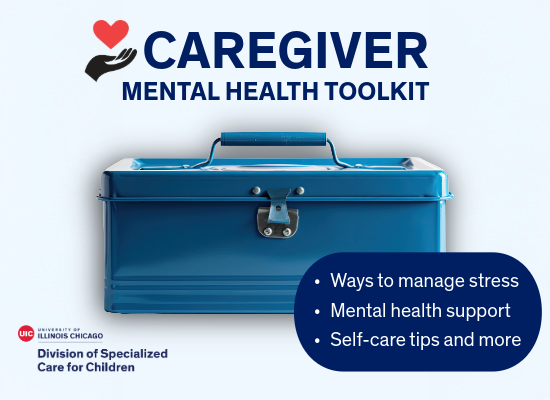
We’ve developed resources to help you support your mental health, reduce stress and connect with others who understand.
November is National Family Caregivers Month, a time to recognize and celebrate the incredible dedication of families caring for children and youth with special healthcare needs.
At the Division of Specialized Care for Children (DSCC), we know that caregiving can be both a rewarding and challenging journey.
As you care for others, it’s just as important to take care of your own mental health.
Find Support in Our Caregiver Mental Health Toolkit
Our Caregiver Mental Health Toolkit can help you find the support and strategies you need to recharge and stay well.
This online resource offers practical tips, self-care strategies and mental health resources to help you navigate the unique demands of caregiving while prioritizing your own health and well-being.
The Caregiver Mental Health Toolkit includes:
- Stress management strategies and techniques to help you cope with tough times.
- Self-care tips and practical ways to nurture your own physical, emotional and mental health.
- Mental health support resources to connect you with professional help and support networks when needed.
- Apps, online tools, videos and podcasts you can access anytime.
We created this toolkit with input from our Family Advisory Council, which shared the importance of mental health support for caregivers like you.
Whether you’re a parent caring for a child, a family member supporting a loved one or anyone in a caregiving role, we encourage you to explore this free resource.
Connect With a Fellow Caregiver for Support
One of the most powerful supports you can have is a connection with another parent who truly understands.
We have a Home Care Family Outreach Associate on our team who understands the unique challenges of caring for a loved one with complex medical conditions firsthand.
Our Home Care Family Outreach Associate works to create a community for caregivers within DSCC and offer heartfelt support, connection and empowerment.
You can ask your DSCC care coordination team to refer you to the HCFOA. You can also email a request to speak with the HCFOA at DSCC-FamilySupport@uic.edu.
Learn more about Erica Stearns, our current HCFOA, on our Home Care Family Outreach page and in the short video below:
Take a Break with Caregiver Coloring Sheets
We’ve also designed four coloring pages to help caregivers relax and take time to relieve stress and practice mindfulness.
There are four designs available in both English and Spanish:
- Lighthouse (Lighthouse in Spanish)
- Sunflowers (Sunflowers in Spanish)
- Hot air balloons (Hot air balloons in Spanish)
- Gears and clock (Gears and clock in Spanish)
These printable pages are a simple way to pause, relax and focus on yourself.
More Mental Health Resources and Support
You can find more mental health resources in our online Resource Directory.
Be sure to also follow our DSCC Facebook page and Instagram page for helpful reminders and tips throughout the rest of the month.
Your DSCC care coordination team is also here to support you. They can listen, help identify your needs and find available services and resources.
As the heart of your child’s care team, we celebrate you this month and always!
Free Virtual Training Program on Caring for Children With Complex Medical Needs at Home

DSCC is proud to sponsor the expanded eHomeCare program to help families and home nurses improve their care knowledge and refresh their skills
We are excited to help expand a free online training program on how to care for children with complex medical needs at home.
Research shows that the number of children in need of medically complex care at home is steadily growing. With this growth, there is an urgent need for current and accessible educational resources to ensure the quality and safety of care for these children.
We’ve also heard from families and home nurses that they need a way to expand their knowledge about care in the home and refresh their skills.
The Division of Specialized Care for Children (DSCC) is proud to sponsor the expanded eHomeCare program to help meet this need and equip caregivers with the tools and knowledge necessary to provide high-quality care.
The eHomeCare program provides comprehensive, evidence-based information on the care of children with complex medical needs at home. The training is for:
- Family members and caregivers of children with complex medical needs
- Nurses working in home-based environments
- Physicians
- Respiratory therapists
- Students from health professions
- Anyone interested in learning more about caring for children with complex medical needs.
The eHomeCare program consists of eight on-demand courses to enhance the knowledge, skills and confidence of home care providers in the following areas:
- Caring for children with a tracheostomy with or without a ventilator
- Central line care
- Dialysis in home
- Infection control
- Setting boundaries in the home
- Skin care
- Range of motion
- Daily care activities for children
The courses aim to bridge knowledge gaps and enhance caregivers’ confidence and competence in managing both routine and emergency situations.
Please note that the completion of these training courses alone is not enough to demonstrate proficiency in skills that require specialized care (such as caring for a trach, ventilator or central line). If you are interested in becoming trained to provide these cares, please talk to your child’s medical team or home nursing agency.
Parents, extended family members, caregivers and others can use these modules to learn and refresh different skills for caring for their medically complex child in the home setting.
To learn more about the courses and enroll, visit the eHomeCare Online Training Program website.
After participating in the eHomeCare courses, individuals will be able to:
- Describe best practices for providing care and managing common issues for children requiring complex medical care at home.
- Recognize signs and symptoms of complications and determine appropriate responses when caring for children requiring complex medical care at home.
- Demonstrate enhanced confidence and competence in providing care for children requiring complex medical care at home.
- Collaborate effectively with healthcare team members to provide comprehensive and coordinated care for children requiring complex medical care at home.
Free continuing education credits are available.
If you have trouble enrolling in the course or need help, please email help@icep.wisc.edu.
The eHomeCare Program originally started as one course focused on trach and vent care through a partnership of several Wisconsin-based nursing schools and hospitals.
DSCC provided funding and collaboration to expand the eHomeCare training program in response to family feedback on the need for more education and training on caring for children with complex medical needs at home.
We partnered with the Illinois Department of Healthcare and Family Services (HFS) and the federal Centers for Medicare and Medicaid Services (CMS) to fund the project.
DSCC team members worked with eHomeCare developer Dr. Kim Whitmore and her team at Ujima United to add more courses to the training in collaboration with the Interprofessional Continuing Education Partnership at the University of Wisconsin-Madison.
We hope the expanded eHomeCare training modules will be a valuable resource for families, caregivers and everyone involved in their children’s complex care at home.
Meet Our Medical Advisory Board Member Dr. Sarah Sobotka
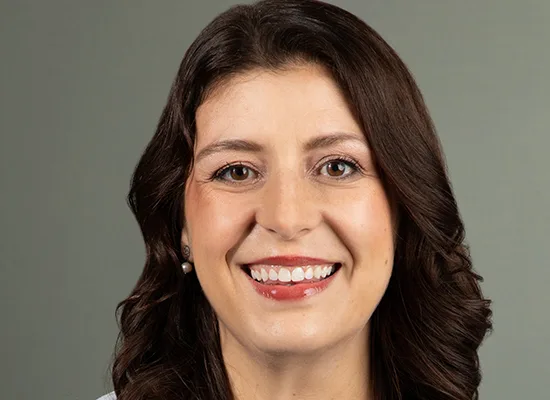
“My hope is that what I bring to DSCC… are the data points that help to drive advocacy and improvements in care.”
Dr. Sarah Sobotka first started working with the Division of Specialized Care for Children (DSCC) through her research to improve support for children with mechanical ventilators and their families.
“I have been working with DSCC as a critical partner in my research program since 2017,” she said, noting how DSCC helped recruit eligible families for her research studies.
“I am so fortunate to have had the enthusiastic support from DSCC because our missions are so aligned and from a research standpoint, it allows me to work with a state agency that lacks the bias of a single hospital center or a single institution… it is a more balanced sample, working with the entire state.”
Sobotka and DSCC share the same goal to better understand the needs of children with medical complexity and connect their families with the right services and support to achieve their best quality of life.
In 2020, DSCC’s leadership invited Sobotka to join our Medical Advisory Board as an expert medical provider.
Her research and expertise provide valuable perspectives on how to best allocate resources and improve systems of care for all Illinois children and youth with special healthcare needs.
An early focus on children with medical complexity leaving the hospital
Sobotka is an Associate Professor of Pediatrics, Section of Developmental and Behavioral Pediatrics, and Ambulatory Medical Director of Comer Developmental and Behavioral Pediatric Programs in the Department of Pediatrics at the University of Chicago.
She became interested in children with medical complexity while completing her residency.
“I did my pediatric residency, and then I elected to do a developmental and behavioral pediatric fellowship in order to focus on the diagnosis and support of children with disabilities and their families,” Sobotka said.
She quickly saw how long children with medical complexity and undiagnosed disability spent in the hospital.
“I recognized early on that an impediment to their flourishing and to their families’ functioning was the length of time they were in the hospital,” she said. “So, some of my early work focused on that process of discharge and the many components that have to get together in order for a child with medical complexity, particularly kids with ventilators, to leave the hospital.”
As part of Dr. Sobotka’s training, she took an additional year between her third and fourth year of medical school to complete a Master of Science for Clinical Professionals. This advanced degree gave her training in epidemiology and research.
Sobotka’s research focus has explored what happens after children with complex medical needs leave the hospital, what the home nursing landscape looks like and what individual families’ experiences and needs are.
One of Dr. Sobotka’s first research studies involved interviewing DSCC Care Coordinators, skilled private duty nurses, and parents of children in the Home Care Program who came home with a ventilator.
“I interviewed those parents a couple of times after going home, so I really started to understand the complexity of home care challenges and what that looked like for families,” she said.
This research project identified gaps in therapy services for these children, and Sobotka developed interventions to support their diverse disabilities. She also learned more about how DSCC Care Coordinators support families and what motivates and challenges professionals in this important role.
Improving the healthcare system’s efficiency
Over the last seven years, Sobotka has continued to partner with DSCC on multiple studies. Recent projects include:
- “Disparities in Home Nursing and Hospital Length of Stay for Children with Invasive Mechanical Ventilation: Identifying National Trends and Piloting a Parent-to-Parent Intervention”
- This study includes a parent-to-parent coaching pilot program for families. This pilot program is for families who have a child on a ventilator in the hospital and are awaiting home nursing so their child can be discharged home or have gone home and do not have enough home nursing support.
- “Let’s E.A.T! (Eating with Assistive Technology)”
- This study aims to help children with feeding tubes and tracheostomies (trachs) eat by mouth. It is for families who have a child under 3 years old with a feeding tube and trach.
You can read more about these studies on pages 35 and 36 of our FY 2024 Annual Report.
A major theme in Sobotka’s work is improving the healthcare system’s efficiency so that all children, especially those with medical complexity, spend more time in the least restrictive environment at home with their families.
“This ultimately has the greatest potential to improve their developmental trajectory, because although this is a population at high risk for complex disability, I still believe there are opportunities to mitigate the worst disability outcomes with the right interventions at the right times,” Sobotka said.
Sobotka says families’ experiences and feedback direct the course of her research.
As a Medical Advisory Board member, Sobotka enjoys the opportunity to collaborate with other members to advocate for parent caregivers. She also aims to keep families’ needs and priorities at the center of decisions and improvements in the healthcare system.
“My hope is that what I bring to DSCC and also to other investigators, clinicians, and families are the data points that help to drive advocacy and improvements in care,” she said.
Thank you, Dr. Sobotka, for your dedication to improving the lives of children with complex medical needs and their families!
Sensory-Friendly and Inclusive Holiday Events for All Ages
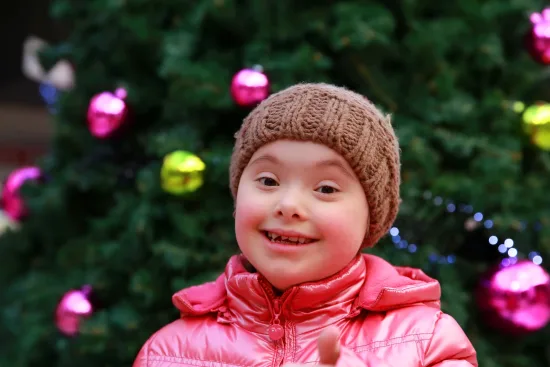
Experience the magic of the season with Santa visits, light displays and other fun events happening throughout Illinois.
The holiday season is a time for joy, connection and celebration. For individuals with sensory sensitivities and other disabilities, traditional festivities can sometimes feel overwhelming.
We’ve gathered a list of inclusive and sensory-friendly holiday events happening throughout Illinois to help families celebrate the season.
There are light displays, sensitive Santa opportunities, parades and more going on throughout Illinois.
Our Special Events page includes a roundup of opportunities designed specifically for youth with disabilities and special healthcare needs.
We hope this collection of events will help spark ideas to create your own holiday magic:
- The Secret Sleigh Project coordinates volunteers to provide in-home Santa visits to children who are medically fragile nationwide. See our Secret Sleigh event listing for more details on how to request a visit.
- Autism Speaks and Cherry Hill Programs will provide free sensory-friendly Santa experiences at multiple shopping centers in Illinois on Dec. 8. You must sign up to attend. Photo packages will be available to buy. Visit the Santa Cares website for a complete list of Santa’s stops. Be sure to select “Santa Cares”, “Caring Santa” or “Sensitive Santa” when checking your location. (Note some event dates and times may vary. Please check your location to confirm your date and time.)
- The National Federation of the Blind is offering letters from Santa and winter celebration letters in Braille to children who are blind or have low vision. The program is for children 10 years old and younger. Please complete the letter request form by Dec. 16. Letters are available in English or Spanish. If you have any questions, call (410) 659-9314, ext. 2236, or email education@nfb.org.
- Enjoy a movie on the big screen with the lights up, lower sound and the freedom to get up, dance, walk, shout or sing. Visit the following sites to find more details and a theater near you:
- For families in the Chicago area, Chicago Parent magazine has a roundup of sensory-friendly Chicagoland events as a list of free holiday activities for Chicagoland families. Activities include:
- In central Illinois, enjoy time with Santa at the sensory-friendly “Meet and Greet with Santa” in Springfield or the “Sensory Hour Sweets with Santa” at the Allerton Mansion in Monticello. The Illinois Times family event calendar and Chambanamoms.com website also provide lists of events, parades, light displays and more in and around the Springfield and Champaign-Urbana areas.
- Southern Illinois residents can find many fun seasonal activities on SI Families’ event calendar. It’s packed with ideas including the:
- St. Louis events include Breakfast with Signing Santa and Milk & Cookies with Santa in St. Louis – Chesterfield.
- The animals at zoos throughout Illinois are celebrating the season, too! Check out Sensory Night at St. Louis Zoo Wild Lights, ZooLights at Lincoln Park Zoo or contact your local zoo to find out what’s happening and when.
Be sure to check our Special Events page often as we add more holiday activities to the list. If you know of a good sensory-friendly event to share, please email us at dscc@uic.edu.
Happy Holidays!
Please note, the University of Illinois Chicago’s Division of Specialized Care for Children (DSCC) is not involved in the organizing or scheduling of these holiday events. If you have questions about a specific event, please contact the event sponsor or organizer.