


Award Opportunity for Students Who Fight Ableism in Education
The Heumann-Armstrong Award is for students in sixth grade and up, including higher education
Ableism can take many forms. It is discriminating against someone because of their disability. It can also include bullying, isolation or the refusal to give accommodations to a student with a disability.
Like other forms of discrimination, ableism shows up in ways that are both blatant and subtle.
The Heumann-Armstrong Award is for students in sixth grade and up, including higher education, who have experienced and shown a passion for fighting ableism in education.
The American Association for People with Disabilities, The Coelho Center and Equal Opportunities for Students (EOS) sponsor this award program.
The award started in May 2021. It is named for two disability rights champions:
- Judith (Judy) Heumann, a lifelong and internally recognized advocate for the rights of individuals with disabilities
- Elijah Armstrong, who has epilepsy and founded the EOS organization to help tell the stories of marginalized students in education
The award program defines a disability as any physical or mental condition that affects how someone attends classes, participates in extracurricular activities or socializes with classmates.
Students can submit an application in writing or by video. All applicants must be willing to do a video interview upon winning the award.
Six individuals will receive an education award that includes a $1,000 prize and a video interview posted on EOS social media platforms. Six semi-finalists will also receive recognition.
See the 2022-23 Heumann-Armstrong Award application page to apply.
You can also check out the Heumann-Armstrong Award frequently asked questions and the 2022-23 award opening video for more details.
The deadline to submit applications is July 22.
If you have questions, contact equalstudentopportunities@gmail.com.
Meet Dr. Stephen Bash, Our Medical Advisory Board Chair
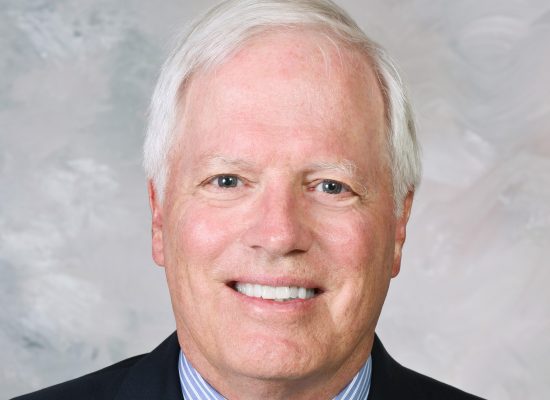
“The help DSCC provides is more important now than it’s ever been.”
Division of Specialized Care for Children (DSCC) Medical Advisory Board Chair Dr. Stephen Bash is a “Hoosier” born and raised.
He attended college and medical school at Indiana University. While doing his rotation at Riley Children’s Hospital in Indianapolis, he fell in love with pediatric cardiology.
“I had completed one year of training, but it takes two years to be board certified for pediatric cardiology,” Bash explained. “I had to make a decision to either continue my training or join my dad at his practice.”

He joined the practice and got hands-on experience treating children with many kinds of complex healthcare needs.
Bash was partially trained and was one of only three pediatric cardiologists in the state of Indiana. For 11 years, he referred his patients, who came from multiple states, to the two specialists he had trained with at Riley Children’s Hospital.
Bash was 40 years old when his dad started to retire.
“So, I figured it was time for a new wife, a Porsche or to go back into a training program,” Bash joked. “I kept my wife, never got a Porsche and completed my training to become a board-certified pediatric cardiologist. Most people do it the other way around, but I completed my academic training after being in private practice for more than a decade as a pediatrician.”
Bash, his wife, Patti, and their four children moved to Houston so that he could finish his fellowship requirements and complete an extra year of heart catheterizations at Texas Children’s Hospital.
Where’s Peoria?
At age 42, Bash was in the job market and fielding offers. Dr. William Albers at OSF Saint Francis Medical Center invited him to Peoria.
“I was invited to visit numerous places around the country. We had Peoria at the bottom of the list,” Bash said. “Patti and I decided we would keep an open mind, look around and talk to people before making our decision. “

The Bashes toured Peoria and found there was a lot to like. He joined OSF Saint Francis Medical Center, where he helped start the Congenital Heart Clinic and connected with DSCC.
“I initially started with DSCC evaluating and accrediting congenital heart program centers in Illinois,” said Bash. “I quickly realized that these centers of excellence were only one piece and began to connect with the other subspecialists in the state.”
It was Dr. Bash who had the dream of starting the Children’s Hospital of Illinois. The hospital eventually grew from 15 pediatric subspecialists in 1985, when he joined the pediatric cardiology group, to 150 pediatric subspecialists. It also underwent a $283 million project that included building a new facility.
In 1986, as Peoria was taking on this project to grow The Children’s Hospital of Illinois, Dr. Albers stepped down from chairing DSCC’s Medical Advisory Board (MAB). He asked Bash if he would like to join the board.
Bash accepted and has been serving in many ways since.
“I will continue to help”
The MAB is a diverse group of healthcare professionals. Each offers a unique perspective on how DSCC can enhance our care coordination services for children with special healthcare needs.
“Over the years I’ve worked with all kinds of subspecialists. I’ve also seen what the families have to go through,” explained Bash. “DSCC’s (program) is the only one that coordinates care statewide and helps steer these families through a confusing maze of insurance changes, seeing all kinds of specialists and understanding their treatment options. The help DSCC provides is more important now than it’s ever been.”
Knowing the many challenges medically complex children and their families face, Bash has focused on breaking down silos and building lasting connections to improve care.
“I began connecting with other doctors and providers in the state. Just like DSCC covers the entire state, Peoria’s pediatric cardiology clinic outreach is also wide-ranging,” Bash said.

“Even if we were competitors, we could still cooperate. For example, OSF could refer transplants to Chicago or St. Louis. Silos don’t work for the families, so creating lasting partnerships to help these families has always been at the forefront.”
Bash said he has always tried to make serving on the board personal because “what you see in a clinic or the hospital isn’t the same as visiting a family in the home.”
“Visiting these families in their homes gave me a much different picture of what they were going through. It was very humbling and not something you will get from your hospital clinic experience. Now, DSCC is there to help these families coordinate care.”
The University of Illinois Board of Trustees appoints DSCC’s Medical Advisory Board members for a three-year term. The MAB membership currently includes pediatric specialists in cardiology, rehabilitation, plastic and reconstructive surgery, neurology and more.
“I am so impressed by our members and all that they do,” Bash emphasized.
“The amazing parent, specialist and staff presentations to the board continue to help us learn about and better understand the different specialties, the many pieces involved in getting and providing care and the ways we can help impact making the services these families need available. We volunteer because we love what we do, and the need is so great.”
Dr. Bash retired from OSF three years ago and continues to enjoy leading the MAB.
“I feel like I’ve lived in the best age of medicine for any physician,” said Bash.
“From the development and mass production of penicillin to the eradication of polio, to the amazing procedures now being done in pediatric cardiology, we’re now doing cardiovascular surgery that I never thought would be possible in such tiny hearts,” he said.
“I’ve had a fabulous career, and DSCC has been an important part of that. There is no question that the needs of these families are very complex. As long as DSCC allows me to, I will continue to help.”
Thank you for your exceptional service, Dr. Bash!
Visit our Medical Advisory Board page to learn more about the MAB and its mission.
Affordable Connectivity Program Helps Lower Internet Costs
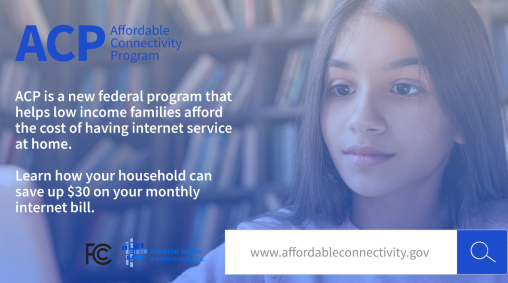
Eligible families can receive discounts on internet service and devices in their homes
Having affordable and reliable internet service at home is more important than ever.
The Affordable Connectivity Program (ACP) is a federal program to help families afford the cost of internet service and devices in their homes.
Households can qualify in a number of ways. Eligibility can be based on income, participation in other assistance programs or if anyone in the household already receives a Lifeline benefit.
Under the ACP program, eligible households may receive:
- Up to $30 per month discount for broadband service
- Up to $75 per month discount for households on qualifying tribal lands
- A one-time discount of up to $100 for a laptop, desktop computer or tablet purchased through a participating provider. The household must contribute more than $10 but less than $50 toward the purchase price.
The ACP is a program of the Federal Communications Commission (FCC).
The program is limited to one monthly service discount and one device discount per household.
To apply, go to ACPBenefit.org. You may submit your application online or print a mail-in application in English or Spanish.
Applicants also must contact their existing or preferred provider to select a plan and have the discount applied to their bill.
For complete details and to access American Sign Language videos about the program, visit www.fcc.gov/acp.
The ACP Support Center is also available to answer your questions daily from 8 a.m. to 8 p.m. at (877) 384-2575 or ACPSupport@usac.org.
For more utility and financial assistance programs, visit our online Resource Directory.
Summer Camp Fun for All Ages and Abilities

Here’s a list of day, overnight and virtual camps to help you find the right fit for your child
It’s hard to believe another school year will soon come to an end.
The good news is there are a variety of opportunities to help your children stay engaged and continue learning during the summer break.
We’ve compiled a list of virtual, day and overnight camps across Illinois for all ages.
Does your child want to make new friends? Develop new skills? Meet others with their condition or foster their independence?
Our 2022 summer camp list can help you find an opportunity that is the right fit.
Many camps are returning to in-person sessions this summer. Virtual camp opportunities are also available.
All these camps are accessible for a variety of special needs and abilities, including many of our program’s eligible medical conditions.
Our events calendar shows the summer camps listed by date. You may also search for events in your area by clicking on a regional office near you.
Know of an in-person or virtual summer camp opportunity to add to our list?
Send us the details at dscc@uic.edu. We’ll continue to update our list of camps and activities, so please check back often.
DSCC Intern Grateful for Education Opportunity of a Lifetime
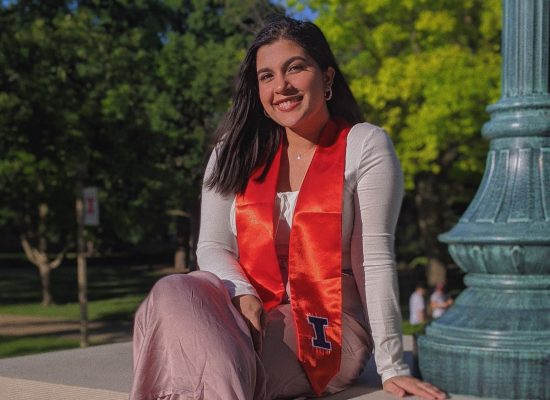
“My time with DSCC has not only shaped me as a social worker but also shaped my idea of the perfect team.”
As part of the University of Illinois Chicago, the Division of Specialized Care for Children (DSCC) offers internships and other valuable educational opportunities to college students. These opportunities help students gain real-world experience and complete their advanced degrees.
They also help develop the next generation of social workers, nurses and health care providers to serve children and families with understanding and compassion.
To celebrate Social Work Month, we’re sharing how a DSCC internship provided life-changing experiences for one young social worker.
“My time with DSCC has not only shaped me as a social worker but also shaped my idea of the perfect team,” said Sruthi Thinakkal.
Sruthi wrapped up her two-semester internship with our Marion and Olney Regional Offices in December 2021. She recently graduated with her master’s degree in social work through the BHWELL Scholars Program at the University of Illinois at Urbana-Champaign.
Drawn to partner, help and connect
Sruthi said she discovered DSCC through her advisor. When she first began looking for internships, she was struggling to find the right fit.
About a month before she had to make her decision, Sruthi’s advisor mentioned a new internship opportunity with DSCC that recently opened.
Sruthi did her research and liked DSCC’s mission and approach to helping families. She decided to apply.
“The emphasis was on partnering with families and communities to help children and youth with special healthcare needs connect to services and resources,” she said. “Also, that children and youth with special healthcare needs should be at the center of a seamless support system really stuck with me.”
When Marion and Olney Regional Manager Amy Jones reached out to Sruthi, the “deal was sealed.”
“She spoke passionately about providing families support and teaching them the skills needed for success. Her enthusiasm and sincerity were contagious,” Sruthi said.
She felt excited but worried she would miss out on important opportunities because of the pandemic and working remotely.
Sruthi soon learned she was “in a really good place” and that remote work would be smooth and successful.
“A true team approach”
“From the beginning, the Olney and Marion regional offices provided me with information, cheat sheets, everything I needed to get situated. They would reach out in so many ways,” Sruthi said. “We used chat and had weekly meetings to bond and catch up. It was AMAZING, a true team approach.“
Sruthi shadowed DSCC Care Coordinators during their comprehensive assessments and person-centered planning conversations with families. She also helped Care Coordinators with data entry, scheduling and making calls to families.
One of Sruthi’s major accomplishments during her internship was a guardianship project for DSCC families and staff members in southern Illinois.
Sruthi created an extensive, easy-to-click-through tool kit that includes definitions for the various guardianship processes, step-by-step instructions, courthouse contacts, blank copies of needed forms and legal resources. She presented the toolkit to a group of more than 50 DSCC staff members in the southern region of Illinois.
“Sruthi’s project focused on (the question), could families complete this type of process on their own?” Amy said. “She diligently contacted all 32 courthouses in both regions, put together a comprehensive tool kit, then partnered with Care Coordinators to make calls and contact families. Already, one family she helped has successfully completed the process and another continues to work through the process.”
Amy praised Sruthi’s eagerness to learn and ability to soak up information.
Lessons for a lifetime
The end of the internship was bittersweet for both Sruthi and the Marion and Olney office teams.
“It’s hard leaving a fantastic team but the lessons I’ve learned will be with me always,” Sruthi said.
“One of the biggest takeaways for me is the importance of just being there and listening. Chatting about every aspect of a kiddo, providing space to vent, helping to arrange something for a family that has so much going on every moment and obstacles no one expected, getting to know parents who are so worried about their kiddos that they forget about their own health, and hearing how they feel alone, not lonely,” she continued.
“These conversations with families each month create an everlasting relationship and lessons that I will carry with me for a lifetime.”
Sruthi is now moving to Chicago and launching her career in social work. She’s ready to take what she’s learned at DSCC and put it into action.
“I’m so grateful for my internship at DSCC,” she said.
“I will be working with the Rush Craniofacial Center team and believe that my internship experience at DSCC was key to helping me move into this position. I’m looking forward to building new partnerships, connecting individuals to the programs and tools needed for self-determination, and making sure that each patient knows that they have a team behind them that genuinely cares.”
DSCC Participant’s ‘Baby Bucket List’ Spreads Awareness and Joy
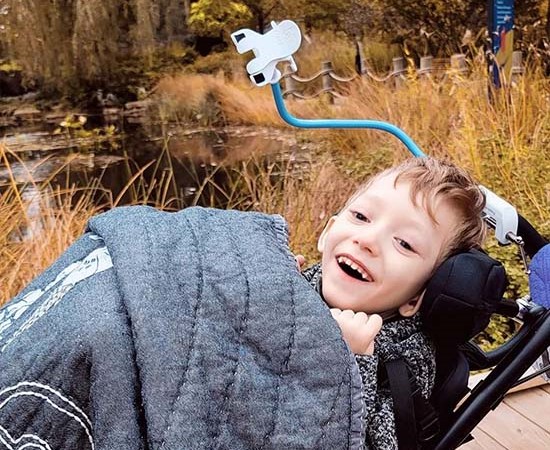
Elijah’s Baby Bucket List is a social media movement raising awareness about lissencephaly while helping 4-year-old Elijah live life to the fullest
Elijah is quite the celebrity and not just among his nine older siblings.
The 4-year-old was born with a rare, terminal genetic condition called lissencephaly.
The devastating diagnosis led his family to create a bucket list to fill Elijah’s lifetime with as much happiness and adventure as possible.
“Elijah’s Baby Bucket List” is now a popular social media movement dedicated to raising awareness about lissencephaly. It also provides opportunities for Elijah to live life to the fullest while spreading joy and making new friends and memories.
Elijah’s story has appeared on TV, in print and online. He also has thousands of followers from around the globe on platforms including Facebook, Instagram, YouTube and TikTok. His followers read about his latest experiences and enjoy videos of his infectious laughter and smile.
“He’s always happy, always laughing. It’s hard to stay sad when he’s around,” said his mother, Amy Tarpein. “He is unconditional love and the embodiment of pure joy.”
“Choose joy”

Elijah, a participant with the University of Illinois Chicago’s Division of Specialized Care for Children (DSCC), was born deaf. Approximately two months later, he was diagnosed with lissencephaly.
Lissencephaly occurs when the folds and grooves of the brain do not develop correctly.
“It was devastating. The doctors said he wouldn’t live beyond the age of 2,” Amy recalled. “We were packed and ready to spend time at my sister’s. Instead, I loaded up the kids, left the hospital and we drove to Florida to see the ocean.”
During that trip, the idea for Elijah’s Baby Bucket List was born.
“It can all be really hard, but we decided that we could either sit around and feel sorry about things or choose to give Elijah the best, God-filled life possible while he’s here. We decided to choose joy, be grateful, encourage others and hope,” Amy said.
Through “Elijah’s Baby Bucket List”, the family shares inspirational messages, videos and updates as they work through experiences on Elijah’s bucket list.
“We’ve shared about the first time he heard his sister sing, visits to the hospital and doctors, and our adventures to the Morton Arboretum, Beyond Van Gogh Exhibit, St. Louis Aquarium, hiking in the mountains, observing stars with a NASA scientist, picking pumpkins, playing in the leaves and a private screening of ‘Clifford the Big Red Dog,’” Amy said.
“The focus is on Elijah doing or watching the things on the list and making as many memories and friends as possible!”
Other recent highlights include the city of Quincy declaring Sept. 8 as Lissencephaly Awareness Day and lighting the Bayview Bridge purple in his honor. The Quincy Herald-Whig newspaper covered the special honor and Elijah’s story last fall.
“Our town came together to spread awareness and advocate for kids who are differently-abled. They lit up the bridge purple for Elijah, ” Amy said. “I can’t express the emotion that overwhelmed me when we were also given a beautiful photo of the purple bridge taken by a local artist. The community support for my family has been amazing.”
“Be a light”

Amy says her family loves Elijah fiercely. He has five grown siblings and four at home — Avayha, Isaiah, Kaylynn and Mackenzie – who dote on him.
They enjoy spending time together reading, studying, looking at and doing art, listening to music and cuddling.
“Avayha practices violin with him. She tells him the strings and what she’s playing. He loves music,” said Amy. “When we go to museums, she will read all of the descriptions and tell him about the exhibits and artwork.”
Elijah’s lessons include learning sign language and using his computer with an eye gaze device.
“He’s doing stuff they said he would never do,” Amy said. “He’s gotten really good at matching his letters, numbers, colors and shapes. He signs mom, dad, call, dog, no and will also sign ‘all done’ when he doesn’t want to get into his AFOs, the orthotics braces, because they are uncomfortable.”
Elijah’s sister Avayha wants to take him to Paris to drink lemonade and see the museums. She set up a lemonade stand to fund the trip, but the COVID-19 pandemic soon followed.
“Avayha asked if she could learn web design, so she could build up her own site,” Amy said proudly. “At 9-years-old, she studied and set everything up on her own. She’s determined to take him.”
Avayha’s website is Lemonade in Paris.
Amy calls caring for Elijah life-changing in the best possible ways.
“If someone had told me that five years ago, I would not have believed it. This was not the plan, but I love my life,” she said.
More to Explore

DSCC has worked with Elijah’s family since 2019. As Elijah continues to check off items from his baby bucket list, DSCC continues to help support his family’s journey.
“DSCC collaborates with a wide range of agencies,” said Elijah’s Care Coordinator Kathy Thomas. “We’re here to listen and help families with children with complex health needs navigate insurance, health care and other resources.”
DSCC’s Care Coordinators work countless hours helping families set and achieve their child’s goals based on their family’s unique needs.
Amy continues to plan new adventures for Elijah, stay positive and share the positivity with others.
“Elijah continues to defy the odds,” she said.
“Some things can’t be fixed, only carried! Life is full of things you can’t fix, no matter how well-intentioned you are. God, your higher power or whatever you believe in, always sends someone. I can’t explain half the stuff that happens in our lives, but we are braver together. This was not my plan, but I am truly blessed to be his momma.”
To learn more about Elijah and lissencephaly, follow Elijah’s Baby Bucket List on Facebook or visit elijahsbabybucketlist.com.
Illinois Miss Amazing Program Accepting Applications
The program provides a nurturing, empowering experience for girls and women with disabilities
Illinois Miss Amazing is accepting applications for its 2022 program.
Miss Amazing is a national nonprofit program for girls and women with disabilities. The program aims to build self-confidence and vital self-advocacy skills for participants as well as nurture a sisterhood of girls and women from different walks of life.
According to the Miss Amazing website, girls and women with disabilities face a unique set of economic, social and political challenges. The Miss Amazing program seeks to encourage future leaders and break down stereotypes by empowering girls with disabilities from a young age to take pride in who they are, to set ambitious goals and to fight for the respect that they deserve.
Miss Amazing is open to girls and women ages 5 and older who have:
- An Individualized Education Program (IEP) or Individualized Program Plan (IPP)
- A 504 Plan
- Supplemental Security Income (SSI)
- A physician’s records proving disability
Illinois Miss Amazing is accepting applications for participants and volunteers for its annual Amplify event on April 9 at the Yellow Box in Naperville. The application deadline is March 1.
The Illinois Miss Amazing experience includes:
- Show rehearsal
- Interviewing
- A fun evening wear presentation
- Sharing your passion and creativity on-stage
- Building friendships
This year’s event is in-person and will feature two shows and one big celebration.
Learn more about the Illinois Miss Amazing program and how it helped one of our participants spread her wings on stage and off at https://dscc.uic.edu/dscc-participant-promotes-illinois-miss-amazing/.
Inspire someone you know to participate in Illinois Miss Amazing.
Applications will be accepted until March 1 or as soon as all spots are filled.
Program Coordinator Assistant Earns DSCC’s 2021 Merit Award
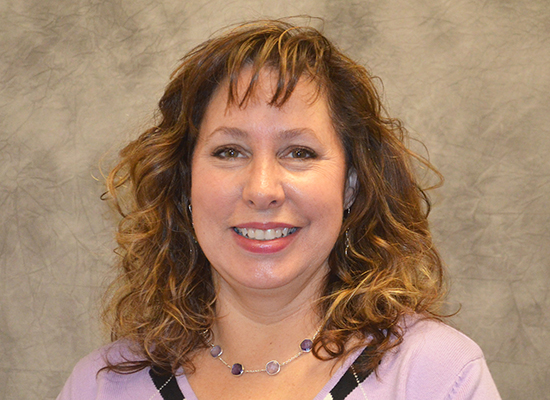
Kimberley Firkins recognized for exemplifying DSCC’s mission to partner, help and connect
Kimberley Firkins is the 2021 recipient of the Award of Merit from the University of Illinois Chicago’s Division of Specialized Care for Children (DSCC).
The award recognizes exceptional employees for outstanding dedication and service to Illinois children with special healthcare needs.
Kimberley, also known as “Kim” or “Kimba“ to co-workers, is a Program Coordinator Assistant for Home Care Region 2. She is based in the Lombard Regional Office.
Program Coordinator Assistants work as a team with Care Coordinators to meet our participant families’ needs.
Kimberley is a team player and a constant source of encouragement and support for her participant families and co-workers alike.
Her colleagues say she is friendly, welcoming and gladly offers her creativity, knowledge and skills to assist wherever needed.
She sends her Lombard teammates positive messages and self-care tips weekly to keep everyone motivated and foster a positive work environment. Those messages have helped bridge the “disconnect” of working remotely through the pandemic.
Co-workers say her calm and caring nature puts the families she works with at ease.
“Kimberley’s enthusiasm and passion for serving others are an inspiration to many,” said DSCC Executive Director Thomas Jerkovitz. “The past two years have been challenging. Kimberley’s teamwork spirit highlights that the way we are working may be different, but our dedication to each other and our participant families remains strong.”
Kimberley has worked at DSCC for 16 years in the Core and Home Care programs.
“I would like to say how fortunate I am to work in an organization that makes such a huge impact to so many people and families, especially over the last almost two years,” Kimberley said.
“I hear from families almost every day how important it is for them to hear from their care coordination team not just as their Care Coordinators or the Care Coordinators’ Assistants but as their friends as well, wanting to know how they’re doing, how things are going, and how they’re handling all of the stressors that are happening right now. It just means so much to me to know that our organization has that place in their family.”
Kimberley was an Award of Merit nominee in 2016, 2018, 2019 and 2020. She said she is both honored and surprised to receive the 2021 award.
“I am so very grateful. It means the world to me, but I don’t do what I do without everyone else. We’re all one team. We all won this,” she said.
DSCC staff nominated a total of six of their colleagues for this year’s Award of Merit. As the winner, Firkins receives an Award of Merit memento, a $2,500 award and recognition from the Executive Director.
The other 2021 nominees are:
- Cynthia Booth, Home Care Program Hospital Liaison, Chicago Home Care Regional Office
- Becca Hunt, Care Coordinator, Marion Regional Office
- Danielle Osburn, Claims Unit Assistant Supervisor, Central Administrative Office
- Tess Rhodes, Quality Improvement Specialist with Core Quality Improvement, Central Administrative Office
- Marian Walles, Care Coordinator, Mokena Regional Office
Congratulations, Kimberley! And a big thank you to all the nominees for their excellence on behalf of our children and families!
Santa Making Sensory-Friendly Stops Statewide

Free Santa visits for children with autism and other special needs
Are you ready for some Santa magic?
Autism Speaks has partnered with Cherry Hill Programs to provide sensory-friendly Santa experiences nationwide.
In Illinois, Santa will be spreading joy and holiday cheer on Dec. 5 and 12.
Join Santa in a calmer, more subdued environment. He is planning stops in communities that include:
- Aurora
- Champaign
- Chicago
- Gurnee
- Moline
- Northbrook
- Orland Park
- Peoria
- Rockford
- Rosemont
- Schaumburg
- Springfield
- Vernon Hills
These sensory-friendly Santa experiences are free. Keepsake photo packages are available to buy.
You can reserve your spot for the Santa experience online. (The organizers strongly encourage reservations.)
For more upcoming holiday events for children with special healthcare needs in Illinois, be sure to check our Special Events page often.
New Monthly Mama Therapy Group for Central Illinois Caregivers
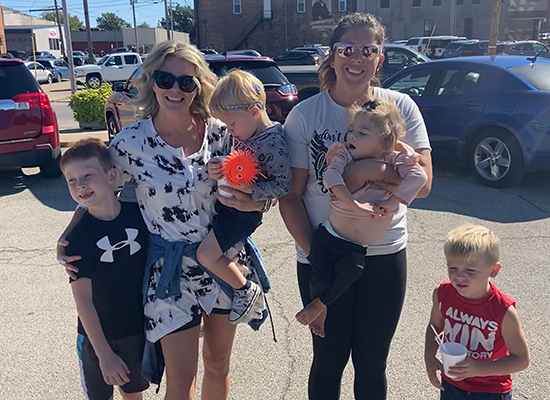
A DSCC mom and her friend started the Facebook group to connect with other parents of children with special needs
Thanks to an outing at a coffee shop, hearing aids and an impromptu conversation, two moms with children of similar ages and needs connected.
“I saw her daughter’s hearing aids. My son has them, too, so I just started talking to her,” Lace Mandrell said of her first meeting with Bailey McBurney Imig.
In no time Lace and Bailey were texting, talking and sharing tips, concerns and road trips to specialists.
Their immediate connection led to a new Facebook group called “Monthly Mama Therapy.”
Monthly Mama Therapy aims to help central Illinois caregivers of children with special needs connect with and support one another.
“If you’re trying to understand a diagnosis or therapy, running from appointment to appointment or saving for the next piece of equipment, things can be challenging,” said Lace “We just thought that having a network of moms with a wide range of experiences, ready to back you up on the good days and the bad days, would be amazing.”
Lace is the mother of two sons, Ollie and Auggie. Auggie, 3, is bilaterally deaf and has had cochlear implant surgery. He also has Chiari Malformation and was diagnosed with Waardenburg Syndrome.
“He’s a wild child who rarely stops moving,” Lace said. “He’s sweet, inquisitive and a little sponge excited about learning and soaking up everything around him.”
Auggie is a participant in the University of Illinois Chicago’s Division of Specialized Care for Children (DSCC). He has been enrolled with DSCC since 2019.
Bailey McBurney Imig is also the mother of two: Paxton, 3, and Parker, 2 1/2. Parker is deaf and has undergone multiple screenings and tests. There is still no diagnosis for her other conditions.
“With all of the testing and so few answers, I feel like she’s probably that one in a million child who will have a diagnosis named after her,” Bailey said. “But, despite all her complications, Parker is a tiny, little bundle of joy who loves attention. She’s an easy-going cuddler who is almost always happy and smiling.”
During their first meeting, Lace and Bailey related to each other right away.
“We just hit it off and I’m so glad. With HIPAA (the Health Insurance Portability and Accountability Act) and concerns for privacy, it can make it hard to connect. Then COVID-19, online therapies and everything else got thrown in,” said Lace. “It’s hard to do this stuff alone. It can get really complicated and overwhelming.”
The more Bailey and Lace talked, the more they wanted other moms in the “same or similar boat” to have a safe space where their kids could connect and they could relax, share and recharge. The seed for Monthly Mama Therapy was planted.
Monthly Mama Therapy has a private Facebook page and hosts meet-ups at local parks, coffee shops and other venues in the Champaign and Bloomington areas. Conversations online and in-person may range from accessible parks and walking trails to experiences with therapies or the transition to school.
The group promotes “therapy” and the importance of caregivers taking care of their own needs, too.
“The online community is really growing. When someone asks a question, the support and responses have been great,” said Bailey. “Our ultimate goal is to build an in-person community that’s just as strong.”
Monthly Mama Therapy hopes to continue growing online and meeting in person when the weather turns cool at central Illinois locations where distancing is possible.
“Our wish list includes adding some veteran parents who are willing the help the ‘newbies’ navigate and prepare for the transitions ahead,” said Lace. “We’d also love to add activities like exercise or yoga to do together.”
For more information, visit the Monthly Mama Therapy Facebook page.