


DSCC Quality Specialist Honored for Service to Families in Crisis
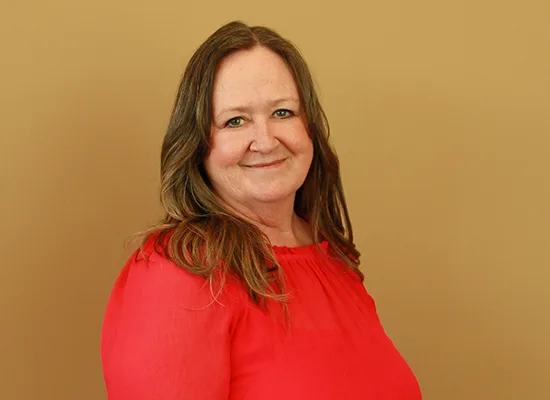
CountyCare awarded Tess Rhodes its Certificate of Excellence for her commitment and dedication
Tess Rhodes is a registered nurse on our Quality Improvement Team. She collaborates with her Division of Specialized Care for Children (DSCC) teammates and partner organizations across Illinois to make sure children in crisis have the right support.
A managed care health plan recently honored Tess for these efforts to protect the safety of children and families.
CountyCare’s Health, Safety and Welfare Team awarded Tess its Certificate of Excellence. The certificate recognizes her “tremendous commitment and dedication” to keeping County Care participants safe and meeting their families’ needs.
Tess said she couldn’t do this important work without DSCC’s care coordination teams and our partners in the community.
DSCC has a contract with CountyCare to provide care coordination to the children and youth with special healthcare needs in its Medicaid managed care health plan.
As a Core/Connect Care Quality Improvement Specialist, Tess helps DSCC’s care coordination teams when a participant enrolled in CountyCare has a critical incident.
Critical incidents are events or situations that create a significant risk of substantial or serious harm to a participant’s physical or mental health, safety or well-being. They can include:
- Abuse or neglect
- Harassment or bullying
- Death of a family member
- Significant injuries
- Medication or treatment errors
- Threat of self-harm
DSCC works with CountyCare to report these incidents and make sure our teams respond to reduce any risks for our participants and help them get the right resources and services they need.
When DSCC team members learn of a critical incident, they must report it to CountyCare within 24 hours of notification.
Tess says it’s important to first ensure that our child/youth is safe and that their family receives the right support for their situation.
Tess and the DSCC care coordination teams work alongside CountyCare staff, the child’s medical team and others to provide access to services and resources.
The DSCC Care Coordinator checks in with the family bi-weekly after a crucial incident to help and monitor the outcome. Tess assists in the process by guiding the participant’s Care Coordinator and providing more resources and materials for education.
Once CountyCare closes a critical incident, Tess continues to monitor the situation and provides final updates at the 30-, 60- and 90-day marks. She also coordinates meetings for all care team members to discuss the incident and develop a plan of support.
“This requires very detailed organizational skills, and Tess never misses an update or chance to help,” her supervisor, Quality Improvement Manager Brandon Bartels, said.
Brandon praised Tess’ “exceptional” communication with CountyCare and her collaboration to keep participants’ and families’ needs at the forefront.
“Tess has received accolades by email from their team multiple times, so this Certificate of Excellence proves not only have they valued her efforts in the past but her continued support for our participants, Care Coordinators, and relationship with CountyCare is truly making an impact,” he said.
Congratulations, Tess! We are grateful for your compassion, teamwork and commitment to children and families!
Share Your Feedback on Illinois’ Plan for Maternal, Child and Family Health

Illinois’ Maternal and Child Health Services Title V Block Grant application is open for public comment until July 21
Illinois families, you have an opportunity to share your input on the state’s latest Maternal and Child Health (MCH) Services Title V Block Grant application and report.
The MCH Title V Block Grant is a federal and state partnership to improve the health and well-being of all mothers, infants and children. The block grant is authorized by Title V of the Social Security Act.
Every state receives MCH Title V Block Grant funds. At least 30 percent of these funds must support services for children and youth with special healthcare needs.
The Division of Specialized Care for Children (DSCC) has managed Illinois’ Title V program for children and youth with special healthcare needs since 1937.
Each year, states must complete an application for future funding and an annual report of our MCH activities from the last federal fiscal year. DSCC has partnered with the Illinois Department of Public Health (IDPH) to help with Illinois’ latest application.
The 2024 MCH Title V Block Grant Application and 2022 Annual Report are posted on the IDPH website. You can also see Illinois’ updated MCH Title V Block Grant Action Plan for 2021-25, which includes the Title V priorities, national performance measures and strategies.
You can share your comments or recommendations on these documents until noon on July 21.
Please send comments to Title V Coordinator Cassidy Chambers at Cassidy.Chambers@illinois.gov.
More details are on the IDPH website.
For more information about DSCC’s Title V role, check out our Fiscal Year 2022 Annual Report.
Important Reminders: End of Public Health Emergency and Return to In-Person Visits
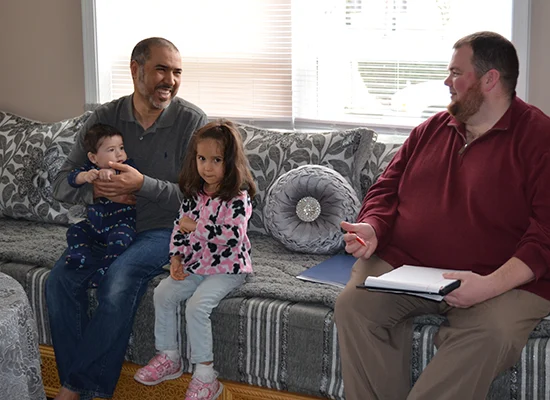
An overview of key changes affecting all Division of Specialized Care for Children participants now that the public health emergency is over
The public health emergency due to the COVID-19 pandemic ended on May 11, 2023.
This ending brings a variety of changes for our Division of Specialized Care for Children (DSCC) participant families. These changes include a return to in-person visits from DSCC Care Coordinators, an end to verbal signatures and more.
The following sections give an overview of key points and important dates to remember:
- Reminders for All DSCC Program Participants
- Reminders for Home Care Program Participants
- Important Medicaid/Insurance Updates for All DSCC Participants in Medicaid
- Contact Reminders for All DSCC Program Participants
Reminders for All DSCC Program Participants
Return to In-Person Visits
Meeting in person with our participants and families is an important part of care coordination. The public health emergency allowed face-to-face visits to occur virtually. Now that the public health emergency has ended, we must return to face-to-face meetings with our participants.
Your DSCC Care Coordinator will work with you in advance to schedule your next in-person/home visit. We understand that in-person visits with your Care Coordinator may be a change for you and your family. We paused these visits for several years during the public health emergency (though many families continued to meet with their Care Coordinator during the pandemic).
Seeing you in person helps us get to know you and your family better. It can also help improve your connection with your DSCC Care Coordinator. Our partnership with Medicaid and Medicaid managed care plans also requires us to meet with you in person. If you have any concerns about in-person visits, please talk to your Care Coordinator. We will work with you to see how to best accommodate your preferences.
Verbal Signatures
The public health emergency allowed your Care Coordinator to receive necessary signatures verbally. As of May 11, 2023, it is a federal rule that DSCC can no longer accept verbal signatures.
- Electronic signature options (such as through Adobe) remain an option for families when signing DSCC documents.
Reminders for Home Care Program Participants
End of Continued Medicaid and Program Enrollment for Those Found Ineligibile for Services
Starting April 1, 2023, DSCC began working with the Illinois Department of Healthcare and Family Services (HFS) to reassess all Home Care Program participants who received a notice of ineligibility for the program since March 1, 2020. Now that the public health emergency has ended, HFS’ notices accurately list the approved level of services for you or your child.
- If you or your child received a notice of ineligibility for services since March 1, 2020, your services will remain in place until HFS completes a reassessment. The reassessment looks at your updated and current medical documentation and will occur before Sept. 30, 2023.
- If you or your child received a notice of reduced nursing hours since March 1, 2020, your Care Coordinator will complete the next reassessment of services at your regularly scheduled renewal time. Services will remain in place until this reassessment occurs.
Reminders for Individuals in the Non-Waiver Program (Nursing and Personal Care Services)
Now that the public health emergency has ended, all individuals who turn 21 and are not on the Home and Community-Based Services Waiver for Those Who Are Medically Fragile Technology Dependent (MFTD), will not be eligible for services. If you or your child were on non-waiver services and turned 21 between the dates of March 1, 2020, and March 31, 2023, services will end on Sept. 30, 2023. Your Care Coordinator will work with you to ensure you or your child is set with an alternate state waiver, such as the Division of Rehabilitative Services (DRS), if applicable.
For all non-waiver participants under age 21, you must continue to have Medicaid coverage to receive Home Care services. It is important that you submit the redetermination form from Medicaid to keep your coverage. If you fail to meet Medicaid eligibility or do not respond in time, HFS will cancel your Medicaid case. Your Home Care services will then also end.
Additional COVID-19 Respite Allotment
During the public health emergency, HFS approved an additional 336 hours of respite to use before the regular respite allotment. This additional respite is for all Home Care MFTD waiver participants. Starting Nov. 11, 2023, this additional COVID respite will expire. All respite used after Nov. 11, 2023, will come from the standard respite allotment.
Personal Protective Equipment (PPE)
During the public health emergency, nursing agencies were reimbursed for PPE when actively staffing nurses in the home. The PPE is for the nurses to use while caring for participants. This reimbursement of PPE supplies to the nursing agencies will end on Nov. 11, 2023.
Nursing Supervisory Visits
Nursing agencies resumed in-person supervisory visits in November 2020. Effective May 11, 2023, there can be no exceptions to replace in-person supervisory visits.
Important Medicaid/Insurance Updates for All DSCC Participants in Medicaid
These next sections explain important Medicaid updates now that the public health emergency and continuous Medicaid coverage period has ended. The end of the public health emergency may also affect your Medicaid coverage or your private health insurance coverage.
No More Copays or Premiums for Medicaid
Most Medicaid programs no longer have premiums or copays. All Kids Assist, Aid to the Aged Blind and Disabled (AABD) and Adult Medicaid do not have monthly premiums or copays for services. All Kids Premium 1, Premium 2 and Share programs are all called All Kids Assist now.
Medical Redetermination for Medicaid
Redetermination is when Medicaid looks to see if you are still eligible. They look at your residency, monthly income and other criteria to decide if you still qualify.
Medicaid sent forms to some members as early as May 2023. They will not complete redetermination on all cases at the same time. They will make the redeterminations over several months. This means that your Medicaid redetermination could happen now or later, even next year. It is important to make sure Medicaid has your current address. You can report your address online at Medicaid.illinois.gov or call (877) 805-5312. We also have a news post with more details about how to update your address.
Please watch your mail for letters from Medicaid.
Once you receive your redetermination notice, you will have about a month to respond. Medicaid may ask for more information about your income, residency or other information. If Medicaid asks for more information and you do not respond, your Medicaid coverage ends. You can return the redetermination in several ways:
- Online at ABE.illinois.gov using Manage My Case. Manage My Case is the quickest way to complete your redetermination.
- By mail.
- In person at a local Illinois Department of Human Services (DHS) Family Community Resource Center.
- By phone.
If you are in a Medicaid managed care plan (MCO), please remember the MCO does not do the redetermination. Medicaid does redetermination reviews. If you do not qualify for Medicaid anymore, your coverage ends. If you are still eligible, you keep your Medicaid coverage.
Don’t risk losing your health insurance. Please update your address with Illinois Medicaid. It’s easy, fast and free:
- Call (877) 805-5312 from 7:45 a.m. to 4:30 p.m., Monday through Friday.
- Visit medicaid.illinois.gov.
- If you use a TTY, call (877) 204-1012.
Please contact your DSCC Care Coordinator if you have questions about Medicaid redetermination.
Telehealth Coverage
Telehealth coverage for Medicaid (and other insurances) is a permanent change and will continue after the public health emergency to give Medicaid time to review for any future changes. You can review the HFS Provider Notice issued May 9, 2023, on Telehealth to learn more.
An Illinois law signed in 2021 requires insurance to cover telehealth through 2027. This law does not require that practitioners or providers offer telehealth services. Therefore, your providers may not offer telehealth care. The law only says that insurance must pay providers for telehealth care if they provide it.
Pharmacy Billing and Prior Approval Requirements
Pharmacy billing and prior approval requirements for Medicaid will resume. There were many flexibilities that allowed Medicaid members to get medications. These include overriding the refill too soon and waiving requirements for the preferred drug list, quantity and brand limits. If you go to the pharmacy and they tell you that you can’t get your medications, ask your doctor to submit a prior approval to Medicaid. You can review the HFS Provider Notice issued May 3, 2023, on Pharmacy Billing to learn more. Contact your DSCC Care Coordinator for more help.
DME and Therapy Prior Approval Requirements
DME and therapy prior approval requirements for Medicaid will resume. There are some services that Medicaid did not require a prior approval for during the public health emergency. These services include therapy, home health and some durable medical equipment (DME). It is important for your providers to get a prior approval so that Medicaid reviews medical eligibility for the services. You can review the HFS Provider Notice issued April 4, 2023, on Prior Approval Requirements for more details. Contact your DSCC Care Coordinator for more help.
COVID-19 Tests, Treatment, and Vaccines
Uninsured individuals will no longer get access to special COVID-19 Medicaid eligibility which included testing, services, treatment, and vaccine administration during the public health emergency. You can view the HFS Provider Notice issued May 9, 2023, on Uninsured Population Special COVID-19 Coverage. Medicaid members who do have eligibility will continue to be able to access treatment, testing and vaccines.
Those with private insurance should also be able to continue to access treatment and vaccines as outlined by their plan.
Insurance plans will no longer cover over-the-counter tests for COVID-19 for free. Generally, a doctor will need to order the test and provide them in an office or similar facility. This may vary from plan to plan. You should call your insurance plan if you have questions. There may also be community organizations or public health departments still distributing COVID-19 tests and related services, such as vaccines, for free.
Extension of COBRA
During the public health emergency, there was an extension of election and notice deadlines for someone to take COBRA after losing or leaving a job. That will expire 60 days after May 11, 2023.
Temporary Special Enrollment Period
For individuals who no longer qualify for Medicaid after they go through redetermination, there is a special open enrollment period through the federal health insurance marketplace to purchase private insurance. It will extend from March 31, 2023, to July 31, 2024. This is only for people with a special qualifying event, such as losing coverage. Otherwise, the regular open enrollment period will be in November and December for individuals who need to enroll in private insurance through the marketplace. The Illinois website is GetCovered.illinois.gov and the federal website is HealthCare.gov.
Questions? Contact Us!
As a DSCC participant family, you can contact us with any questions or support your family needs.
Please note the best way to reach your care coordination team or any DSCC office is through our toll-free number of (800) 322-3722.
You can use this number to dial your Care Coordinator’s direct extension or to have our Customer Service Representatives connect you with the right person/team.
We have updated our phone system and ask everyone to use the (800) 322-3722 number as the simplest and fastest way to reach us.
Our office hours are 8 a.m. to 4:30 p.m. Please talk to your Care Coordinator if you have a need to speak outside of business hours.
You may also reach us through our general dscc@uic.edu inbox or use our Contact Us or Request a Callback forms on our website.
Please talk with your Care Coordinator if you have more questions or need to update your communication preferences.
We are thankful for your partnership throughout the changes related to the end of the pandemic and public health emergency. Our team will continue to help support your family and connect you with the right services and resources.
Leadership and Education Opportunity for Caregivers Living with Complex Medical Needs

National Consumer Scholars can develop leadership skills and share their experiences to help improve care and services for people with complex health and social needs
A leadership development program is available for caregivers and advocates who live with and/or care for someone with complex medical needs.
The Camden Coalition is accepting applications for its 2023-24 National Consumer Scholars program.
In the National Consumer Scholars program, caregivers and advocates can take part in peer-led leadership development activities. They play an active role in the coalition’s annual conference and bring lessons back to their local communities. Consumer Scholars also work alongside Camden Coalition staff to develop and inform the complex care field.
National Consumer Scholars have firsthand experience living with and/or caring for someone with complex health and social needs. They also have experience working as a consumer/patient advisor/advocate and/or community leader.
The program is open to individuals from across the country who represent many different experiences.
Learn more about the program and how to apply on the National Consumer Scholars program website.
The application deadline is May 31.
For more information, contact Evelyne Kane at ekane@camdenhealth.org.
2023 Summer Camp Opportunities for All Ages and Abilities

Check out our list of inclusive camps to help you find the right fit for your child
It’s never too early to start planning for summer break activities.
Fortunately, there are a variety of opportunities for children and young adults with special healthcare needs.
We’ve compiled a list of day and overnight camps across Illinois as well as virtual programs.
Does your child want to make new friends? Develop new skills? Meet others with their condition or become more independent?
Our 2023 summer camp list can help you find the right fit.
These camps are accessible and inclusive for a variety of needs, including many of our program’s eligible medical conditions.
Our events calendar shows the summer camps listed by date. You may also search for events in your area by clicking on a regional office near you.
Know of a good summer camp opportunity to add to our list?
Send us the details at dscc@uic.edu. We’ll continue to update our list of camps and activities, so please check back often.
Important Updates on the End of Continuous Medicaid Coverage and Appendix K

Key dates to know and an overview of the impact on DSCC participants and families
We are starting to prepare for the end of the public health emergency due to the COVID-19 pandemic. We’ve put together important information about how it will affect our Division of Specialized Care for Children (DSCC) participants and their families.
When the public health emergency took effect in 2020, the federal government allowed continuous Medicaid coverage and flexibilities for individuals receiving services through a Medicaid waiver. The federal government has signaled that the public health emergency will end on May 11, 2023. Please note the federal Centers for Medicare and Medicaid has not yet confirmed this date in writing.
We want to keep our participants as up-to-date as possible and will let you know if this date changes. In the meantime, we want to explain what changes will occur once the public health emergency and continuous Medicaid enrollment end.
The following sections give an overview of:
- The end of continuous Medicaid coverage
- The changes for all DSCC participants and families
- The impact on those enrolled in the Home Care Program
End of Continuous Medicaid Coverage
When the public health emergency began in 2020, the federal government allowed for continuous Medicaid coverage. This flexibility meant no one would lose Medicaid coverage during this time. The federal government is now ending continuous Medicaid coverage on March 31, 2023.
Starting April 1, Illinois Medicaid must review eligibility for all Medicaid cases. This process is called redetermination. Redetermination is when Medicaid looks to see if you are still eligible. They look at your residency, monthly income and other criteria to decide if you still qualify.
Medicaid will send forms to some members as early as May 2023. They will not complete redetermination on all cases at the same time. They will make the redeterminations over several months. This means that your Medicaid redetermination could happen in May or later this year.
It is important to make sure Medicaid has your current address. You can report your address online at Medicaid.illinois.gov or call (877) 805-5312. We also have a news post with more details about how to update your address. Please watch your mail for letters from Medicaid.
Once you receive your redetermination notice, you will have about a month to respond. Medicaid may ask for more information about your income, residency, or other information. If Medicaid asks for more information and you do not respond, your Medicaid coverage ends. You can return the redetermination in several ways:
- Online at ABE.illinois.gov using Manage My Case. Manage My Case is the quickest way to complete your redetermination.
- By mail.
- In person at a local Illinois Department of Human Services (DHS) Family Community Resource Center.
- By phone.
If you are in a Medicaid managed care plan (MCO), please remember the MCO does not do the redetermination. Medicaid does redetermination reviews. If you do not qualify for Medicaid anymore, your coverage ends. If you are still eligible, you keep your Medicaid coverage.
Don’t risk losing your health insurance. Please update your address with Illinois Medicaid. It’s easy, fast and free:
- Call (877) 805-5312 from 7:45 a.m. to 4:30 p.m., Monday through Friday.
- Visit medicaid.illinois.gov.
- If you use a TTY, call (877) 204-1012.
Please contact your DSCC Care Coordinator if you have questions about Medicaid redetermination.
Changes for All DSCC Program Participants:
- In-Person Visits: The public health emergency has allowed flexibility for in-person visits. As the public health emergency ends, DSCC must resume all in-person visits by Nov. 11, 2023. Your DSCC Care Coordinator will work with you to schedule your next in-person/home visit.
- Verbal Signatures: The public health emergency also allowed your Care Coordinator to receive necessary signatures verbally. As the public health emergency ends, we can no longer accept verbal signatures beginning May 11, 2023.
Impact on DSCC Participants in the Home Care Program:
The COVID-19 public health emergency has allowed several flexibilities for those in the Home Care Program in two separate areas:
- Continuous Medicaid and program enrollment for those found ineligible for services beginning March 1, 2020
- Appendix K flexibilities (Appendix K is an emergency coverage document for individuals receiving services through a Medicaid waiver.)
The following is important information about how the end of the public health emergency will affect Home Care Program participants.
End of Continued Medicaid and Program Enrollment for Those Found Ineligible for Services:
- There have been no reductions or loss of eligibility for Home Care participants since March 1, 2020. In 2022, the federal government separated the continuous Medicaid enrollment coverage provision from the public health emergency. As a result, continuous Medicaid coverage will end on March 31, 2023.
Starting April 1, 2023, DSCC will work with the Illinois Department of Healthcare and Family Services (HFS) to determine eligibility. We will reassess all Home Care Program participants who received a notice of ineligibility for the program since March 1, 2020. If you or your child received a notice of ineligibility for services since then, your services will remain in place until we complete a reassessment. The reassessment will look at your updated and current medical documentation. This includes individuals who appealed and were still deemed ineligible for services. Based on the new reassessment, HFS will send you an updated notice. This notice will state whether you or your child are eligible for Home Care services. Your DSCC Care Coordinator will work with you to complete a reassessment before Sept. 30, 2023.
- If you or your child received a notice of reduced nursing hours since March 1, 2020, your Care Coordinator will complete the next reassessment of services at your regularly scheduled renewal time. Services will remain in place until this reassessment occurs. After this reassessment, HFS will send you a new notice based on updated and current medical documentation. The notice will list the new level of services.
More Information for Individuals in the Non-Waiver Program (Nursing and Personal Care Services):
- You will no longer receive Home Care Program nursing services if you or your child turned 21 and are not on the MFTD waiver but still receive nursing. Your nursing services will end on Sept. 30, 2023. Your Care Coordinator will work with you to ensure you, or your child is set with an alternate state waiver, such as the Division of Rehabilitation Services (DRS), if applicable. If you or your child will turn 21 on or after March 31, 2023, services will end on the date indicated on the current notice of ineligibility.
- For all non-waiver participants under age 21, you must continue to have Medicaid coverage to receive Home Care services. It is important that you submit the redetermination form from Medicaid to keep your coverage. If you fail to meet Medicaid eligibility or do not respond in time, HFS will cancel your Medicaid case. Your Home Care services will then also end. For more information on the Medicaid redetermination timeline, see the dates above.
Appendix K Flexibilities
Appendix K is an emergency coverage document for individuals receiving services through a Medicaid waiver. Appendix K provisions took effect on March 1, 2020, to give flexibility to Home Care participants. Appendix K is tied to the public health emergency, which is determined by the federal government.
As we noted above, the federal government has indicated the public health emergency will end on May 11, 2023. Appendix K provisions would then continue for six months after the public health emergency ends. Therefore, Appendix K flexibilities will end on Nov. 11, 2023. However, DSCC worked with HFS to make two flexibilities permanent. Here are more details on what will change and what will remain in place:
- Licensed (RN or LPN) parent/LRA paid caregivers: Parents/legally responsible adults (LRAs), including foster parents, can continue to provide skilled nursing services to their child if they hold an active registered nurse (RN) or licensed practical nurse (LPN) license. DSCC sent a separate notice on this provision remaining permanent, which includes details on guidelines. (You can also read our news post on Home Care Program Changes Give Families More Flexibility and Support.)
- Overtime: Nursing agencies will permanently receive payment for providing overtime hours to Home Care participants. DSCC sent a separate notice on this provision remaining permanent, which includes details on guidelines. (You ou can also read our news post on Home Care Program Changes Give Families More Flexibility and Support.)
- Additional COVID-19 respite allotment: During the public health emergency, HFS approved an additional 336 hours of respite to use before the regular respite allotment. This additional respite is for all Home Care MFTD waiver participants. Starting Nov. 11, 2023, this additional COVID respite will expire. All respite used after Nov. 11, 2023, will come from the standard respite allotment.
- Personal Protective Equipment (PPE): During the public health emergency, nursing agencies were reimbursed for PPE when actively staffing nurses in the home. The PPE is for the nurses to use while caring for participants. This reimbursement of PPE supplies to the nursing agencies will end on Nov. 11, 2023.
- Nursing Supervisory Visits: Nursing agencies resumed in-person supervisory visits in November 2020. Effective May 11, 2023, there will be no exceptions allowed to replace in-person supervisory visits.
Please contact your DSCC Care Coordinator at (800) 322-3722 if you have questions or are unsure how this information may impact your family.
We are thankful for your partnership throughout the pandemic and public health emergency. Our team will continue to help support your family and connect you with the right services and resources.
Permanent Home Care Program Changes Give Families More Flexibility and Support
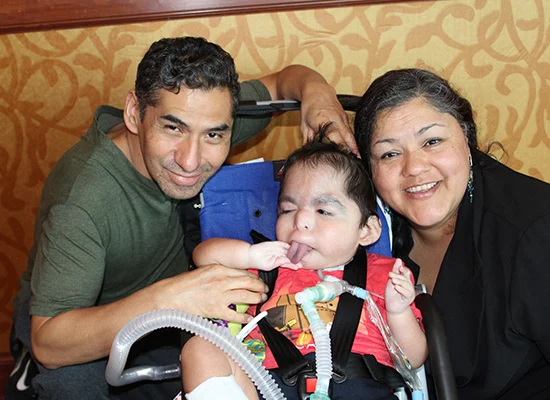
Paid licensed caregivers and nurse overtime are now permanent options for Home Care families
We have exciting news about long-term changes to the Home Care Program. We have listened to our participant families and made two pandemic-related benefits permanent. These changes can provide continued flexibility and support beyond the public health emergency.
When the COVID-19 pandemic began in March 2020, UIC’s Division of Specialized Care for Children (DSCC) partnered with the Illinois Department of Healthcare and Family Services (HFS) to address our Home Care families’ needs. Together, we set provisions included in Appendix K. Appendix K is an emergency coverage document for individuals receiving services through a Medicaid waiver.
We continued to partner with HFS to make two provisions permanent for Home Care participants. As a result, nurses can continue to provide overtime. Licensed parents/legally responsible adults (LRAs) can also remain paid nurse caregivers for their children enrolled in Home Care.
Below are more information and guidelines on these new permanent changes.
Licensed (RN or LPN) Parent/LRA Paid Caregivers
Parents or LRAs, including foster parents, can provide skilled nursing services to their children if they hold an active registered nurse (RN) or licensed practical nurse (LPN) license.
This approval includes participants enrolled in medically fragile, technology-dependent (MFTD) waiver services and non-waiver services. This approval is for all children approved for Home Care services, regardless of the child’s age.
Guidelines include:
- The licensed parent/LRA must be a nurse employee of a DSCC-approved nursing agency. The nursing agency sets the number of hours the parent can work each week.
- Services may begin on the licensed parent/LRA’s hire date.
- The licensed parent/LRA must meet all nursing agency rules for provider qualifications and training.
- The licensed parent/LRA can work overtime hours. Overtime is anything over 40 hours a week.
- The licensed parent/LRA must hold an active RN or LPN license.
- Licensed parents/LRAs may not provide respite services under the waiver.
- Licensed parents/LRAs cannot receive reimbursement for nurse training.
- The total nursing hours may not exceed the approved resource allocation.
Overtime
Nursing agencies will permanently receive payment for overtime hours to Home Care participants. Overtime hours benefit the participant and family. They also allow nurse caregivers to provide more nursing coverage to participants. The possibility of overtime also incentivizes the nurse caregiver to provide more coverage. Overtime allows nursing agencies to cover more authorized hours while stretching their staffing over fewer nurses. This is especially helpful to families during a time of increased demand for nurses.
Guidelines include:
- Under the Fair Labor Standards Act, overtime is anything over 40 hours a week.
- The Nurse Practice Act prohibits working more than 16 hours in a 24-hour period. An eight-hour break between shifts is also mandatory.
- Overtime is defined as time-and-a-half.
- Overtime reimbursement comes from the approved resource allocation. The amount billed cannot exceed the HFS-approved resource allocation.
- Those on the MFTD waiver cannot use overtime when using respite hours.
- Parents/LRAs who are nurse paid caregivers can work overtime. The parent/LRA is an employee of the nursing agency. The nursing agency determines the number of hours the parent can work each week. The number of hours cannot exceed the approved resource allocation.
- Nurses can only be eligible for overtime when Medicaid is the payer. When private insurance is the payer, nurses cannot receive overtime pay.
Please contact your DSCC Care Coordinator with any questions or concerns.
We hope these permanent changes will continue to benefit your family.
DSCC Teen Starts Podcast on Disability

Petra Petty hopes to promote greater understanding and disability representation
Petra Petty says she’s fought for greater understanding and representation of the disability community her whole life.
The 17-year-old Kewanee high school student was born with cerebral palsy and uses a wheelchair. As she’s grown, she’s advocated for greater accessibility in her school district’s buildings. She also successfully pushed for a wheelchair swing at a local park playground.
She’s also passionate about other social justice issues and being an advocate for others.
Now Petra gets to share this passion and her experiences with a wider audience.
Petra recently started a podcast called “Roll With It.” The podcast focuses on living with a disability, current events, pop culture and more.

“I always had a desire to start one,” Petra said. “I’ve always loved talking about my opinions, and I’ve always been on social media, but I felt like I needed a longer form to share my thoughts. So, I just decided to make one. And I really love podcasts.”
Petra is a participant in the Division of Specialized Care for Children (DSCC). DSCC partners with families to help them find the right services and resources for their child’s special healthcare needs.
Petra says DSCC has helped her family with insurance coverage issues and how to navigate the healthcare system as a whole. As Petra has grown, she gets to speak with her DSCC Care Coordinator herself during regular check-ins.
“I really love talking to her and having someone to ask questions to and who I can also relate to,” Petra said of her current Care Coordinator Sarah Kelly. Sarah also has a disability and uses a wheelchair. “It helps a lot.”
Petra started the “Roll With It” podcast in September. She started with weekly episodes and took a short break during her high school exams and the holidays. She thinks of different topics to cover by drawing inspiration from current events, feedback from her social media followers and daily life experiences.
“People don’t understand disability,” she said. “I talk about the struggles and the dynamics of it. I want to show non-disabled people how it really is and not just what they think it is.”
Petra’s received great feedback so far.
“I have classmates that listen to it and teachers,” she said. “People have been supportive.”
Petra is also noticing a difference within herself since starting the podcast.
“I’ve learned how to be more open and honest and be less afraid. It’s given me a lot of confidence,” she said.
“Roll With It” is available on Spotify and Amazon Music.
Petra is excited to see where it leads. She currently plans to go to college and major in psychology and minor in political science or social justice.
Petra was also recently selected to join the Girls Committee of the Illinois Council on Women and Girls. Lt. Gov. Julianna Stratton chairs the council, which advises Gov. JB Pritzker and the General Assembly on policy issues affecting women and girls.
Participants on the council’s Girls Committee share their experiences and perspectives to help make Illinois a place where all girls can thrive.
Petra said she hopes to continue to be a force for positive change through the council.
She also encourages other teens to not let fear or doubt hold them back from trying something new and sharing their voices.
“If it doesn’t work out, it doesn’t work out,” she said. “You never know until you try.”
You can learn more about Petra’s background and podcast in this news article from the Kewanee Star Courier.
Congratulations, Petra!
New Improvements to DSCC Family Surveys
Updates make it simpler and more convenient for our participant families to share feedback
Our participant families are important to us, and your feedback matters. We’ve updated our family survey process to make it easier for you to share your thoughts about our services.
All participant families receive a series of surveys at certain points in their child’s journey with the Division of Specialized Care for Children (DSCC).
We’ve simplified the process so all families will receive our annual survey at the same time. We will also send you fewer surveys throughout the year.
On Feb. 15, you will receive our updated annual survey. This survey replaces the questions you previously received on your enrollment anniversary.
All families will receive this annual survey every February, regardless of enrollment date.
The survey asks how well DSCC team members are supporting your family and meeting your needs. It also asks about:
- Your contact preferences
- How and when you’d like to meet with our team
- How well our staff communicates with you
How Your Feedback Makes a Difference
Your responses will help us strengthen your services. It also informs our decisions about DSCC policies and procedures that affect your family.
Our surveys are optional, but we strongly encourage you to share your experiences. We want to ensure we’re doing all we can to help you meet your family’s needs and achieve your goals.
We make it a priority to not only listen to our participant families but to follow up on your ideas and concerns.
Recent and ongoing improvement projects that stem from family feedback include:
- We are strengthening our financial assistance process to serve families more quickly and efficiently.
- We are providing more training to our team so they can better explain and share information about state benefits.
- We will begin hosting a series of free webinars in 2023 for participant families to learn about health insurance plans, Medicaid coverage and more.
- We created new tip sheets to explain available benefits and services through the Medicaid waiver for those who are medically fragile and technology dependent (MFTD waiver). You can find these tips sheets on our Waiver Services for Home Care Families page.
We also spent 2022 looking at how to make our survey process more convenient for families. These efforts included gathering feedback from our Family Advisory Council.
FAC members shared concerns about the number of surveys families receive. In response, we removed our series of surveys focused on education. Now you can answer just a few questions about your child’s education needs on the annual survey.
You can find a complete list of our surveys on our Family Surveys page.
Please be on the lookout for the new annual survey on Feb. 15. You will receive this survey either by email or mail, based on your preferences.
If you have questions or need more information, please contact your Care Coordinator.
We appreciate your partnership and look forward to hearing from you!
DSCC Invites Teens to Take Part in New Project to Improve Mental Health Support

The B.E.S.T. research study looks at how care coordination services that include mental health support can benefit teens with intellectual and developmental disabilities.
Adolescence can be a challenging time for teens with intellectual and developmental disabilities (IDD).
It’s not unusual to feel sad, stressed or overwhelmed.
A new research study opportunity can help teens with IDD learn how to manage these feelings and cope with times of change.
The study is called Behavioral Health Stratified Treatment (B.E.S.T.) to Optimize Transition to Adulthood for Youth With IDD.
The B.E.S.T. study wants to understand if care coordination services that include mental health programming can help teens with IDD live happier and healthier lives.
The study is available for some teens and young adults enrolled with the University of Illinois Chicago’s Division of Specialized Care for Children (DSCC). Eligible DSCC participants must be enrolled in DSCC’s Core Program or Connect Care Program. (Please note that DSCC teens enrolled in the Home Care Program are not eligible to participate.)
All DSCC participants receive care coordination services. The B.E.S.T. study looks at if it’s more beneficial for DSCC teens to receive care coordination that also includes programs to help with mood and stress.
The B.E.S.T. study is a free and voluntary project. Teens can join the study if:
- They currently have a DSCC Care Coordinator and are enrolled in DSCC’s Core or Connect Care programs.
- They are between 13 and 20 years old.
- They have an intellectual or developmental disability.
- They can comprehend at a fourth-grade or similar level.
- They can read and speak English.
- They have a computer, tablet or smartphone they can use to access the internet.
- They have permission from their parent, caregiver or guardian (if they are under 18).
More than 200 DSCC participant families have enrolled in the study as of June 2023.
“I am thankful for the B.E.S.T. program,” one parent participant shared. “It’s helping (my daughter) voice feelings. I hope the program continues for her.”
The B.E.S.T. study team developed the project with input from a group of B.E.S.T. Study Scholars. These scholars are teenagers with IDD who tested and reviewed all of the B.E.S.T. study materials.
“I loved working on the B.E.S.T. project because I got to share my experiences as a teen with a disability,” B.E.S.T. Study Scholar Erin Compton said. “Sometimes people with disabilities have health problems, but we aren’t going to let that stop us.”
Erin also praised the B.E.S.T. study team, led by Project Director Iulia Mihaila, Ph.D.
“I loved working with Iulia and the team because they respected me and all the other self-advocates on the project as leaders,” she said. “B.E.S.T. has a really good team, and I loved being a part of it.”
Erin’s mom, Diane Compton, said the project is a great opportunity to include the voices of those with disabilities.
“The B.E.S.T. team really excelled at including the voices and experiences of all who worked on the project,” she said. “It gives me such hope for the future that organizations are creating these opportunities for young people.”
Iulia said Erin and all the B.E.S.T. Study Scholars provided “immeasurable value” to the project.
“They gave us direction on how to make our work more relevant to teens with IDD and their families. Our work would not have been as strong without them,” Iulia said.
Teens who join the study will be put into one of two groups:
- Group A will receive care coordination services as usual from their DSCC Care Coordinator.
- Group B will receive care coordination services and mental health support from the B.E.S.T. team. This support is based on each teen’s needs and can include:
- Mental health education
- Online group sessions
- Caregiver education and support
The study is a virtual program and should last for two years.
The B.E.S.T. study is a partnership between DSCC and the University of Illinois Hospital and Health Sciences System (UI Health), the University of Illinois Chicago’s (UIC) Department of Disability and Human Development and the UIC Department of Pediatrics.
The principal investigators are Dr. Benjamin Van Voorhees and Dr. Kristin Berg.
The B.E.S.T. study team includes mental health professionals from Illinois, California and Massachusetts. They are all working together to find a way to promote the health and well-being of teens with IDD.
You can learn more information for both teens and parents/caregivers on the B.E.S.T. study website.
If you would like to join the study or have questions, please email the B.E.S.T. study team at beststudy@uic.edu or call (833) 732-5778.
If you choose to join, you and your family can support research that helps other teens and families.
Teens will have the opportunity to learn helpful coping skills for their moods and emotions. Parents and caregivers can gain information on how to support their teens.
Both parents/caregivers and teens must agree to be in the study. (Note that if a teen is their own legal guardian, they can participate alone or with a parent/caregiver if they choose.)
Those who join will be compensated for their time.
We’re excited to be a part of this important research project!