


Research Study Seeks Families to Help Improve Home Health Care for Children
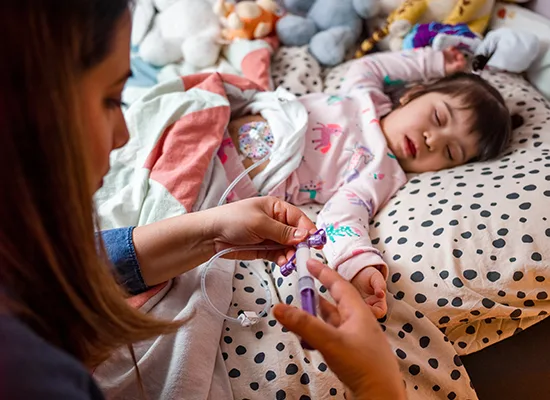
“SafeCare@Home4Kids” aims to understand and prevent safety issues at home for children with medical complexity
A research study is looking for families to help improve home health care for children with complex medical needs.
The study is called “The SafeCare@Home4Kids Learning Lab: Designing Safer Healthcare at Home for Children.” It wants to learn from parents of children with medical complexity about what it is like to care for your children at home, including giving your children complex medication and using your children’s devices. The study aims to find ways to help prevent safety problems with this complex caregiving at home.
Dr. Carolyn Foster of Ann and Robert H. Lurie Children’s Hospital of Chicago is leading the research team. Foster is also a member of the Division of Specialized Care for Children’s (DSCC) Medical Advisory Board.
By sharing your experiences, you can help “SafeCare@Home4Kids” find ways to better support and help parents while reducing problems and challenges at home.
What does the study involve?
Participation in the study will take about one week. For seven days, you will send photos or text-based messages about your experience with your child’s medication-related activities and devices at home. Please note, if you do not have a device, the study researchers will loan you one.
After the week is over, you will meet with research team members to talk about your messages. You will also participate in a “critical decision methods” interview about how you:
- Identify problems with your child’s medication or device
- Communicate the problem
- How you have problem-solved these issues in the past
The research team will keep your answers confidential. If you complete all study steps, you can receive up to $195 by virtual gift card.
How do I participate?
You can enroll in the “SafeCare@Home4Kids” study if you:
- Speak English or Spanish
- Have a child who is 17 years old or younger with a disabling complex chronic condition who uses an implanted medical device to receive medication at home (such as a gastrostomy tube)
Please email fosterlab@luriechildrens.org or call (312) 227-2510 to enroll or ask questions.
For more details about the “SafeCare@Home4Kids” study and DSCC’s involvement, please visit https://dscc.uic.edu/dscc-partners-in-research-study-to-improve-home-health-care-for-children/.
You can also see the study flyer for more information.
Important Update on Change Healthcare Cyberattack and Its Impact on Our Participant Families

We are working with our state and provider partners to try to ensure there is no impact on our participants’ care.
Late last week, we learned of a cyberattack affecting Change Healthcare.
We want to share how this event may impact our participant families. We also want to explain the steps that are in place to try to ensure there is no impact on your child’s care.
Change Healthcare/Optum is the database that the Illinois Department of Healthcare and Family Services (HFS) uses to manage pharmacy claims. Please see the following communication from HFS at https://hfs.illinois.gov/medicalproviders/notices/notice.prn240223b.html.
In addition to the impact on the pharmacy system, this cyberattack also affects some billing processes. Home nursing agencies use Change Healthcare’s system to electronically submit their bills for payment.
We have sent communication to the home nursing agencies who use electronic bills and put an alternative method of bill submission into place. This should not create any disruption in the nursing agencies’ ability to provide services in the home.
Lastly, our Division of Specialized Care for Children (DSCC) team is here to support your family with any issues you may experience.
If you have any concerns or need assistance, please reach out to your assigned DSCC Care Coordinator. We are happy to help you.
DSCC Families, It’s Time to Share Your Input!
Our annual family survey is an easy way to share your feedback and make a direct impact.
Our participant families are important to us, and your feedback matters.
On Feb. 15, all Division of Specialized Care for Children (DSCC) participants will receive our annual family survey.
This survey asks how well our team members support your family and meet your needs. It also asks about:
- Your contact preferences
- How and when you’d like to meet with our team
- How well our staff communicates with you
You will receive this survey either by email or mail, based on your preferences. If you respond, you will have a chance to win a $50 Visa gift card.*
Your responses will help us strengthen your services. They also guide updates to our DSCC policies and procedures that affect your family.
Our surveys are optional, but we strongly encourage you to share your experiences. We want to ensure we’re doing all we can to help you meet your family’s needs and achieve your goals.
* Please note: Foreign national nonresident aliens are not eligible for the gift card participation prize.
How Your Feedback Makes a Difference
Listening to our participant families is a priority. Your ideas and concerns have helped strengthen our services and guide improvement projects.
Here’s an overview of how the 2023 survey input and overall family feedback made a difference at DSCC:
- Our authorizations are now easier to fill out and keep up to date. We updated the form authorizing us to share information with multiple providers, meaning only one signature on one form.
- Our online resource library is now searchable. Families shared their need for more resources. In response, we updated our online Resource Directory and Events page to add search features. This improvement should help all Illinois families of children and youth with special healthcare needs find and share resources more easily.
- We resumed face-to-face visits. Our care coordination teams resumed face-to-face visits with families following the end of the public health emergency on May 11, 2023. Meeting in person should further improve our connection and engagement with families.
- We created a new Family Portal. In October 2023, DSCC introduced a new Family Portal to better connect families with their care teams. The portal gives participant families one place to communicate with their care coordination teams, sign documents and access information.
- We created “All About Me” Pages to help others get to know your child. DSCC developed “All About Me” Pages so families can highlight their child’s strengths, medical needs and more. Families can personalize the templates to best fit their child’s personality. You can share these templates with medical providers, schools, other caregivers and so on. These pages should make it easier to share what works best for your child, what they like and dislike, and their medical needs. These templates are available on our website’s “All About Me” Pages section.
- We’ve partnered to improve nursing availability throughout the state. Nursing agencies that work with DSCC can now receive a license to work across the state. We partnered with the Illinois Department of Public Health to make this change. The new license process offers more opportunities for nursing coverage for families of children and adults with complex medical needs. DSCC is also developing NurseNet. This interactive website will allow families looking for nursing to connect with nursing agencies.
Please be on the lookout for our annual survey on Feb. 15.
If you have questions or need more information, please contact your Care Coordinator.
We appreciate your partnership and look forward to hearing from you!
Announcing Rate Increases for In-Home Nurses

Increased rates for in-home nurses will take effect on Jan. 1, 2024.
We have an exciting update for our participants enrolled in the Home Care Program.
The Centers for Medicare and Medicaid have approved a rate increase for in-home nurses in the new year.
We hope this rate increase can help expand available and high-quality nursing options for our participant families.
This rate increase affects:
- Registered nurse (RN), licensed practical nurse (LPN) and certified nursing assistant (CNA) care
- In-home and facility-based respite care
- Nurse training rates
This increase will take effect Jan. 1, 2024. The rates are as follows:
- RN, $54 per hour
- LPN, $45 per hour
- CNA, $30 per hour
You can see the updated Home Health Fee Schedule on the Illinois Department of Healthcare and Family Services (HFS) website.
The following rate increases are for participants who are in the Home and Community-Based Services Waiver for Those Who Are Medically Fragile, Technology Dependent (MFTD):
- Nurse training for an RN, $54 per hour
- Nurse training for an LPN, $45 per hour
- In-home respite for an RN, $54 per hour
- In-home respite for an LPN, $45 per hour
- In-home respite for a CNA, $30 per hour
HFS will also increase the maximum amount for nurse training service hours from four to 32 hours per nurse per waiver year.
As a reminder, parents and legally responsible adults who have an RN or LPN license can be paid caregivers. (Parents and legally responsible adults who are CNAs cannot be paid caregivers at this time.)
HFS will increase your nursing resource allocation amounts to reflect the increase.
Your Division of Specialized Care for Children (DSCC) care coordination team can help you with any questions about the rate increase or nursing services.
You can also find more helpful information about Home Care Program services on our website’s Home Care Information Hub.
Introducing “All About Me” Pages to Highlight Your Child’s Strengths, Needs and More

We’ve created free templates you can personalize to help doctors, schools and others get to know your child
It takes a village to care for children and youth with special healthcare needs. Parents and caregivers must partner with many different team members — specialists, nurses, therapists, educators and so on — to help their children reach their full potential.
Ensuring everyone understands your child and their unique needs can be exhausting. We want to help make it easier to share your child’s strengths, wants, goals and more.
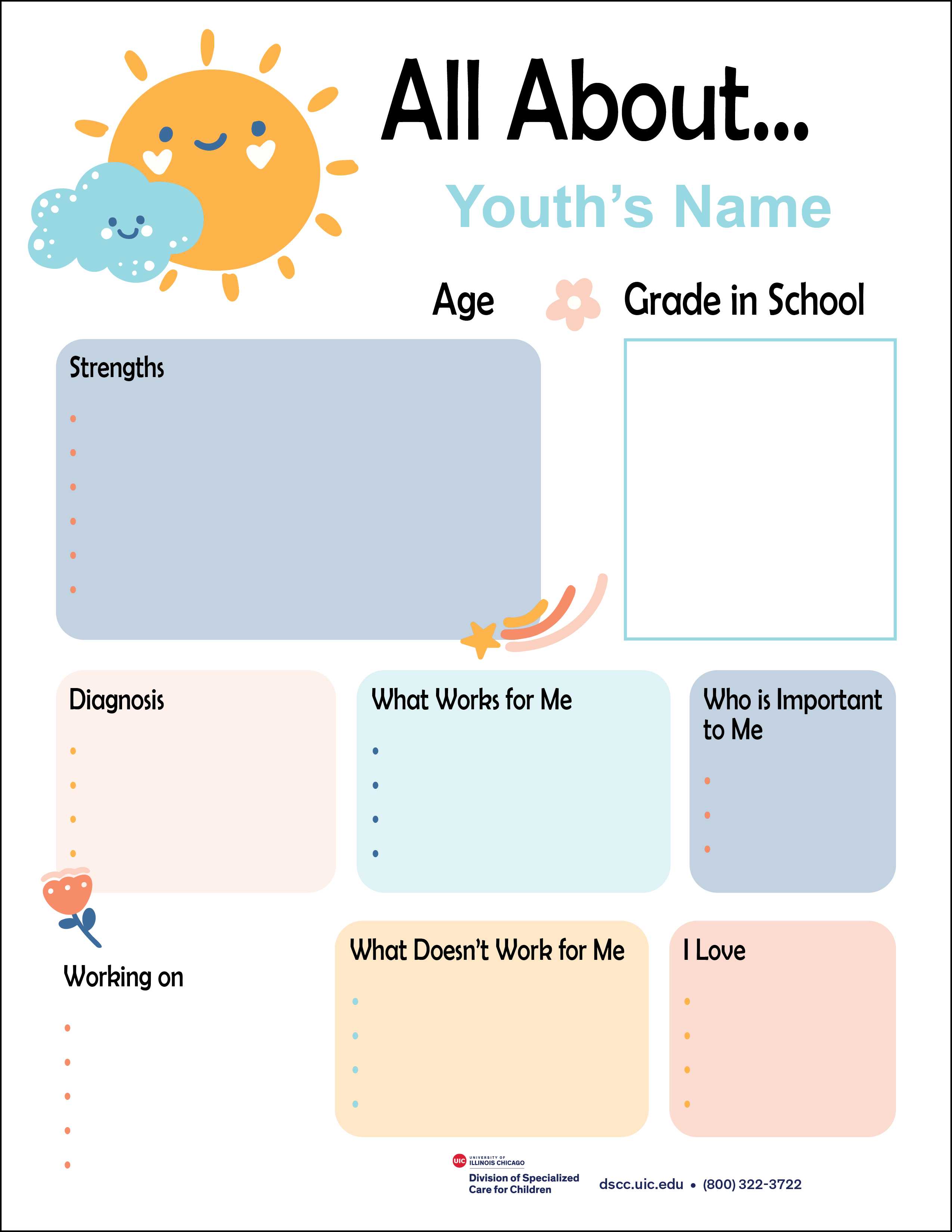
We’ve created “All About Me” Pages that you can personalize to help anyone get to know your child. These free templates highlight what works best for your child, what they like and dislike and who they are as a person.
There are a variety of designs to choose from to help you capture your child’s personality and what makes them unique.
Visit the new “All About Me” Pages section of our website to see the templates and learn how to customize them for your child.
Our “All About Me” Page templates are available for anyone to download and customize.
If you are a Division of Specialized Care for Children (DSCC) participant and need help using the templates, please contact your Care Coordinator.
These pages are a result of feedback from our annual family surveys and our Family Advisory Council meetings.
We hope these pages can be helpful conversation starters with new doctors, nurses, teachers and other caregivers for your child.
DSCC Partners in Research Study to Improve Home Health Care for Children
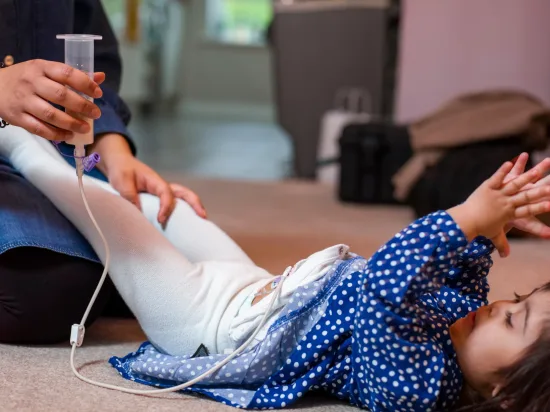
“SafeCare@Home4Kids” aims to understand and prevent safety issues at home for children with medical complexity
The Division of Specialized Care for Children (DSCC) is excited to partner on a new research study to help improve home health care for children with complex medical needs.
The research team is led by Dr. Carolyn Foster of Ann and Robert H. Lurie Children’s Hospital of Chicago. Foster is one of our Medical Advisory Board Members.
Foster and her research team have received a $2 million grant award to fund the study, called “The SafeCare@Home4Kids Learning Lab: Designing Safer Healthcare at Home for Children.”
This study will bring together experts and patient families to better understand how family caregivers and home nurses can help identify, communicate and prevent safety issues at home for children with complex medical needs. The study will use this input to create a digital safety toolkit to help support families.
DSCC Executive Director Thomas F. Jerkovitz said DSCC appreciates this opportunity to partner in the study. He said DSCC will share our team’s experiences with families and home nurses who report safety challenges at home.
Dr. Molly Hofmann, our Director of Care Coordination, Systems Development and Education, is one of the participating experts.
“DSCC plays such a pivotal role in supporting care in the home and… is a repository for safety events,” Foster said. “DSCC also plays such a functional role in creating solutions, so it was pretty clear to me I wanted to have DSCC be a partner in the grant.”
Children with medical complexity need substantial amounts of care to live safely at home. In recent years, their families have taken on increasingly more in-depth medical care at home.
“We send patients home with increasingly more complex medical regimes, and families have expressed to us they didn’t have a clear way to get the support they need when experiencing problems at home,” Foster said.
“A lot of our patients have an artificial airway to help them breathe or they have a g-tube in their stomach to help them eat. If that gets clogged or it falls out or the tubing connected to the machine gets broken, then they can’t get the nutrition they need and they end up in the emergency room. And it’s a life-threatening event at home if their airway isn’t working,” Foster continued. “The idea for the study is we want to find out what are the things leading up to when those safety events occur so we can prevent them.”
“SafeCare@Home4Kids” also wants to help improve communication when medical device and equipment malfunctions happen at home.
“Doctors don’t always know, and families might not know that they should or can tell us about it. They might tell the DME (durable medical equipment company) to get the replacement part, but we don’t know about it, so we keep ordering it for other patients,” Foster said. “It’s both an issue for current patients and also an issue for future patients.”
The study aims to create a better system where families can communicate safety problems at home and know who to notify when they occur.
“One of the problems we recognize is families are scared they’re going to get in trouble. We want to make sure they feel supported to let us know when medical problems are happening at home,” Foster said. “The goal is to move past the reporting safety events to preventing them in the first place.”
The study will also host focus groups to hear directly from families about the safety issues that affect them.
“The goal is to hear from real families on what it’s like day-to-day,” Foster said. “Hopefully it’s the beginning of several projects to support how we’re improving care in the home.”
If you are a family member and would like to participate or learn more about the “SafeCAre@Home4Kids” study, you can email Foster at fosterlab@luriechildrens.org.
We are excited to collaborate with Foster and her research partners on this important project. We’ll share more updates and opportunities to get involved as it progresses.
The project kicked off in September and will continue through July 31, 2027.
DSCC Rolls Out New Tool to Better Connect With Our Participant Families
The DSCC Family Portal can help you easily communicate with your care coordination team and find the information you need
It’s important for our Division of Specialized Care for Children (DSCC) participant families to be active partners in their child’s care. We’re excited to introduce a new way for you to easily share information and communicate with your DSCC care coordination team.
Our new DSCC Family Portal aims to help you find the records you need all in one convenient place.
You can use the Family Portal to:
- Send messages
- Sign documents
- View important letters
- See a list of providers and much more
To access the portal, visit https://go.uic.edu/DSCCFamilyPortal.
To log in to the Family Portal for the first time, you will need:
- Your email address
- Your DSCC participant’s name or DSCC ID number
- A unique password
We know learning a new application can seem tough. We have tip sheets and videos to help you get started and feel comfortable using the portal. You can find these resources on our website at https://dscc.uic.edu/dscc-family-portal/.
If you have trouble accessing the Family Portal or need other support, please email dsccexternalhelp@uic.edu. A designated DSCC staff person will help you as soon as possible.
We are always looking for ways to improve our services and strengthen our support for families.
We hope the Family Portal will be an easy and convenient way for you to connect with your care coordination team and the resources you need.
New Training Resources on Caring for Children With Trachs
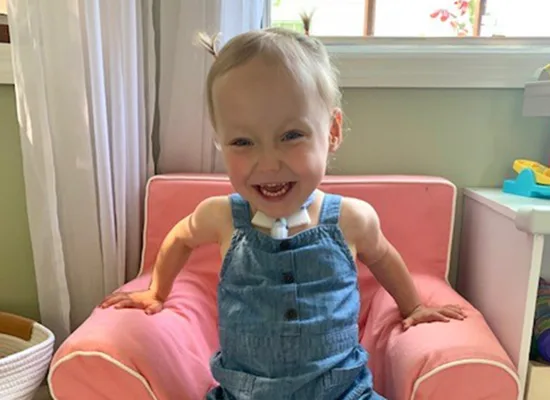
A new video and an updated free online course are available to help support the care of children with tracheostomy tubes
Parents and caregivers have a lot to learn when their child needs a tracheostomy (trach) tube to breathe.
Our Division of Specialized Care for Children (DSCC) team is here to support and guide families through learning how to care for their children’s complex medical needs.
We’ve gathered two new training resources to help families understand trach care.
Lurie Children’s Hospital Video on How to Handle Trach Emergencies
When emergency situations occur, it’s very important to keep the child’s trach tube open and in place.
Ann and Robert H. Lurie Children’s Hospital of Chicago has developed a video to help parents, caregivers and others know how to handle emergency situations with pediatric trach patients.
In this video, Lurie nurses explain:
- How to prevent and assess emergency situations
- How to manage a mucous plug
- How to replace a trach tube that has become dislodged
- What to do if the trach tube is difficult to replace
- When to provide manual ventilation using bag to trach tube, bag and mask to mouth, and mouth to mouth
We encourage our participant families in the Home Care Program to watch this video. Many of the children and youth in the Home Care Program rely on trachs and ventilators to breathe.
Please note that watching this video alone is not enough training to safely care for a child with a trach. Families should speak with their child’s doctors and care team about any questions or training needs.
For more information on how to safely care for a trach tube, you can visit Lurie’s Tracheostomy Care at Home webpage.
Free eHomeCare Course on How to Care for Children With A Trach
An updated free online course is available on how to care for children with trachs with or without a ventilator.
The eHomeCare program training is for:
- Nurses working in home-based environments
- Physicians
- Respiratory therapists
- Family members and caregivers of children with trachs with and without ventilators
- Students from health professions
The course is available until Sept. 30, 2026.
Learners can use this course for initial training, an annual review or as an ongoing resource.
The course learning objectives are:
- Describe best practices for providing day-to-day care for children with trachs with or without ventilators in the community
- Explain how to manage emergency situations for children with trachs with or without ventilators in the community
- Report an increase in confidence when caring for children with trachs with or without ventilators in the community
- Describe the roles and responsibilities of members of the healthcare team.
Free continuing education credits are available.
If you have trouble enrolling in the course or need help, please email help@icep.wisc.edu.
Again, please note that families should speak with their child’s doctors and care team about any questions or training needs for their child with a trach.
Our participant families can also contact their DSCC Care Coordinator with questions.
Free At-Home COVID Test Program Resumes
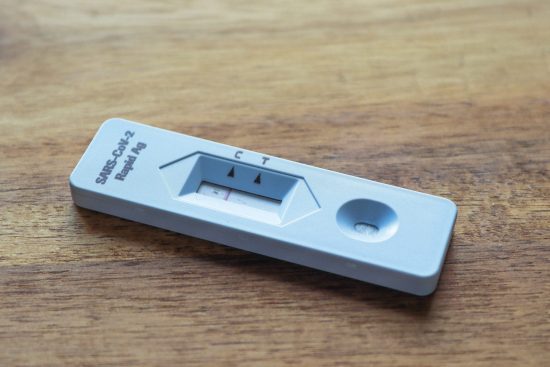
*Please see our updated news post, “New Round of Free At-Home COVID Tests Now Available,” for the most up-to-date information about free COVID-19 test availability. *
A federal program that provides free at-home COVID-19 tests is once again available.
Starting Sept. 25, 2023, every U.S. household can order four free COVID-19 rapid tests through the U.S. Postal Service (USPS).
Visit www.covid.gov/tests to place an order. (The website is available in Spanish and Chinese.) Here’s what you need to know:
- There is a limit of one order per residential address.
- One order includes four individual rapid antigen COVID-19 tests.
- Orders will ship free starting the week of Oct. 2, 2023.
If you need help placing an order, you can call (800) 232-0233 or (888) 720-7489 (TTY).
The USPS is also distributing more accessible tests for individuals who are blind or have low vision.
Starting Sept. 25, 2023, you can visit https://special.usps.com/testkits/accessible to order one set of 12 free at-home tests with enhanced accessibility (while supplies last). Here is what you need to know:
- There is a limit of one order per residential address.
- Each order includes 12 accessible rapid-antigen tests.
- Supplies are limited. Please do not order the more accessible tests if you have options for using the standard tests.
- The tests work with a compatible Bluetooth-enabled smartphone and a free app to provide users with audible instructions and audible test results.
- Orders will ship free starting the week of Oct. 2, 2023.
Individuals with disabilities can also contact the Disability Information and Access Line (DIAL) for help with available testing options, including ordering free at-home test kits.
Contact DIAL Monday through Friday from 7 a.m. to 8 p.m. through:
- Call, text or videophone at (888) 677-1199
- Email DIAL@usaginganddisability.org
- Start an online chat with an information specialist
- Connect to an agent in American Sign Language
The U.S. government will also continue to make COVID-19 tests available to uninsured individuals and underserved communities through its existing outreach programs.
To learn how to access low- or no-cost COVID-19 tests from the federal government, you can contact any of these programs:
- A Health Resources and Services Administration (HRSA) health center
- A Test to Treat site
- An Increasing Community Access to Testing (ICATT) location near you
Still have old COVID-19 tests at home? You can check the FDA’s website to see if your COVID-19 tests have extended expiration dates.
You can also visit www.covid.gov/tests for more details about free testing sites by state, frequently asked questions about at-home tests and more.
Institute Provides Education, Support and Connection for Families of Children with Hearing Loss
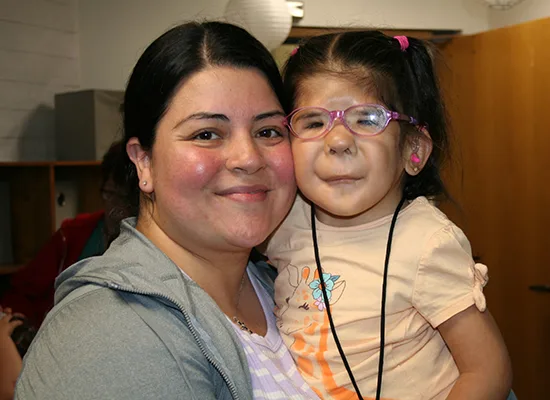
Illinois families gained knowledge and formed priceless relationships during the 2023 Institute for Parents of Preschool Children Who Are Deaf or Hard of Hearing.

The journey to the 2023 Institute for Parents of Preschool Children Who Are Deaf or Hard of Hearing was a mixture of excitement, nerves and some fear for Kelly Lane and Crystal Harris.
When they received the flyer for the free one-week program at the Illinois School for the Deaf in Jacksonville, they were skeptical it would be the right fit for their son, Casper.
Casper, 4, has bilateral hearing loss, epilepsy and a developmental delay.
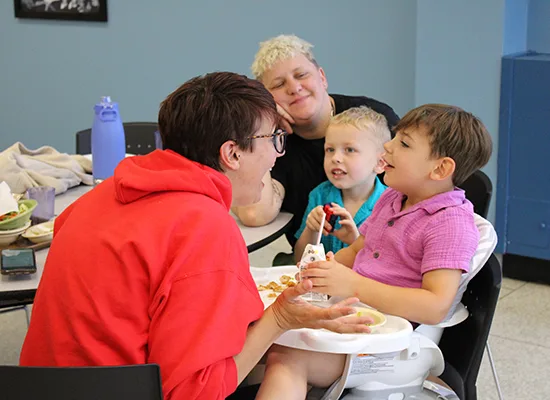
“We’ve been to other events on a smaller scale before that were geared towards families with kids who have hearing loss and felt out of place there because our son also has other disabilities,” Kelly said.
Crystal called the number on the flyer and spoke with Violet Wiker, the Family Liaison for the University of Illinois Chicago’s Division of Specialized Care for Children. Violet helps families enroll in the Institute and addresses any questions or concerns they may have.
Crystal said she talked to Violet for more than two hours.
“She assured me that there were kids of all different learning abilities here, that they would be in a classroom setting… she really sold it to me, really made me feel comfortable,” Crystal said.
She and Kelly then made the trip from Chicago with Casper and his big brother, Courtland. Once they arrived on the School for the Deaf campus, they knew they made the right choice.
“We couldn’t have felt more welcome… We’re used to feeling out of place, so it felt really good to come somewhere and feel normal for once,” Kelly said. “Coming here just felt like going home.”
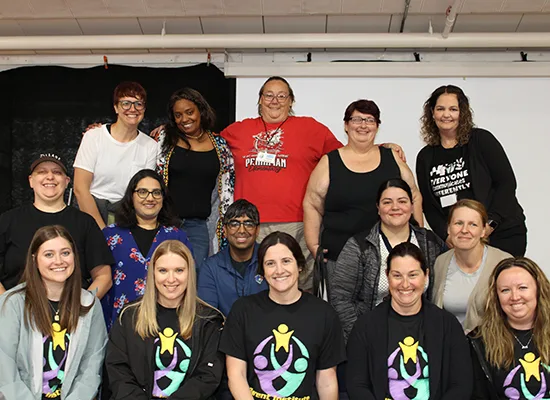
A total of 22 families from across the state attended this year’s Institute from June 11-16. The Institute is for Illinois parents of children from birth to age 7 who have a significant hearing loss.
Participating parents attend daily lectures by experts in the field to learn about raising a child with hearing loss. Lecture topics include:
- Child development
- Types of hearing loss
- Language development
- Communication choices
- Assistive communication devices
- Deaf culture
- School programming
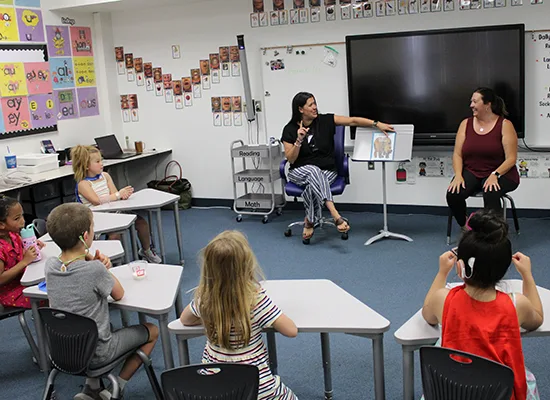
Other activities include meeting in small groups to discuss specific concerns and connecting with other caregivers.
The children with hearing loss attend classrooms based on their age group. Experienced teachers and aides for children who are deaf or hard of hearing oversee these classrooms.
Attending children also can receive hearing, vision, psychological, speech, language and educational evaluations. They also get to play with other children who have a hearing loss.
Siblings also attend the Institute and participate in fun and educational activities, including art projects and learning to sign.
There is no cost for families to participate in the Institute. Meals and housing are provided at no charge.
“One place, all questions answered”
Laura Colic’s son Liam is almost 5 and profoundly deaf. He wears bilateral cochlear implants that he’s had for a little over a year.
“I just wanted to get as much information to make sure that we give him all the opportunities, especially since he’s starting kindergarten in the fall,” Laura said of her decision to attend.
One of her favorite experiences from the week was listening to a panel of Deaf adults share their experiences.
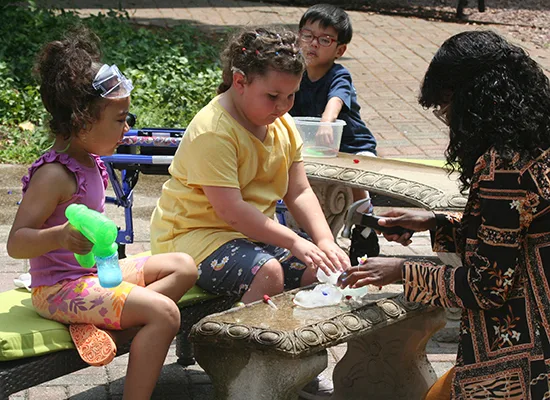
“When you’re in it with little ones, it’s hard to see what that may look like as they grow up. I love the exposure to just the Deaf culture. Even Liam has loved that. He has been so excited to see adults with cochlear implants” she said.
Laura also praised the knowledge of the team of professionals who spoke with families and provided evaluations for the children.
“Their knowledge is phenomenal, and I feel like it’s golden,” she said.
“I wish I could take them with me back home and just create this bubble for Liam. But I’m happy to take the knowledge that they’ve given me, the assessments they’ve provided, the one-to-one time with each of the different people that have worked with Liam and assessed Liam. The evaluations are just phenomenal.”
Sylvia Gavina is mom to 4-year-old Freddy. She appreciated the opportunity to see and understand what Freddy’s hearing loss truly means for him.
“Being able to meet with the professionals and learn what we did in a week takes it to a different level. At home, you might have an appointment one week and then wait three months for the next one. Here, we are leaving with a baseline. One place, all questions answered,” she said.
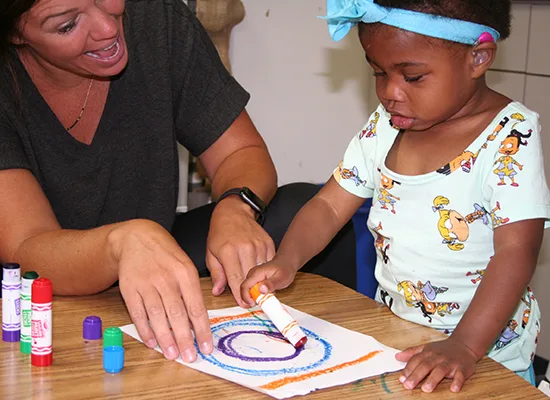
Sheryl Stone’s daughter Nevaeh is 4 ½ and attends the Illinois School for the Deaf. She said the Institute gave her an eye-opening look into how Nevaeh experiences the world. An education session on the Deaf experience helped her understand better what it’s like to not hear and to rely on lip-reading, sign language and other communication methods.
Eddi Fowler said she also learned how to better communicate with her 2 ½-year-old daughter, Kacey. In addition to learning American Sign Language (ASL) and cued speech, Eddi learned more about available resources and how to advocate for Kacey.
“I learned a lot, and I have a lot to take back home with me. I’ve got gigantic paperwork that’s going to help Kacey and my little family throughout the year with her education needs, her hearing loss, her autism, everything,” Eddi said.
“A community of families”
Three-year-old Christian has hearing loss in both of his ears. His parents Basia and Aaron said watching their son become more social with the other children was especially rewarding.
“He’s more expressive. With all the signing and the cued speech that we’re integrating, he’s using his hands more, different modes of communication. That’s something that we were really trying hard to get out of him at home and it’s been tough. But he seemed to really just open up to more people and other children as well,” Aaron said.
Sarah Berns attended the Institute with her son, Colsen, and daughter, Evelyn. Colsen, 7, was born with bilateral sensorineural hearing loss. However, his family was not aware of his hearing loss until he was 3 years old.
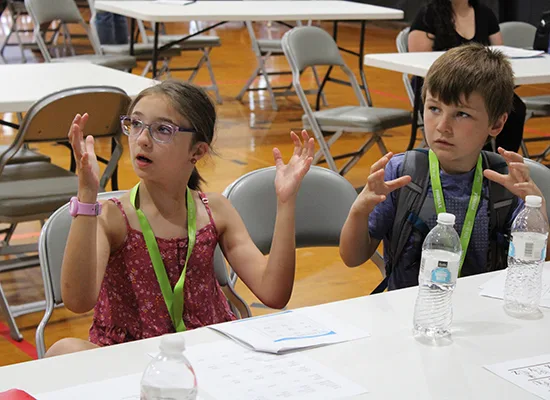
The Institute was the first time he could see other kids with hearing aids and cochlear implants and simply play with them and have fun.
Sarah said she also found a special connection with the other parents.
“I felt like I was all alone. And now I feel like I have a community of families that I can call when I need to talk to them about anything. I also got a lot of information about what my son is going through and what it’s like to be hearing impaired, which is the best connection that I could have with my son, and knowing more about him and what he needs,” she said.
The Institute was also just as valuable for Colsen’s big sister Evelyn.
“She sees that (hearing loss) isn’t something that’s terrible, her brother isn’t annoying, and that there’s this really cool language now that we can have between us that she wasn’t interested in before,” Sarah said. “There’s value in it for her… she has a newfound empathy that she didn’t have before.”
Sarah encourages all families of children with hearing loss to make the trip to the Institute.
“It is life-changing. There are people that value you for who you are, and they are only here to help and give you strategies to help you,” she said.
“A sense of comfort”
After spending a week at the Institute, Kelly and Crystal said they didn’t want to leave.
“We’re not ready to go home. This past week, I’ve felt a sense of comfort that I haven’t felt in a very long time,” Crystal said.
“And that’s saying a lot considering how much information overload has been happening,” Kelly added. “I feel like we should be feeling frazzled and overwhelmed with the amount of new information we’ve gotten, but instead I just feel clarity. I feel clear on where my son’s at, where we need to go, and the options that we have and resources that we have at our disposal.”
Sarah shared a similar sense of peace and optimism for her son, Colsen, after attending the Institute.
“Even though life is not the same plan I thought it was going to be, it’s still going to be wonderful…” she said. “Seeing these other people going through this and through their life, how their life has been impacted by having hearing loss, I realize that (Colsen) really hasn’t lost anything. He is just experiencing it in a different way, and that that’s OK, and that we’re going to be OK.”
Visit our Facebook page to see a photo album with more photos from this year’s program. You can also see videos that highlight different parts of the Institute experience on our YouTube playlist.
The following organizations supported the 2023 Institute:
- University of Illinois Chicago’s Division of Specialized Care for Children (DSCC)
- Department of Human Services – Division of Rehabilitation Services
- Illinois School for the Deaf
- Illinois State Board of Education
- Illinois Department of Public Health
- Ann & Robert H. Lurie Children’s Hospital of Chicago
The 2024 Institute will take place June 13-16. Please see the below flyers for more details:
For more information about the Institute and how DSCC supports children with hearing loss, call (800) 322-3722 or email dsccinstitute@uic.edu.