


Summer Camp Fun for All Ages and Abilities

Here’s a list of day, overnight and virtual camps to help you find the right fit for your child
It’s hard to believe another school year will soon come to an end.
The good news is there are a variety of opportunities to help your children stay engaged and continue learning during the summer break.
We’ve compiled a list of virtual, day and overnight camps across Illinois for all ages.
Does your child want to make new friends? Develop new skills? Meet others with their condition or foster their independence?
Our 2022 summer camp list can help you find an opportunity that is the right fit.
Many camps are returning to in-person sessions this summer. Virtual camp opportunities are also available.
All these camps are accessible for a variety of special needs and abilities, including many of our program’s eligible medical conditions.
Our events calendar shows the summer camps listed by date. You may also search for events in your area by clicking on a regional office near you.
Know of an in-person or virtual summer camp opportunity to add to our list?
Send us the details at dscc@uic.edu. We’ll continue to update our list of camps and activities, so please check back often.
Former DSCC Employee Wins Lifetime Achievement Award
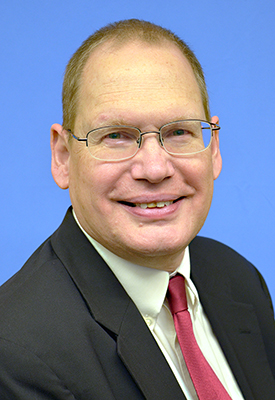
Ralph Schubert honored for 40 years helping Illinois children and families
Ralph Schubert has received the Title V Lifetime Achievement Award from the federal Maternal and Child Health Bureau.
Ralph is the former Associate Director for Title V Programs at the University of Illinois Chicago’s Division of Specialized Care for Children (DSCC). He retired in August 2020.
The award recognizes outstanding contributions to the field of maternal and child health over time.
“He’s been a tireless and lifelong advocate for children,” said Dr. Michael Warren, the Associate Administrator of the Maternal and Child Health Bureau.
Ralph has 40 years of public health experience in various local, state and federal positions in Illinois.
“I never expected to be considered for this award let alone selected to receive it,” Ralph said. “I am deeply honored.”
Before joining DSCC, Ralph spent a combined 30 years at the Illinois Department of Public Health and Illinois Department of Human Services.
His leadership positions at these agencies included Manager of Maternal and Child Health Grants and Program Development Unit. Ralph also served as the acting Associate Director for Family Health and the Associate Director for Program Planning and Development, where he was responsible for developing and implementing a new community health and prevention program.
He later became the Director of Public Policy for the Illinois Public Health Association before joining DSCC in August 2016.
Ralph said a major highlight of his career was helping lead the Healthy Families Illinois initiative.
Healthy Families Illinois is a home visitation program to support new and expectant parents and improve children’s safety. He collaborated with a group of 75 advocates, service provides and others to design, implement and expand this program.
Ralph’s work with Healthy Families Illinois earned him the Friend of Children Award from Prevent Child Abuse Illinois and a Leadership Award from Voices for Illinois Children.
Ralph said he is grateful for the people he has worked with for supporting him and challenging him to be better throughout his career.
Now that he is retired, Ralph is pursuing his third master’s degree and plans to do mission work in Africa.
Congratulations, Ralph, and thank you for your service!
Shopping Spree Brightens DSCC Toddler’s Holiday
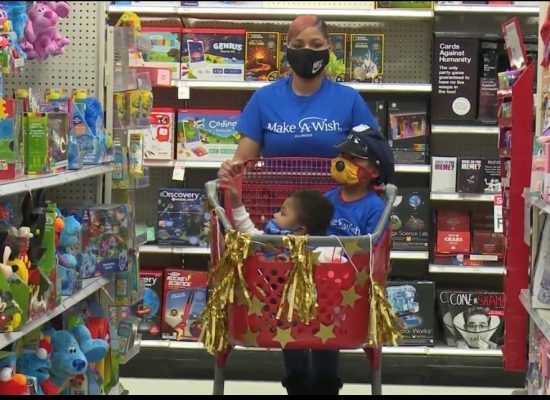
Make-A-Wish organizes a car parade, limo ride and shopping spree for 3-year-old T’Aubrae
The year 2020 has been especially challenging for Shyterria Jordan and her children.
Her 3-year-old son, T’Aubrae, has complex medical needs. He was in the hospital for more than a month earlier this year. T’Aubrae then stayed at the transitional care center Almost Home Kids for another three months.
Safety precautions for the COVID-19 pandemic meant T’Aubrae’s two older siblings couldn’t visit him while he was away from home.
“He loves his brother and sister to death,” Shyterria said. “To go weeks or months without seeing them made it really hard. It was definitely the most difficult thing I’ve dealt with.”
The news that Make-A-Wish Illinois would grant T’Aubrae’s wish brought much-needed joy for the whole family.
On Dec. 5, the foundation partnered with the Peoria community to organize a parade with local firefighters, police, classic cars and hot rods in front of the family’s home. The family then got to ride in a limo for a shopping spree at various stores. The trip also included a stop at a local park and a special visit with Santa.
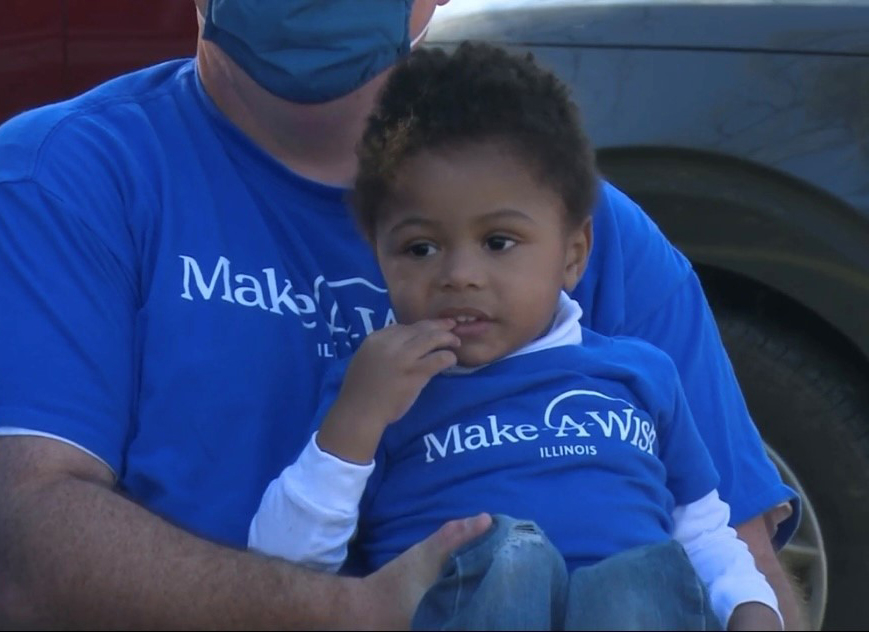
Local media covered the special day and T’Aubrae’s excitement.
“I never thought we would experience something like this,” Shyterria said. “It was a once-in-a-lifetime experience and the kids were so excited.”
T’Aubrae was born with short bowel syndrome, meaning his body doesn’t have enough small intestine to absorb enough nutrients from the foods he eats.
He has a feeding tube and receives in-home nursing care. T’Aubrae has been enrolled with the University of Illinois at Chicago’s Division of Specialized Care for Children (DSCC) for more than two years.
His condition has resulted in multiple surgeries and hospitalizations.
“He’s doing great right now. We’re just trying to keep him out of the hospital for as long as we can,” Shyterria said “He’s just a very outgoing kid and full of energy. Overall, he’s a wonderful kid and he’s a very strong boy…. I’ve learned a lot from him.”
She said T’Aubrae enjoyed the noise of the sirens during his special parade and was delighted to go shopping. He picked out toys and items for his bedroom. His brother and sister also got to pick out two toys each for themselves.
“I know he’s going to have a great Christmas,” Shyterria said.
T’Aubrae loves cars, so Make-A-Wish also gave the family tickets for the Peoria Speedway and racecar t-shirts.
“It was a very, very great experience. (Make-A-Wish is) a blessing to this world to do something like that,” Shyterria said. “It’s a once-in-a-lifetime experience and something that he will never forget.”
You can see pictures and videos from T’Aubrae’s special wish day in the news stories below:
Training Supervisor Wins DSCC’s Merit Award
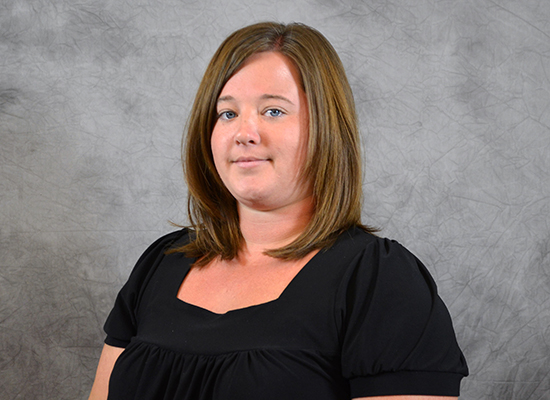
Tiffany Kalka honored for outstanding service to children with special healthcare needs.
Tiffany Kalka is the 2020 recipient of the Award of Merit from the University of Illinois at Chicago’s Division of Specialized Care for Children (DSCC).
The award recognizes exceptional employees for outstanding dedication and service to children with special healthcare needs.
Tiffany is DSCC’s Training Supervisor and based in our Springfield Office.
She works with staff across the state to make sure they have the knowledge, tools and support necessary to provide the best service possible for children and families in our program. Tiffany wears many hats, coordinating training events and learning requirements for staff and their related technology needs.
DSCC moved to a new electronic care coordination system last spring. This new system helps our care coordination teams work more efficiently and effectively as they partner with families. Tiffany helped spearhead the system’s planning, implementation and ongoing support for employees.
She took on this huge volume of work while also fulfilling her training responsibilities with exceptional dedication and quality.
“Tiffany’s talent and knowledge have helped us develop our care coordination system that better meets our participants and staff’s needs,” said DSCC Executive Director Thomas Jerkovitz. “Tiffany’s efforts have empowered our staff to be better champions for the children and families we serve.”
Tiffany joined DSCC 19 years ago. She says she is honored and grateful to be nominated and selected for this award.
“The most rewarding part of my job is being able to help my peers navigate our electronic care coordination system,” she said. “By helping them, I know that I am helping the families DSCC serves.”
DSCC staff nominated a total of 10 of their colleagues for this year’s Award of Merit. As the winner, Kalka receives an Award of Merit memento, a $2,000 award and recognition from the Executive Director.
The other 2020 nominees are
- Carla Jo “CJ” Chandler, IT Technical Associate, Central Administrative Office in Springfield
- Darcy Contri, Program Transition Specialist, Central Administrative Office in Springfield
- Kimberley Firkins, Program Coordinator Assistant, Lombard Regional Office
- Connie Harriss, Program Coordinator Assistant, Olney Regional Office
- Tami Peleckis, Customer Service Assistant, Mokena Regional Office
- Summer Puckett, Care Coordinator, Champaign Regional Office
- Jamie Renth, Manager of Home Care Region 3, St. Clair Regional Office
- Gabrielle “Gab” Schmitt, Home Care Enrollment Manager, Champaign Regional Office
- Amanda Simhauser, Communications Manager, Central Administrative Office in Springfield
Congratulations, Tiffany! And a big thank you to all the nominees for their excellence on behalf of our children and families!
DSCC Participant Opens Community Pet Pantry
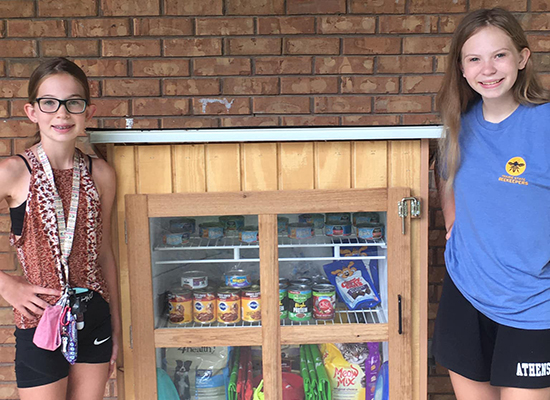
Emma Wiker’s community effort helps local pets stay fed and cared for during the COVID-19 pandemic.
For six years, Emma Wiker has run the Animal Abusive Protection Program to raise money for abused or abandoned animals in Menard County.
The 15-year-old sells buttons and key chains and organizes a hugely popular annual dog walk in her hometown of Athens to benefit the program.
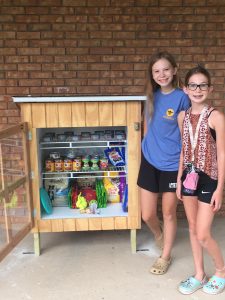
For the 2020 dog walk, Emma decided to use the proceeds to open the Animal Abusive Protection Program Pet Pantry over the summer. The pantry ensures that no local animal will go hungry due to the COVID-19 pandemic.
Emma has been a participant of the University of Illinois at Chicago’s Division of Specialized Care for Children (DSCC) for the last four years. Her mother, Violet, is DSCC’s Family Liaison.
The Wiker family says Emma grew up with a determined spirit and desire to help others. Emma was inspired to start the dog walk in 2014 after seeing a disturbing image of an abused dog that went viral on social media.
Emma handles all the responsibilities of planning and coordinating the dog walk herself and has become a local celebrity. For this year’s walk on July 26, Emma asked her younger sister, Ellen, age 12, to partner with her.
The sisters raised a grand total of $1,978 from this year’s event.
Emma and Ellen worked with community member Jim Roles, who designed, built and donated the pantry.
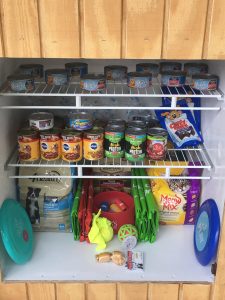
The pet pantry is stocked with food, treats and toys. It is set up for pet owners to take what they need and for others to leave donations as they are able.
The funds raised during the dog walk have helped fill the pantry when community donations run low. Demand at the pantry has been high, with Emma and Ellen stocking the shelves multiple times.
The pet pantry is located in Athens Community Park.
Kudos to Emma and Ellen for helping to fill a genuine need in their community!
In the News: DSCC Participant Wins Adaptive Bike
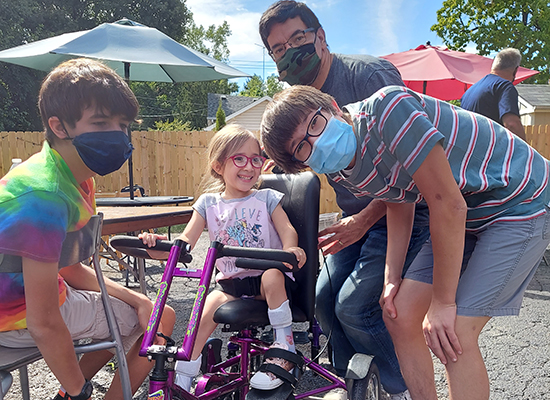
Project Mobility awards adaptive bikes to seven youth with mobility issues
Six-year-old-Dayna loves to keep up with her older brothers.
But keeping up became a lot harder when biking became a favorite pastime during the COVID-19 stay-at-home order.
Dayna was born with spina bifida, a birth defect in which the spinal cord fails to develop or close properly. She has no feeling in her legs from the knee down, so a traditional bicycle is too difficult to maneuver.
To give Dayna greater independence, her family entered a contest to raise money for a new adaptive bike.
Thanks to the Bike Rack’s Project Mobility program, Dayna and six other children are receiving specially configured bicycles at no cost.
Project Mobility is a nonprofit organization based in St. Charles, Ill. It offers recreational events using specialized bicycles for people with disabilities. The organization also does adaptive bike giveaways.
Adaptive bikes can cost anywhere from $1,000 to $5,000.
“We’ve known about Project Mobility for a few years. We go to the Ability Expo every year and they are well-known in the spina bifida community,” Dayna’s mother, Kimberly Dorencz-Cuervo said. “When we saw they were starting up an adaptive bike giveaway for this year, we decided to enroll Dayna.”
Dayna is a participant in the University of Illinois at Chicago’s Division of Specialized Care for Children (DSCC).
She was one of seven children with mobility issues who entered the Adaptive Bike Giveaway – Everybody Rides 2020 edition.
“One way that we get to go out as a family and do things is by bike riding, and it really brings normalcy to our days,” Kimberly told Chicago WGN 9 News. The news station featured the contest and Dayna in a recent news story.
“Dayna can’t participate in it, so having this bike would just be able to make her feel included, and inclusivity is so important to us. It would be a blessing,” Kimberly added.
Typically, the contest awards a bike to the youth who receives the most shares and likes on Facebook.
But this year’s contest went viral. Thanks to the generosity of donors and sponsors, all seven children will receive their own adaptive bike. Chicago WGN 9 covered the great news in a follow-up story.
“We thought that was awesome,” Kimberly said. “Dayna is so excited. She can’t wait.”
Kimberly said the bike shop is currently customizing Dayna’s bike, so she expects it will be ready to go for next spring.
“Having the adaptive bike will allow her to participate with the family in bike riding and doing all of the things that a typical child does,” she said. “It will also help her in making friends because many of the kids in our neighborhood ride bikes. I think it’s going to help her with the social aspect, too.”
Congratulations to Dayna and all the giveaway winners!
For more information on Project Mobility, visit www.projectmobility.org/.
DSCC Staffing Interruption Update for Families
Note: This post was updated on Sept. 24, 2020
All staff have returned to work at the University of Illinois at Chicago’s Division of Specialized Care for Children (DSCC).
The University has reached an agreement with SEIU Local 73, ending the strike on Sept. 23.
We are pleased to welcome all staff back to the office and look forward to working together to help your children and families reach their full potential.
Thank you for your understanding during this time.
As always, if you have an urgent need or concerns, please contact your Care Coordinator directly or reach out to your local DSCC regional office.
You may also call our main telephone number at (800) 322-3722 or email dscc@uic.edu.
Home Care Families: Share Your PPE Concerns

DSCC provides dedicated email address for families to submit concerns about personal protective equipment
The University of Illinois at Chicago’s Division of Specialized Care for Children (DSCC) team is working hard to make sure our participants’ needs are met during the COVID-19 pandemic.
For families in the Home Care Program, access to personal protective equipment (PPE) is extremely important for their children with medical complexity.
Nursing agencies are responsible for providing PPE supplies for nurses working in the home.
If you have concerns about the PPE supplies provided for your home nurses, please let us know.
We’ve created a new email address for Home Care families to submit these concerns at DSCCPPEConcerns@uic.edu. Our staff will follow up on any reported issues.
Please continue communicating with your DSCC Care Coordinator to discuss any additional issues you experience. We are here to support your family and will work with you to find solutions and the right resources.
We also encourage you to check our COVID-19 Resource Directory often for the latest health information, education guidance and learning tools, financial assistance and parenting/caregiving support.
Important Updates for Home Care Families
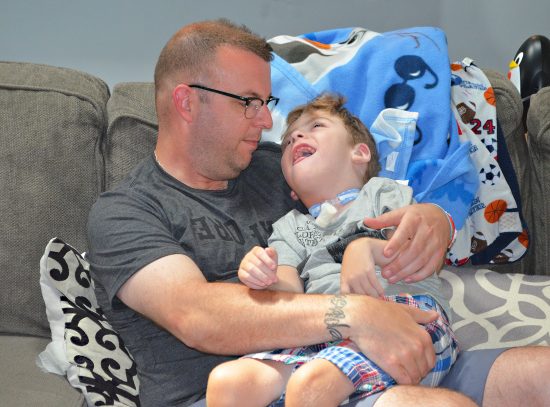
DSCC is partnering with HFS to focus on families’ concerns and find solutions to pandemic-related challenges.
The University of Illinois at Chicago’s Division of Specialized Care for Children (DSCC) takes pride in our partnership with the participants and families we serve.
Some Home Care parent partners have let us know about recent concerns affecting their children and families. We are working with the Department of Healthcare and Family Services (HFS) to address these concerns.
DSCC’s leadership would like to share the following updates with our Home Care families:
School in the fall
This school year will likely be a very different experience for our participants. With the first day fast approaching, we want you to know that DSCC and HFS are partnering to discuss ways to ensure your family is supported.
The decisions for how schools will operate this fall is up to individual school districts across the state.
We know many schools have yet to comprehensively address how they will handle services for children with individualized education programs (IEPs). Please communicate closely with your school district.
Also, let your DSCC Care Coordinator know if there are ways we can help support you and your child. Our staff can attend school meetings and work with your child’s IEP team to make sure their needs are met.
In a recent notice from HFS, the agency states it will ensure your child receives adequate nursing hours if the way nursing hours are provided in the school setting changes. Some individuals already have this difference written into their 2352. DSCC is working to get this information to HFS for changes to be made.
If your child’s difference in nursing hours from school is not clearly stated in your 2352 allocation, please notify your Care Coordinator so we can work to have HFS review your needs further.
DSCC encourages you to discuss any concerns about your child’s school-related needs with your pediatrician. Your child’s medical team can help weigh the pros and cons of in-person versus remote learning, if applicable.
Personal Protective Equipment (PPE)
Nursing agencies are responsible for providing PPE supplies for nurses working in your home, as always.
With the COVID-19 pandemic creating an increased demand for PPE, HFS has approved an additional $16 per day payment to nursing agencies on the days a nurse is working in the home. The nursing agencies across the state have received guidance on how to bill for this additional payment (a fairly simple process).
DSCC has been communicating regularly with home nursing agencies about the availability of PPE supplies. To date, availability has not been a problem. If you have concerns about the PPE supplies provided for your home nurses, please let DSCC know.
Your Home Medical Equipment company handles providing PPE supplies for your family. You will need an order from your child’s provider for these supplies.
Reminders
HFS received approval for several additional elements to be provided for your child, as needed, as part of Appendix K. Appendix K is an emergency coverage document for individuals receiving services through a Medicaid waiver. Please see a copy of the approved Appendix K document.
A few elements included are:
- Approval of nurse overtime for nurses working in the home setting at a rate of time and a half (for medically fragile, technology-dependent (MFTD) waiver participants only)
- Parents who are licensed nurses may be paid caregivers (for MFTD waiver participants and Nursing and Personal Care Services (NPCS) non-waiver participants)
- Respite hours are increased to 672 per year with respite provided at an increased rate (for MFTD waiver participants only)
Our DSCC team is here to support our Home Care participants and families. We will continue to work closely with HFS to focus on your concerns and find solutions.
We are all facing new challenges as a result of the COVID-19 pandemic. Please continue to communicate with your DSCC Care Coordinator or feel free to contact our administrative team to discuss any additional concerns you may have.
Updated Council Seeks Parent Input
DSCC’s updated Family Advisory Council makes it easier for families to take part and share feedback.
Feedback from our parents and participants is important to us at the University of Illinois at Chicago’s Division of Specialized Care for Children (DSCC).
We have updated our Family Advisory Council (FAC) setup to make it easier for families to take part and share their input.
The FAC’s mission is to bring together families and our staff and leadership to promote the delivery of participant and family-centered services.
Our updated council will connect families to resources and provide guidance to strengthen our teamwork, improve communication and empower families to have a voice in their child’s care.
Our Family Advisory Council will consist of 15 family members and two DSCC staff members. Members must agree to a one-year commitment with an option to stay for a second.
The FAC will meet in person twice per year. Meeting locations will include Springfield, Chicago and southern Illinois.
We plan to hold a virtual meeting in September 2020. We will hold two more virtual meetings per calendar year via telephone or video.
FAC members will receive $100 per face-to-face meeting with travel reimbursement, lodging fees and per diem included. Members will receive $50 per virtual meeting.
Family engagement is essential for a successful Family Advisory Council. FAC members will have a shared responsibility to facilitate meetings and keep participant- and family-centered values at the forefront of discussions.
We ask that FAC members not only attend scheduled meetings but also share ideas, provide feedback and give support to other members. These are crucial components for a strong and productive committee.
Eligible FAC members must:
- Be a family member of a current or former Core or Home Care program participant
- Have knowledge of and interest in improving systems of care for children with special healthcare needs
- Have time for quarterly meetings
- Can travel to the regional hub for face-to-face meetings
Please contact Adell Scott (adells@uic.edu) or Claire Richardson (clairer3@uic.edu) if you have any questions or recommendations. You may also reach them by phone at (217) 558-2350.