


Our New Claims Processing System is Live!

The new system offers faster, more efficient claims processing
Our new, centralized claims and provider management system for the Division of Specialized Care for Children (DSCC) is now live!
This upgrade is part of our continued commitment to improve service delivery and strengthen our partnerships with providers by offering faster, more efficient claims processing.
The new platform offers a new and improved Provider Portal. Please note that the new Provider Portal is not yet available for our Core Program providers.
Here is what each group of providers needs to know:
Core Program Providers
As we launch our new claims processing system, please be aware that our previous Provider Portal is no longer available.
We are currently developing a new and improved Provider Portal for our Core Program-enrolled providers. We expect to launch the new portal in the coming months. For more details, please visit our Provider Portal page.
Home Care Nursing Agencies
Our new claims processing system combines NurseNet and the new Provider Portal into a single, streamlined solution to make managing claims easier and more efficient.
If your agency has not yet completed the Provider Portal Access form, please have a designated representative do so as soon as possible.
Please include all users your agency would like to access NurseNet, the Provider Portal or both. Once you sign the form electronically, it will automatically go to DSCC for review.
For more details about how to register and log in, please visit our Provider Portal page. You will also be able to find resources for using the new Provider Portal, including a tip sheet and how-to videos.
Rate Increase for In-Home Nurses Now Approved

HFS has received the necessary federal approval for the Jan. 1, 2025, rate increase to take effect.
We have an important update on the rate increase for in-home nurses originally set to take effect on Jan. 1, 2025.
The Illinois Department of Healthcare and Family Services (HFS) has received the necessary federal approvals for the rate increase to take effect.
You will see the updated rates reflected on your next Prior Authorization for In-Home Shift Nursing letter (also known as the 2352).
The rate increase affects:
- Registered nurse (RN), licensed practical nurse (LPN) and certified nursing assistant (CNA) care
- In-home and facility-based respite care
- Nurse training rates
The increased rates are:
- RN, $57.78 per hour
- LPN, $48.15 per hour
- CNA, $32.10 per hour
You can find the updated rate table on our website’s Home Care Rate Table page.
The Division of Specialized Care for Children (DSCC) will begin paying nursing agencies the newly approved rate when our new CarePay claims software system goes live. We currently expect to launch CarePay in mid-May.
We are communicating with our enrolled home nursing agencies about this update as well.
After we transition to CarePay, DSCC will work with home nursing agencies to adjust payments for nursing services dating back to Jan. 1.
If you have any questions, please reach out to your DSCC Care Coordinator. We are here to help!
Resources to Become a Certified Nursing Assistant

We developed a tip sheet to help guide parents and caregivers through the steps to become a CNA.
We continue to wait for approval to allow parents/legally responsible adults (LRAs) to become paid caregivers if they are a certified nursing assistant (CNA) and employed by a nursing agency.
We understand that our participant families are eager for this change to take effect. Allowing parents and caregivers who are CNAs to become paid caregivers is an important step in strengthening support for families of individuals who need in-home shift nursing.
To help families prepare as we await approval, we’ve put together a Certified Nursing Assistant Resources Tip Sheet.
This tip sheet aims to guide parents and caregivers through the steps to become a CNA. It links to several websites for your convenience and provides general guidelines.
You can also find the CNA Resources Tip Sheet on our Home Care Nursing Information for Families page.
Our Family Advisory Council reviewed this tip sheet to make sure it’s as helpful for families as possible.
Please remember that currently, parents/LRAs can only be paid for providing skilled nursing services to their children if they hold an active registered nurse (RN) or licensed practical nurse (LPN) license. This rule applies to parents/LRAs of all children approved for Home Care Program services, regardless of the child’s age.
The plan to allow CNAs as paid family caregivers requires an amendment to the Medicaid Home and Community-Based Services Waiver for Those Who Are Medically Fragile, Technology Dependent (MFTD waiver). It also requires the creation of a new state plan amendment. Both approvals must be in place to allow for this change.
There is currently no set timeline for the state plan amendment and the MFTD waiver amendment to be approved.
Once approved, we will notify you as quickly as possible.
If you have any questions, please contact your DSCC Care Coordinator at (800) 322-3722.
Share Your Feedback to Allow CNAs as Paid Family Caregivers

Families have until Jan. 30, 2025, to share their input on a state plan amendment allowing CNAs to become paid family caregivers.
Families can now share their feedback to allow more parents/legally responsible adults (LRAs) to become paid caregivers for their children at home.
The public comment period is currently open for a state plan amendment allowing parents/LRAs to become paid caregivers if they are a certified nursing assistant (CNA) and employed by a nursing agency.
Currently, parents/LRAs are paid for providing skilled nursing services to their children if they hold an active registered nurse (RN) or licensed practical nurse (LPN) license. This rule applies to parents/LRAs of all children approved for Home Care Program services, regardless of the child’s age.
Allowing parents and caregivers who are CNAs to become paid caregivers is an important step in strengthening support for families of individuals who need in-home shift nursing.
This change requires an amendment to the Medicaid Home and Community-Based Services Waiver for Those Who Are Medically Fragile, Technology Dependent (MFTD waiver). It also requires the creation of a new state plan amendment. Both approvals must be in place to allow for this change.
The public comment period for the new state plan amendment is now open until Jan. 30. You can read the public comment notice for the state plan amendment on the Illinois Department of Healthcare and Family Services (HFS) website.
Here is how you can review the amendment and share your feedback.
Review the Amendment
- Visit the HFS website to download and/or print a copy of the proposed state plan amendment.
- Email HFS.BPPC@illinois.gov to request a digital copy of the proposed state plan amendment.
- Review a hard copy of the proposed state plan amendment at HFS’ offices at:
- 201 South Grand Ave. E.,
Springfield, IL 62763 - 401 S. Clinton
Chicago, IL 60607
- 201 South Grand Ave. E.,
Springfield, IL 62763 - 401 S. Clinton
Chicago, IL 60607
- 201 South Grand Ave. E.,
Share Your Feedback
HFS is accepting public input on the proposed state plan amendment through Jan. 30, 2025.
You can share your feedback in two ways:
- Email your input to HFS.BPPC@illinois.gov.
- Mail your written input to the Illinois Department of Healthcare and Family Services, Attention: Bureau of Program and Policy Coordination, 201 South Grand Ave. E., 2nd floor, Springfield, IL 62763
This public comment process is one of the best ways you can make your voice heard.
Next Steps
In addition to the new state plan amendment, we have worked closely with HFS to incorporate this new rule into the MFTD waiver. This waiver amendment is currently under federal review for approval.
There is currently no set timeline for the state plan amendment and the MFTD waiver amendment to be approved.
Once approved, we will notify our Division of Specialized Care for Children (DSCC) participant families as quickly as possible.
If you have any questions, please contact your DSCC Care Coordinator at (800) 322-3722.
NurseNet Simplifies the Search for In-Home Nursing
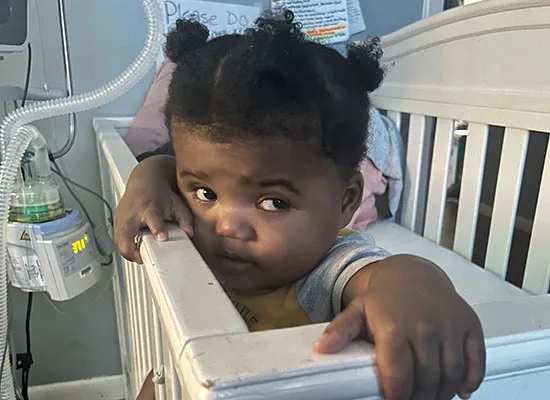
Home Care Program parent praises NurseNet as an easy way to find available nurses in your area
The search for in-home nurses can be exhausting for many families of loved ones with complex medical needs.
Home Care Program parent Shekia Wright understands this challenge.
She recently tried NurseNet to find available nurses for her 1-year-old son, Kaharri Pittman (pictured above). He has a tracheostomy and relies on a ventilator to breathe.
Shekia set up a NurseNet account and entered Kaharri’s nursing needs.
She quickly found two available matches from two different nursing agencies. Overall, she was impressed with how easy NurseNet is to use.
“It was easy to set up the account and easy to find available nurses,” Shekia said. “I would recommend NurseNet to any families looking for nursing.”
NurseNet is a new tool that makes it easier for families to find the in-home nursing care their child needs. We created NurseNet to be an online resource that connects families with available in-home nursing providers throughout Illinois.
Families can use NurseNet to share their nursing needs. Nursing agencies that are enrolled with the Division of Specialized Care for Children (DSCC) can see this information and contact families if they have available nurses who match the child’s care needs.
Nursing agencies can also use NurseNet to share information about where nurses are available.
This information can help families find suitable nursing care. It can also help nursing agencies identify opportunities to serve families.
How NurseNet Helps Families
- Easy Access: NurseNet is available 24/7, giving you the flexibility to search for nursing providers at your convenience.
- Comprehensive Listings: The tool includes a wide range of in-home nursing providers across the state, ensuring you have multiple options to choose from.
- Direct Connection: You can contact nursing providers directly through NurseNet, making the process of securing care for your child quicker and more straightforward.
How to Get Started
We encourage you to visit our NurseNet page and explore this new tool. There you’ll find guides and how-to videos to help you get started.
If you have problems accessing NurseNet, please send an email to dsccexternalhelp@uic.edu.
You can also talk to your DSCC Care Coordinator to help you get started. Your Care Coordinator can assist with the sign-up process during your next home visit.
We understand how important it is to have reliable, skilled nursing care for your child. We believe NurseNet will significantly improve your ability to find the support you need!
Podcast Highlights DSCC’s Role in Policy Solutions for Children with Complex Care Needs During Emergencies

The MCH Bridges podcast shares the story of how DSCC partnered with parent advocates and state agencies to allow generators to be an MFTD waiver benefit
In August 2020, a powerful windstorm called a derecho struck Illinois.
The storm produced about 15 tornadoes in the Chicagoland area and caused widespread power outages. Many people were without power for multiple days.
After the storm, parent advocate Susan Agrawal compiled feedback from Home Care Program families about how the power loss affected their children and loved ones with complex medical needs. She then shared this feedback with the Division of Specialized Care for Children (DSCC).
DSCC operates the Home Care Program on behalf of the Illinois Department of Healthcare and Family Services (HFS). The Home Care Program serves individuals who need in-home nursing to safely live at home.
Many of these individuals are enrolled in the Medicaid Home and Community-Based Services Waiver for Those Who Are Medically Fragile and Technology Dependent (MFTD waiver). These individuals often have tracheostomies, ventilators, gastrostomy tubes and other medical technology that depends on electricity.
The feedback Agrawal shared showed that many Home Care families wanted the ability to use MFTD waiver funds to pay for power generators for their homes.
DSCC took this feedback, did research and worked with HFS to pursue an amendment to the MFTD waiver to allow waiver funds to cover the cost of generators.
A recent episode of the MCH Bridges podcast tells the story of how this new waiver benefit became available for families. The podcast is from the Association of Maternal and Child Health Programs (AMCHP).
Dr. Molly Hofmann, DSCC’s Director of Care Coordination, Systems Development and Education, co-hosted the episode called “Generating Policy Solutions to Protect Children with Complex Health Care Needs During Emergencies.”
The episode highlights the importance of preparedness, especially in the face of natural disasters or power outages that can severely affect the care of children who are medically fragile and technology dependent.
It features the following DSCC team members and partners:
- Stephanie Leach, DSCC’s Associate Director of Systems of Care
- Courtney Kerfoot, DSCC’s Integrated Program Support Specialist
- Susan Agrawal, parent advocate, Director of the Family-to-Family Health Information Center at The Arc of Illinois and the founder and leader of MFTD Waiver Families in Illinois
- Pam Winsel of the Illinois Department of Healthcare and Family Services
Thank you to AMCHP for highlighting our efforts and partnerships to ensure children with complex medical needs have the life-saving technology they need in emergency situations!
You can learn more about how the MFTD waiver pays for home generators and other important benefits for Home Care families on our Waiver Services for Home Care Families page.
Share Your Feedback on Key MFTD Waiver Updates to Strengthen Support for Families
Families have through Sept. 28, 2024, to share input on waiver amendments allowing CNAs to become paid family caregivers and nursing rate increases.
Families have an opportunity to share feedback on several significant updates to the Medicaid Home and Community-Based Services Waiver for Those Who Are Medically Fragile, Technology Dependent (MFTD waiver).
The Illinois Department of Healthcare and Family Services (HFS) is the Medicaid agency responsible for the MFTD waiver. Many families in the Home Care Program have children who receive services through this waiver.
HFS is currently seeking approval from the federal Centers for Medicare and Medicaid Services (CMS) for waiver amendments that will:
- Allow parents who are certified nursing assistants (CNAs) to be paid family caregivers
- Increase rates for in-home nurses and CNA services
Read below for more details about these amendments and how to share your input.
CNAs as Paid Family Caregivers
Plans are underway to allow parents/legally responsible adults (LRAs) to become paid caregivers if they are a CNA and employed through a nursing agency.
Currently, parents/LRAs are paid for providing skilled nursing services to their children if they hold an active registered nurse (RN) or licensed practical nurse (LPN) license. This rule applies to parents/LRAs of all children approved for Home Care services, regardless of the child’s age. (Read more about our efforts to make paid licensed family caregivers a permanent benefit.)
Allowing parents and caregivers who are CNAs to become paid caregivers is an important step in strengthening our support for families of individuals who need in-home shift nursing.
This update would give more parents/LRAs the opportunity to earn payment for the caregiving they provide their children at home.
This change requires an amendment to the MFTD waiver as well as the creation of a new state plan amendment.
Nursing Rate Increase
HFS is also proposing a 7 percent rate increase for in-home nurses and CNA services to take effect on Jan. 1, 2025.
This rate increase would affect:
- RN, LPN and CNA care
- In-home and facility-based respite care
- Nurse training rates
The proposed rates are as follows:
- RN, $57.78 per hour
- LPN, $48.15 per hour
- CNA, $32.10 per hour
We hope this rate increase can help make more high-quality nursing options available for our participant families.
Transitional Care Services provided outside the home (not an MFTD waiver service) is expected to have a rate increase from $950 to $1,300 a day. This increase would also take effect on Jan. 1, 2025.
Other Key Updates in the Amendment Include:
- Adds adaptive equipment and assistive technology as new services.
- Makes pest control a post-approval process. This change means families will not need to receive prior approval for pest control services.
- Makes the Division of Specialized Care for Children (DSCC) the entity responsible for the prior approval for home accessibility modifications, vehicle modifications, medical equipment operating expenses, adaptive equipment, placement maintenance counseling and assistive technology.
- Removes the requirement of two bids if the cost exceeds $2,000 for waiver services. This change is necessary to help increase access to services.
Share Your Feedback
The public comment period for these proposed waiver amendments is now open.
To review the full list of proposed waiver updates, you can:
- Review a hard copy at HFS’ offices at:
- 201 South Grand Ave. E.,
Springfield, IL 62763 - 401 S. Clinton
Chicago, IL 60607
- 201 South Grand Ave. E.,
The deadline to provide feedback is Sept 28, 2024.
You can share your feedback in two ways:
- Via email to HFS.HCBSWaiver@illinois.gov
- Via mail to the Illinois Department of Healthcare and Family Services, Attention: Waiver Operations Management, 201 South Grand Ave. E., 2FL, Springfield, IL 62763
This public comment process is one of the best ways you can have your voice heard.
HFS will send your comments to the federal CMS as part of the waiver approval process.
If you have questions, please contact HFS’s Waiver Operations Management Unit at (217) 524-4148 or (844) 528-8444.
DSCC’s New Home Care Family Outreach Associate is Available to Support Families

Our Home Care Family Outreach Associate Erica Stearns can offer support, connection and empowerment for DSCC families caring for loved ones with complex medical needs.
We understand that caring for a loved one with complex medical needs can pose unique and sometimes unexpected challenges for families.
We are excited to introduce a new Home Care Family Outreach Associate (HCFOA) on our team who understands these challenges and can provide heartfelt support.
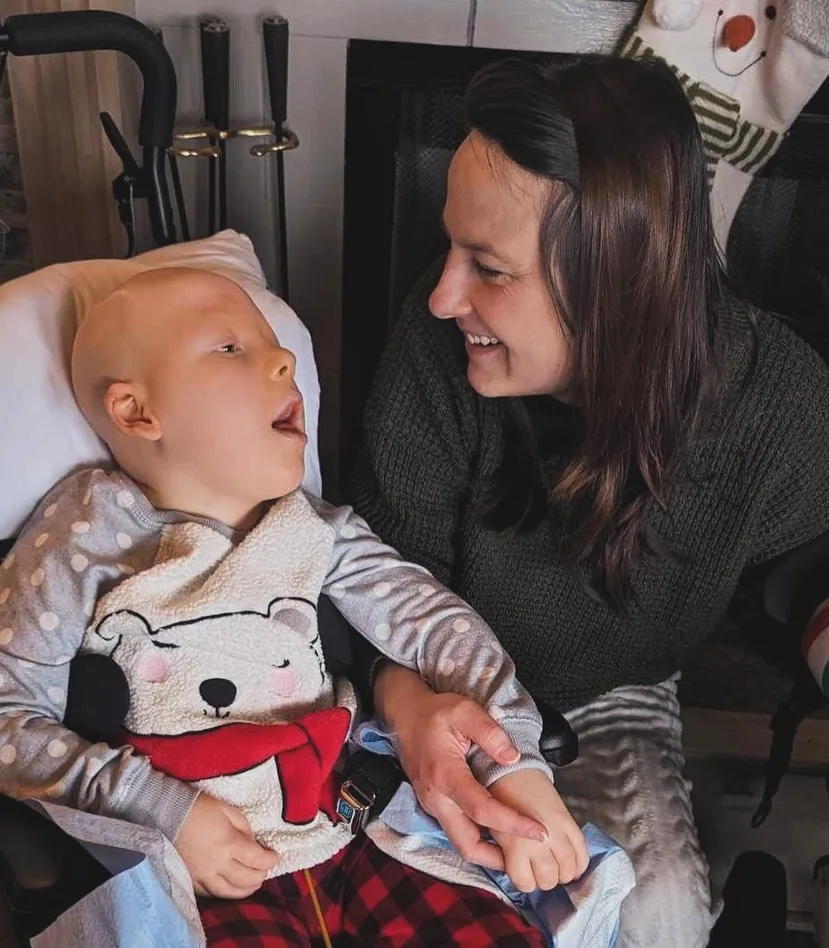
With lived experience as a patient, parent and caregiver, our HCFOA can recognize shared experiences and guide families through the complexities of multiple systems of care.
Our HCFOA also works to create a sense of community for caregivers within the Division of Specialized Care for Children (DSCC). In this community, families can feel supported, empowered and more confident in their caregiving journey.
Erica Stearns recently joined DSCC as our first HCFOA. She is the proud parent of two children, Margot and Caratacus, who have been enrolled in the Core and Home Care programs since 2016. They reside in southern Illinois and enjoy the beauty of the Shawnee National Forest.
Erica also serves as the co-chair of DSCC’s Family Advisory Council. You can learn more about Erica, her family and her caregiving journey in The Stearns Family Story.
As our HCFOA, Erica works hand-in-hand with families and caregivers to:
- Create trusting partnerships
- Offer tailored support in addition to the care coordination services they receive from DSCC
- Provide essential caregiver resources
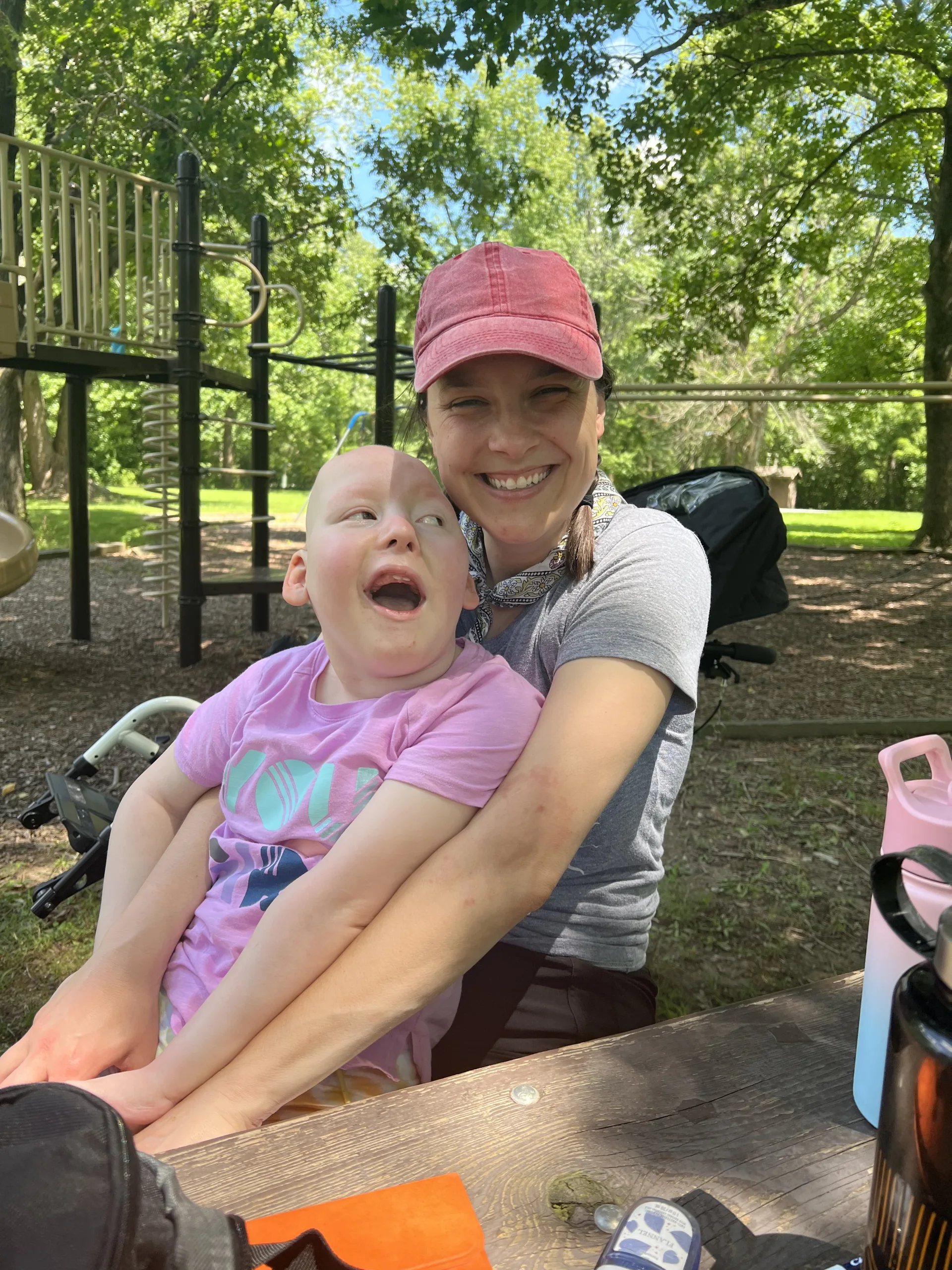
Erica helps ensure that caregivers are equipped with the knowledge and skills they need to advocate for their children and navigate complex systems of care. She can help support your family as you navigate:
- Adjusting to a new norm
- Needing support for your child/loved one’s medical needs and increased level of care
- Looking for guidance on what to expect
- Wanting to connect with other families
Families can request to connect with Erica in several ways. You can ask your DSCC care coordination team to refer you to the HCFOA. You can also email a request to speak with Erica at DSCC-FamilySupport@uic.edu.
For more information about the HCFOA and Erica, please visit our Home Care Family Outreach page.
2024 Health Insurance Education Webinar Series for Families Kicks Off in March
Free virtual training sessions for Division of Specialized Care for Children participants, their families and anyone interested in learning more about health insurance topics
Is figuring out your health insurance leaving you confused, frustrated or both?
Change your confusion to confidence with the University of Illinois Chicago’s Division of Specialized Care for Children (DSCC) Health Insurance Education Series.
These free trainings can help you better navigate your health insurance coverage and benefits. Each month, DSCC team members and other presenters will explain a different topic.
Each presentation will be in English. A Spanish interpretation line will be available during each session.
Check out the topics, mark your calendars and register for each session you’re interested in attending.
The session descriptions are in English followed by Spanish:
- Social Security Benefits, March 12 at 6 p.m.
- This training will help you understand Social Security benefits. Presenters from the Social Security Administration will share information about Supplemental Security Income and Social Security Disability Insurance. You will learn who can get benefits and how to apply for benefits. It will also cover what the Social Security program benefits are and how to keep your benefits.
- See the Social Security flyer for more details.
- Register on Zoom for Social Security Benefits
- Medicaid Denials, April 9 at 6 p.m.
- This training will help you understand Medicaid denials. It will review the common reasons that Medicaid denies services, such as equipment. The presentation will also share tips on how to avoid denials and what to do if Medicaid denies your services. This training will be for those with regular Medicaid and those enrolled in a managed care plan (MCO).
- See the Medicaid Denials flyer for more details.
- Register on Zoom for Medicaid Denials
- Transitioning Health Insurance Benefits to Adulthood, May 14 at 6 p.m.
- This training will help you understand how to transition health insurance benefits to adulthood. It will go over different insurance types, including Medicaid, Medicare and private insurance. This presentation will help you know what to start thinking about for health insurance benefits as you or your child nears adulthood.
- See the Transitioning Health Insurance Benefits to Adulthood flyer for more details.
- Register on Zoom for Transitioning Health Insurance Benefits to Adulthood
- Beneficios de Seguro Social, 12 de marzo a las 6 p.m.
- Esta capacitación lo ayudará a entender los beneficios del Seguro Social. Los presentadores de la Administración del Seguro Social compartirán información sobre el Seguro de Ingreso Suplementario y el Seguro de Incapacidad del Seguro Social. Aprenderá quién puede obtener beneficios y cómo solicitarlos. También cubrirá cuáles son los beneficios del programa de Seguro Social y cómo conservar sus beneficios.
- Consulte el folleto de Beneficios de Seguro Social para obtener más detalles.
- Enlace para registrarse
- Negaciones de Medicaid, 9 de abril a las 6 p.m.
- Esta capacitación lo ayudará a comprender las negaciones de Medicaid. Revisará las razones comunes por las que Medicaid niega servicios, como equipos. La presentación también compartirá consejos sobre cómo evitar negaciones y qué hacer si Medicaid niega sus servicios. Esta capacitación será para quienes tienen Medicaid regular y quienes están inscritos en un plan de atención administrada (MCO).
- Consulte el folleto de Negaciones de Medicaid para obtener más detalles.
- Enlace para registrarse
- Transición de los beneficios del seguro médico a la edad adulta, 14 de mayo a las 6 p.m.
- Esta capacitación lo ayudará a comprender cómo hacer la transición de los beneficios del seguro médico a la edad adulta. Tratará diferentes tipos de seguros, incluidos Medicaid, Medicare y seguros privados. Esta presentación le ayudará a saber en qué empezar a pensar en cuanto a los beneficios del seguro médico a medida que usted o su hijo se acercan a la edad adulta.
- Consulte el folleto de Transición de los beneficios del seguro médico a la edad adulta para obtener más detalles.
- Enlace para registrarse
You can also download a flyer with all the Health Insurance Education Series topics and registration links. (The flyer is also available in Spanish.)
The webinars are open to DSCC participants, their family members and anyone interested in these topics.
This is the second year for the DSCC Health Insurance Education Series. It began in response to DSCC families’ questions and suggestions from our Family Advisory Council.
Details about each series session are also posted on our Events page.
The 2024 Health Insurance Education Series is free for all attendees.
If you miss a session, you can access the recordings and related materials on our Family Education Webinars page.
If you have questions about these webinars before or after a session, email dscc@uic.edu or call (800) 322-3722.
We look forward to seeing you online!
Announcing Rate Increases for In-Home Nurses
Increased rates for in-home nurses will take effect on Jan. 1, 2024.
We have an exciting update for our participants enrolled in the Home Care Program.
The Centers for Medicare and Medicaid have approved a rate increase for in-home nurses in the new year.
We hope this rate increase can help expand available and high-quality nursing options for our participant families.
This rate increase affects:
- Registered nurse (RN), licensed practical nurse (LPN) and certified nursing assistant (CNA) care
- In-home and facility-based respite care
- Nurse training rates
This increase will take effect Jan. 1, 2024. The rates are as follows:
- RN, $54 per hour
- LPN, $45 per hour
- CNA, $30 per hour
You can see the updated Home Health Fee Schedule on the Illinois Department of Healthcare and Family Services (HFS) website.
The following rate increases are for participants who are in the Home and Community-Based Services Waiver for Those Who Are Medically Fragile, Technology Dependent (MFTD):
- Nurse training for an RN, $54 per hour
- Nurse training for an LPN, $45 per hour
- In-home respite for an RN, $54 per hour
- In-home respite for an LPN, $45 per hour
- In-home respite for a CNA, $30 per hour
HFS will also increase the maximum amount for nurse training service hours from four to 32 hours per nurse per waiver year.
As a reminder, parents and legally responsible adults who have an RN or LPN license can be paid caregivers. (Parents and legally responsible adults who are CNAs cannot be paid caregivers at this time.)
HFS will increase your nursing resource allocation amounts to reflect the increase.
Your Division of Specialized Care for Children (DSCC) care coordination team can help you with any questions about the rate increase or nursing services.
You can also find more helpful information about Home Care Program services on our website’s Home Care Information Hub.